ChatGPT terrifies the west.
We worry about copyright. Privacy. Bias. The electric bill of training large language models keeps people awake at night.
Then there is Anguilla.
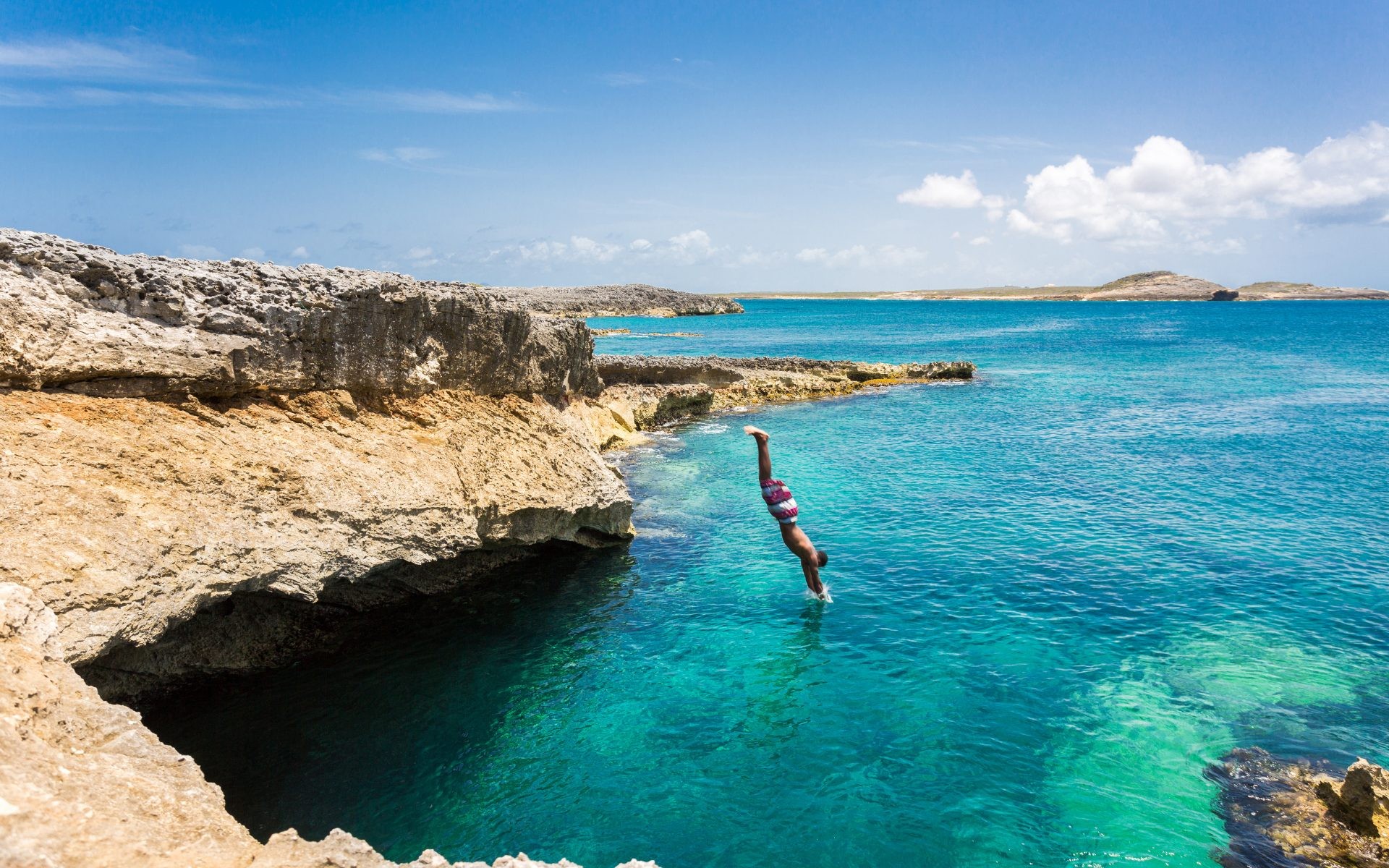
It’s a speck of land in the eastern Caribbean, tucked between the British Virgin Islands and St. Martin. It’s small. Like, tiny. About 37 square miles. You can drive from one end to the other before your latte gets cold. It’s smaller than Paris. Half the size of Baltimore.
A-listers come here to disappear.
Beyoncé and Jay-Z walk these shores. Sir Paul McCartney does too. Follow their footprints and you might spot Harry Styles. All thirty-three beaches are public, by law. It’s supposed to be paradise.
But paradise is expensive. And fragile.
The Hurricane Problem
Anguilla lives in the hurricane belt.
For a long time, its economy rode on two wheels: fishing and tourism. Tourism alone pumps about 37 percent of its GDP, says the IMF.
It works—until it doesn’t.
Hurricanes don’t care about GDP. They come roughly once a decade since 1995. The recovery takes years. In 2017, Hurricane Irma hit. Hard. Material damage topped USD $320 million. That number should give you pause. The entire national budget was under USD $150 million that year.
“It devastated the island,” says Dale Carty, a chef who runs Tasty’s Restaurant. He serves curry goat stew and grilled lobster—staples. “But because of our resilience, we recovered.”
Visitor numbers dipped 42% in 2018. They bounced back two years later. Life went on.
But the next time a storm hits, will they bounce back as easily?
The Domain Glitch
The answer, strangely, comes from 1995.
That was the year the internet assigned Anguilla a two-letter code: .ai.
It makes sense. It’s the abbreviation for Anguilla.
It makes even more sense when you realize AI stands for Artificial Intelligence.
For years, nobody cared. The government used it for local websites. Then, in 2009, they opened sales to the public. By 2018? 50,000 domains sold. Cumulative earnings: USD $2.9 million. Nice pocket change for a territory.
Then ChatGPT dropped in November 2022.
The floodgates broke.
Fast forward to 2026: Anguilla has surpassed one million domain sales. That number hit just a year after they sold 500k total. Revenue from these sales sits at roughly USD $85 million.
That is 47 percent of Anguilla’s GDP.
Just by owning three letters.
“The success of .ai has enabled Anguilla to invest,” Premier Cora Richardson-Hodge said.
She wasn’t wrong.
People pay up. The .ai domain costs seventeen times more than a standard .com over the mandatory two-year registration. Yet over 90 percent renew. No buyer’s remorse here. Tech startups love it. Twenty-eight percent now choose .ai as their identity.
Did anyone sell bot.ai for a million bucks?
Yes. In February 2023—wait, the text says 2026—bot.ai auctioned for USD $1.2 million.
It’s a windfall. An unexpected one, but real.
Spending The Cash
Governments hoard cash. Not this one.
They see a ceiling approaching. Sales will plateau eventually. They know the .ai boom might fade when the next tech wave hits.
So they are building something durable.
Ministers plan to pay down national debt. They are creating a sovereign wealth fund—think of it as a savings account for future infrastructure. They want to diversify the economy so a storm doesn’t sink the ledger again.
Big money means big upgrades.
The Clayton J. Lloyd International Airport got a new terminal. The runway got extended. The cost: USD $175 million.
That was previously unaffordable.
Now? They can host larger planes. Tourists can fly direct. No layovers.
Dale Carty notices the shift. “I have benefited directly from increased tourist arrangements,” he tells Adventure.com. More people in restaurants. But he looks past the full seats.
He wants better healthcare. Education. Skills training. The kids growing up right now deserve a stake in this money.
The revenue isn’t just for today. It’s for the people, for generations.
Beyond The Clouds
Money changes things, but geography does not.
Anguilla still relies on imported oil. Still sits in the hurricane lane. The name itself hints at this—Anguilla means ‘eel’ in Italian. Christopher Columbus supposedly named it for the island’s long, thin shape. Eels bend. They survive.
The government is pushing a “blue economy.” This means sustainable marine use. Conservation.
Shellfish—spiny lobster and queen conch—employ up to 20 percent of the workforce. If those stocks crash, the local economy bleeds.
So the Anguilla National Trust builds artificial reefs.
They place them in Little Bay Marine Park, on the north coast. It creates habitats. It protects jobs. Funding comes from statutory grants, partly boosted by this .ai surge. We don’t know the exact budget for future years, yet, but the trend is clear.
Another project tackles land.
The Trust restores vegetation on offshore islets. They plant stuff to support the Sombrero ground lizard (ameiva corvina ). They build natural barriers against storm surges.
“Establishing a more secure future,” says Devon Carter, a research assistant there. “Diversity makes the vegetation resilient. To climate change.”
The island looks greener already.
The Unfinished Story
Nobody predicts the future correctly.
Mid-century futurists promised flying cars and jetpacks. We got smartphones.
But Anguilla is betting on its eel-like flexibility. It is using this temporary, internet-driven luck to buy permanent safety.
They are buying better runways.
Better reefs.
Better schools.
The .ai money is huge. But it will likely end. When it does, will the infrastructure remain?
Will the beaches stay safe?
The water is blue. The celebrities are watching.
But the real story isn’t on the shore.