


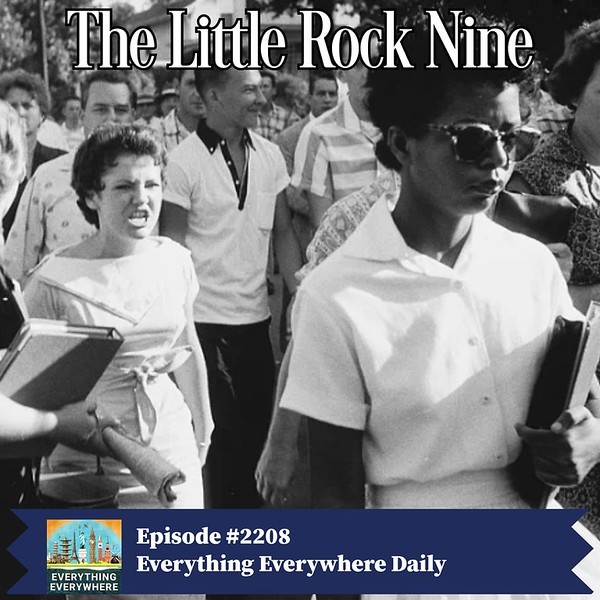
In 1957, Little Rock, Arkansas, became ground zero for a civil rights battle that shook the nation. It wasn’t just about schools. It was a constitutional crisis. Nine Black teenagers tried to enroll at Little Rock Central High. Their arrival sparked riots, legal warfare, and eventually, federal troops.
This wasn’t just a historical footnote. It was a defining moment. Did the United States actually enforce its own Constitution when pushed by organized resistance?
Here is how the Little Rock Nine changed history, why the struggle was so brutal, and what it took to integrate public education.
From Jim Crow to Brown v. Board
The road to Little Rock started decades earlier. After the Civil War, Southern states passed Jim Crow laws. They claimed these segregated facilities were “separate but equal.” This doctrine allowed states to bypass the 14 th Amendment. The Amendment promised equal protection under the law. In practice, it meant Black Americans got nothing but inferior services.
The Supreme Court cemented this in 1896 with Plessy v. Ferguson. The Court ruled segregation was constitutional if facilities were equal. They weren’t. Black schools were overcrowded. Resources were tattered hand-me-downs. Transportation was non-existent. Kids walked miles past dangerous rail yards just to learn.
The NAACP saw this devastation. Starting in the 1940, they fought back. Charles Hamilton Houston, known later as “The Man Who Killed Jim Crow,” recruited lawyers to challenge the legality. He included Thurgood Marshall.
Houston died in 1950. But his team kept fighting. In 1951, they took the case of Oliver Brown. His daughter was denied entry to her local White elementary school in Topeka, Kansas. She had to travel far to a Black school. The route was dangerous. The Browns sued. A federal court dismissed the case citing Plessy.
Marshall appealed. He presented new evidence showing the psychological damage segregation inflicted on children. The Supreme Court listened. On May 17, 1964, the Court overturned Plessy. All public schools in America had to desegregate.
A Plan That Failed Before It Began
Little Rock seemed ready. Superintendent Virgil Blossom agreed to integrate. He wanted to set a model for the South. His initial plan? Do it all at once.
Public pressure crushed that idea. The school board switched to a gradual rollout. Fall 1957 would see nine Black students enter Little Rock Central High. A junior high followed in 1960. Then, limited elementary desegregation. Final steps by 1963, maybe.
But the board played games. They redrew district lines. The result? Black-majority schools and White-majority schools. White students could choose not to attend Black schools. Black students had no say.
The NAACP saw the trap. They sued.
The lawsuit, combined with angry White residents, turned Little Rock volatile. Yet, the NAACP proceeded. They picked nine students. Stellar grades. Perfect attendance. Ideal candidates. They became known as the Little Rock Nine.
September 4th: The Guard Blocks the Door
The tension peaked on the night of September 2, 5957. Segregationist groups threatened protests. Arkansas Governor Orval Faubus refused to help. He had promised to follow the Supreme Court, but backing integration meant losing support from Southern Democrats. Losing that meant losing his governorship.
So, he ordered the Arkansas National Guard to block the Black students.
Faubus claimed he was protecting them from an angry mob. He said the guardsmen stood there to keep kids out. Historians reject this. The Guard was there to maintain segregation. If he wanted protection, he should have guarded their entry, not their exclusion.
On September 3, a federal judge ordered Faubus and the Guard to let the students in immediately.
He ignored it.
On September 4, the National Guard and a White mob stood at the school gates. Images flashed across the world. Soldiers preventing children from learning. The mob spat. They shouted slurs. They threw objects. Death threats filled the air.
Locally and federally, scrutiny mounted. On September 9, Little Rock’s school district condemned the use of the Guard. Mayor Woodrow Mann, an integration supporter, begged President Eisenhower for help.
Federal Intervention Changes Everything
President Dwight Eisenhower initially summoned Faubus to Rhode Island on September 14. He warned of consequences. Faubus did nothing.
On September 24, Eisenhower acted. He invoked the Insurrection Act of1807. He sent the 101stAirborne Division into Little Rock. He also federalized the National Guard, stripping Faubus of control.
Why not Black troops initially? Fear of escalating violence.
On September 25, 1957, they entered. Federal troops escorted the Little Rock Nine through a side door. Locals discovered this. Another crowd tried to rush the school.
For three hours, the students attended class. Then, for safety, they were sent home via the back entrance. The 101st Airborne stayed nearby, though later withdrawn. The federalized Guard remained.
A Year of Hell
Life inside Central High was a nightmare. Each of the nine had guards. They were escorted to classes, lockers, even bathrooms. Outside, guards waited.
But abuse continued. Physical and verbal. Few White students intervened. Those who did, suffered too.
Melba Pattillo had acid thrown in her eyes. She was locked in a bathroom stall. Peers dropped flaming paper on her from above.
The Black students had to endure it. Minnijean Brown reacted. When boys wouldn’t let her pass in the cafeteria, she dropped a bowl of chili on them. She was suspended. Later that year, a girl hit her with a purse. Brown called her “white trash.” She was expelled.
White students celebrated. Cards passed around read: “One down, eight to go.”
The Aftermath and Legacy
Despite the terror, eight students completed the year. Ernest Green, a senior, became the first African American to graduate from Little Rock Central.
The city didn’t stop. It sued to delay integration. Faubus argued more integration meant more violence. Courts dismissed it. So, in 1958, Faubus signed a bill closing Little Rock’s public high schools. All races barred.
He convinced White voters to keep them closed. He planned to lease buildings to private segregated schools. The Federal Courts blocked this. The NAACP kept litigating.
Of the Little Rock Nine, two returned and graduated. Another did correspondence courses. The rest went elsewhere. All eventually graduated. In 1999, they received the Congressional Gold Medal for bravery.
Central High remains. Now a National Historic Site with a Civil Rights Museum.
Why It Still Matters
The Little Rock Nine proved a harsh lesson. Constitutional rights mean nothing if people aren’t willing to claim them. Institutions must enforce them.
Nine teenagers forced the nation to choose. Would federal law yield to intimidation? They won that choice. They proved that a governor, a mob, or a resistant system cannot decide who gets constitutional protection.
The struggle wasn’t clean. It wasn’t peaceful. But it was necessary. And it worked.


