


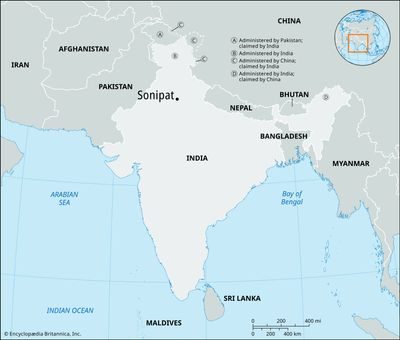
Sonipat sits in the eastern heart of Haryana, a state in northern India. It’s roughly 25 miles (40 km) north of Delhi. That proximity is the city’s defining feature. It makes Sonipat a prime candidate for a day trip or a short stopover. But looking only at its industrial output misses the deeper layers.
The city has roots that go back to roughly 1500 BCE. Early Aryan settlers likely founded it. For centuries, it flourished along the Yamuna River. The river has since shifted course. It now runs about 9 miles (14 km) to the east. This geographical change is significant for understanding the city’s layout and historical context.
Why Sonipat Matters in the Mahabharata
You cannot talk about this region without mentioning the Mahabharata. Sonipat was known as Shonaprastha in the epic. It lies within the Kurukshetra region. This is the “Field of Kuru.” The famous war between the Kauravas and the Pandavas took place here. It’s not just a backdrop. It’s the scene of one of history’s most pivotal mythological conflicts.
For travelers interested in religious and historical sites, this adds a layer of depth. The area is saturated with meaning. You are walking through ground that ancient texts claim shaped the destiny of dharma.
Industrial Reality: Bicycles and Steel
Today, Sonipat is one of Haryana’s largest cities. Its growth is tied to Delhi. The capital provides raw materials and power. This access fueled industrial development. The city is now a major center for bicycle manufacturing in India. If you’ve ever wondered where those affordable bikes come from, look here.
The industrial mix is diverse. You will find factories producing sewing-machine parts. Automobile components are another key output. Rolled steel, hosiery, and textiles also define the local economy. It’s a working city. The air might carry the scent of industry. The streets hum with commerce.
Handicrafts and Historical Ruins
Despite the heavy industry, there are quieter pockets. Hand-loomed textiles are still produced here. Carpets and brass ware add to the artisanal scene. Copper ware is another traditional craft. These items offer tangible connections to the past. They are worth seeking out if you appreciate handmade goods.
Historical structures dot the landscape. The mosque of Abdullah Nāṣer al-Dīn stands as a testament to the 13th century. It was built in 1272. The tomb of Khwāja Khizr is also present. These sites require careful navigation. They are nestled within a modern urban fabric.
The old fort wall remains in ruins. It’s a reminder of the city’s defensive past. Walking through these remnants feels like stepping into a different era. The contrast between the ancient stones and the modern factories is stark.
Practical Details for Travelers
Population figures from the early 2000s show growth. In 2001, the population was 214,974. By 2011, it had risen to 278,149. This growth reflects the city’s expanding role in the National Capital


