


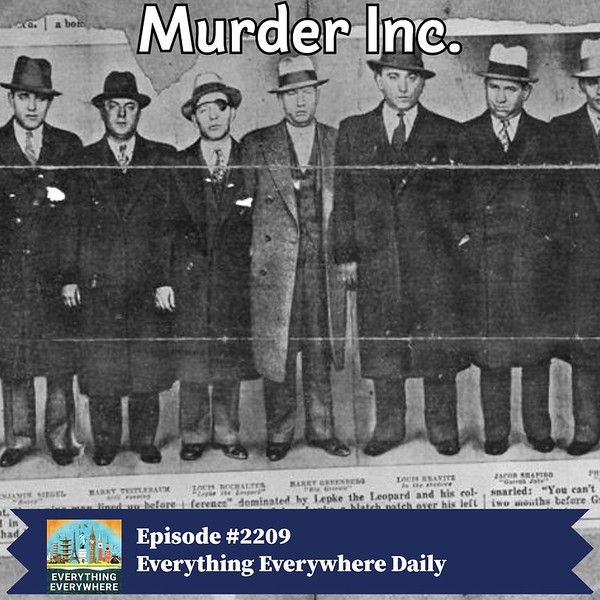
Prohibition didn’t just bring bootleggers into the light; it birthed a corporate model for murder.
By the late 19205, the lines between street gangs and a bureaucratic criminal enterprise blurred into a single, deadly machine. They didn’t just kill for rage or territory. They did it as a service. This was Murder, Inc.
If you’ve ever wondered how organized crime sanitized its bloodiest tasks, the story starts here. Not with random violence, but with logistics, payment schedules, and a candy shop in Brooklyn.
From Prohibition to the Syndicate
The 18th Amendment (1919) banned alcohol. It was a disaster for legitimate businesses and a goldmine for criminals. Bootlegging required muscle. It required intimidation. It required removing people who got in the way.
Movies make it look like mobsters settle everything with a quick shot in a back alley. Real life was more complex. You don’t want the cops tracing a hit back to the boss. So, you outsource.
In 1929, top underworld figures met in Atlantic City. They formed the National Crime Syndicate. The goal? Stop turf wars. Divide territory. Create a commission to settle disputes. It was essentially a cartel meeting.
But cartels need enforcers. Mayer Lansky and Bugsy Siegel pushed for a dedicated execution squad. The result was Murder, Inc.
Two Faces of Violence
The operation had two co-leaders. Their styles couldn’t have been more different, yet they worked.
Louis “Lepke” Buchalter was the mastermind. Born in New York’s Lower East Side, he was a product of reform schools and early prison stints. His nickname came from his mother’s Yiddish diminutive for Louis. He wasn’t just a thug; he was an organizer. Along with partner Jacob Shapiro, he seized control of garment industry unions. They didn’t just run racketeering schemes; they accessed union bank accounts and threatened strikes to flex power. Lepke understood leverage.
Then there was Albert “Mad Hatter” Anastasia.
Anastasia arrived from Italy in 1919, sneaking into New York with his brothers. He started on the Brooklyn waterfront, a longshoreman in the chaos of the docks. He had a history of violence. Convicted of murder in 1921, he walked free when witnesses vanished. By the late 20s, he was a union leader and a loyal soldier for Sicilian boss Giuseppe Masseria.
Anastasia earned his nickname from his unpredictability. He was psychopathic. He solved problems with extreme, often unnecessary violence. Where Lepke was cold calculation, Anastasia was volatile fury.
The Business of Murder
How did it work?
Murder, Inc. served anyone in the National Crime Syndicate. They took contracts. The pay? A base salary plus freelancing fees ranging from $1,000 to $5,000 per hit. Adjust for inflation, and that’s substantial.
Their headquarters was a front: The Rosie Gold Candy Store in Brooklyn. Payphones lined the back wall. Operatives would eat candy, wait, and watch the phone. When it rang, a new order appeared.
Communication was layered to protect the chain of command. A senior boss spoke to Lepke or Anastasia. An intermediary selected a crew. Weapons, cars, surveillance—everything was arranged separately.
Killers worked in teams. One spotted the target. Another stole the car. Another drove. Two others pulled the trigger. Spreading responsibility reduced risk. But it also created a weakness: every new person was a potential snitch.
Methods varied. Shootings, stabbings, strangulations. Sometimes they left bodies in streets. Other times, they hid them in vacant lots or used ice picks. They treated death as a logistical challenge.
The Defiance of Dutch Schultz
The most famous test of their loyalty came in 13935.
Thomas Dewey, the U.S. Attorney who would later run for President, was tearing the mob apart. Dutch Schultz, a powerful gangster, wanted Dewey dead. Murder, Inc. refused. The syndicate leaders feared that assassinating a high-profile federal prosecutor would trigger massive public outrage and a crackdown that could destroy them.
Schultz ignored them. He tried to hire the hit anyway.
The response was swift. Murder, Inc. killed Schultz instead.
The Collapse
Law enforcement had known about these enforcers for years, but the dots weren’t connecting. Abe Wagner, a mobster trying to flip, was murdered for his trouble. Dewey’s investigations picked up steam in the late 1930s as more bosses went to jail.
The breaking point arrived in 1941 with the arrest of Abe “Kid Twist” Reles.
Reles was a founding member of Murder, Inc. Fearing the death penalty, he flipped. He gave authorities a roadmap of the organization. His testimony led to indictments across the syndicate.
But Reles was too dangerous to keep alive. Under heavy police protection at a hotel, he fell from a fourth-story window. Officially, it was an accident. Suspiciously, it looked like a mob hit. Some say the police took care of their loose end; others say the mob got him anyway. Either way, Reles died without finishing his job against Anastasia.
Without Reles’s testimony, the case against Anastasia collapsed. He walked free, eventually ruling the remnants of Murder, Inc. until rival mobsters assassinated him in 1957.
Lepke’s End and Legacy
While Anastasia survived, Lepke did not.
Faced with death-row sentences and crumbling loyalty from his men, Lepke stood trial. He was convicted of murder. In 1944, he became the only major American Mafia boss executed by the electric chair.
The term “Murder, Inc.” was coined by reporters Asa Bordage and Harry Feeney as the organization fell. It stuck. Newspapers loved the alliteration. The public craved the monster.
Popular culture often inflates the numbers. Movies like John Wick draw inspiration from the idea of professional hitmen. Real-life estimates of Murder, Inc.’s victims range from 400 to 1,000. None are verified. It wasn’t a monolithic corporation. It was a loose network of killers, enforcers, and facilitators.
Yet, it proved a chilling point. Crime could be institutionalized. Murder could be contracted, priced, and executed like a delivery service.
The candy shop in Brooklyn is long gone. The payphones are silent. But the idea remains: that violence, when organized, becomes just another line item.


