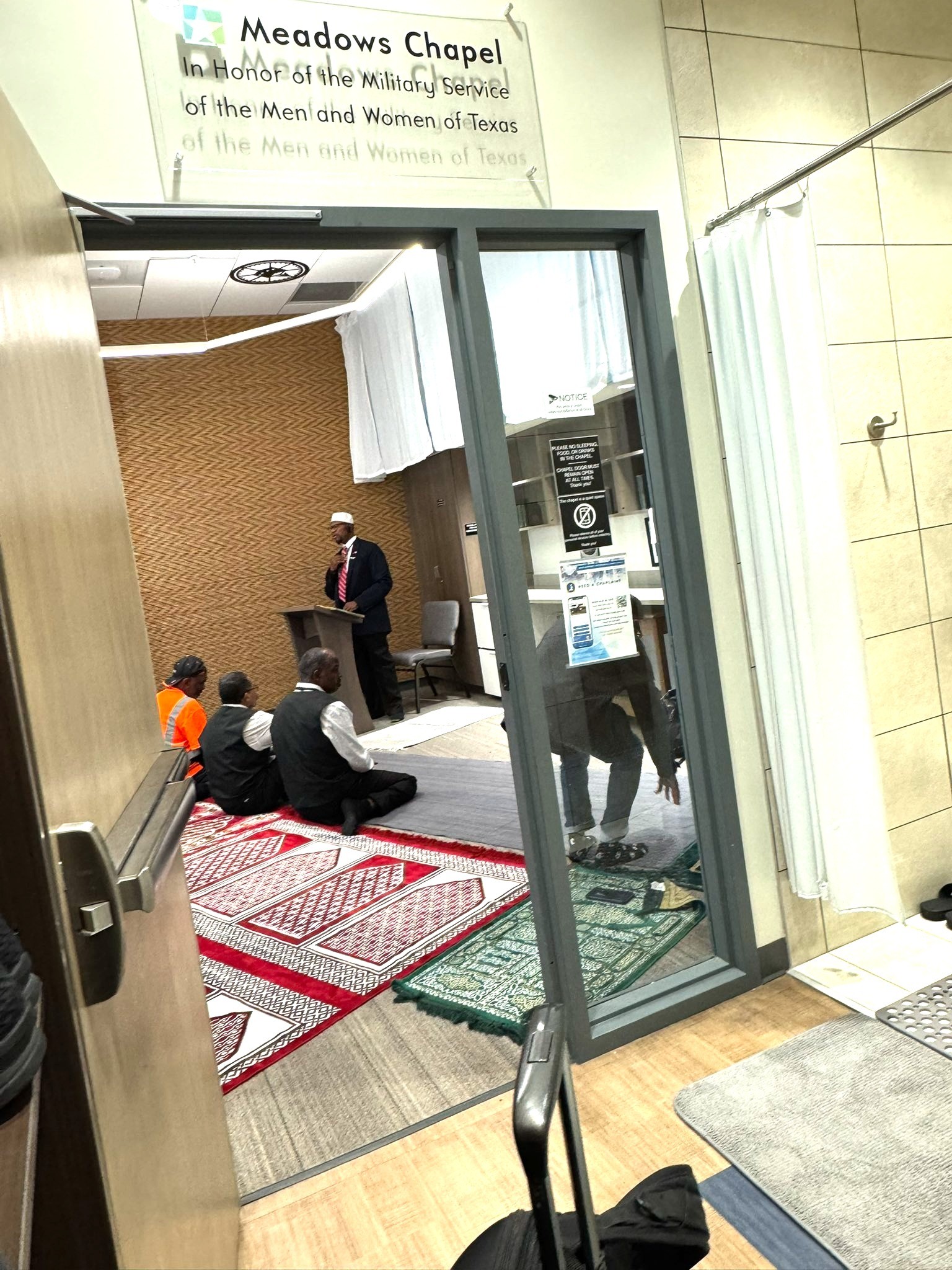
A conservative influencer recently sparked controversy after observing Muslim prayer services taking place within the chapels at Dallas–Fort Worth (DFW) Airport. The influencer described the spaces as “basically mosques” due to the prevalence of prayer rugs and a perceived lack of Christian iconography. This incident highlights broader shifts in religious practice and representation within public spaces.
The Changing Landscape of Airport Worship
The DFW Airport has three chapels, a restoration from a previous period where they had none. While the influencer criticized the dominance of Muslim practices in these spaces, the airport has long accommodated Friday prayer services at 1:30 p.m. This is not a new development. The situation raises questions about inclusivity and how shared spaces are utilized by different religious groups.
It’s worth noting that the issue isn’t unique to DFW. Many major airports, including Austin, Las Vegas, Los Angeles, and Philadelphia, lack dedicated chapel spaces altogether. This scarcity can make existing facilities more contested, especially as travel patterns change.
Declining Religious Affiliation in the U.S.
The debate over airport chapels occurs against a backdrop of declining religious affiliation in the United States.
- Christian identity has fallen: From 78% in 2007 to 62% in 2023, according to Pew Research Center.
- Church attendance is down: Gallup data shows weekly or near-weekly attendance dropped from 42% in 2000–2003 to 30% in 2021–2023. Over half (57%) now attend seldom or never.
- Belief persists: Despite declining practice, 83% of Americans still believe in God or a universal spirit (Pew) and 81% believe in God (Gallup).
This suggests that while organized religion may be waning, spirituality remains significant for many. Airports, as transient spaces, are increasingly becoming sites where these shifting demographics play out.
Historical Context and Airline Practices
The presence of religious accommodations in travel is not new. For three decades, Alaska Airlines offered prayer cards with meal trays before ending the practice in 2012. The initiative originated with a marketing executive who had previously implemented it at Continental Airlines. This illustrates how even seemingly secular industries have historically engaged with religious practices, albeit often for commercial rather than purely devotional reasons.
Conclusion
The DFW Airport chapel controversy reflects broader tensions surrounding religious expression in public spaces. As religious affiliation evolves and airport infrastructure adapts, questions of inclusivity, accommodation, and the role of faith in secular environments will continue to arise. The incident underscores the need for transparent policies and respectful dialogue to ensure that shared spaces serve diverse communities effectively.