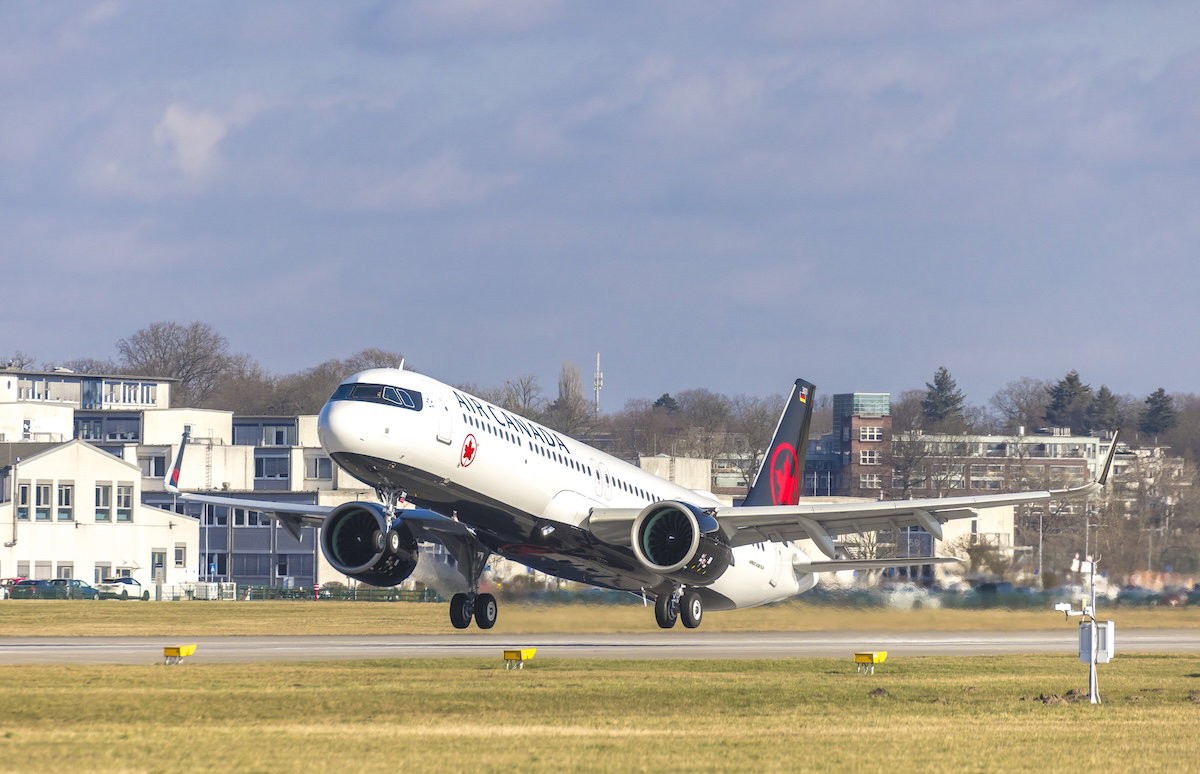
Air Canada has officially taken delivery of its first Airbus A321XLR, marking a significant milestone in the carrier’s fleet modernization strategy. This delivery is the first step in a larger plan to acquire 30 aircraft —half through direct purchase and half via leasing—to bridge a critical gap in the airline’s long-haul capabilities.
Filling the “Long and Thin” Gap
The introduction of the A321XLR represents a strategic shift in how Air Canada will approach international travel. Historically, the airline relied on larger wide-body aircraft, such as the Airbus A330, for long-haul routes. While effective, these larger planes require high passenger volumes to be profitable.
The A321XLR is a narrow-body, long-range jet designed specifically for “long and thin” routes. In aviation terms, this means routes that are geographically long but have lower passenger demand. By using a smaller, more efficient aircraft, Air Canada can:
– Launch new international destinations that wouldn’t support a large jet.
– Increase frequency on existing routes.
– Optimize fuel efficiency and operational costs on transcontinental North American flights.
Cabin Configuration: A Focus on Efficiency
The interior layout of the A321XLR reveals a specific economic strategy by Air Canada. Unlike many competitors, the airline has opted for a high-density configuration designed to maximize seat count:
- Total Capacity: 182 seats
- Business Class: 14 seats (utilizing the Collins Aerospace Aurora platform with a herringbone layout)
- Economy Class: 168 seats
The Premium Trade-off
One notable aspect of this configuration is the absence of a Premium Economy cabin. For comparison, major US competitors like United and American Airlines typically include a Premium Economy section and a higher number of Business Class seats on similar narrow-body long-haul models.
Air Canada’s decision to prioritize a larger Economy section suggests a focus on high-volume, cost-effective travel. The airline is betting that the convenience of nonstop service will be a primary driver for passengers, even if the premium seating options are more limited than on traditional wide-body aircraft.
Deployment and Route Expansion
The A321XLR is expected to become a workhorse for Air Canada’s eastern hubs, particularly Montreal (YUL) and Toronto (YYZ). The airline has already outlined an ambitious rollout plan for the upcoming summer and winter seasons.
Planned destinations from Montreal (YUL) include:
– Europe: Berlin, Lyon, Nantes, Palma de Mallorca, Porto, and Toulouse.
– North America: Calgary, Los Angeles, and Vancouver.
Planned destinations from Toronto (YYZ) include:
– Europe: London (LHR).
As the fleet grows, further expansion is anticipated from other major Canadian gateways, such as Ottawa (YOW) and Halifax (HFX).
“The Airbus A321XLR introduces a dynamic new component to Air Canada’s growth strategy, greatly expanding our flexibility to launch new international routes and improve our offering on existing markets.”
— Mark Galardo, Air Canada Chief Commercial Officer
Conclusion
The arrival of the A321XLR allows Air Canada to connect more Canadian cities to the world with greater efficiency. By targeting niche, long-distance routes with a smaller aircraft, the airline is prioritizing network flexibility and nonstop convenience over high-density premium cabins.