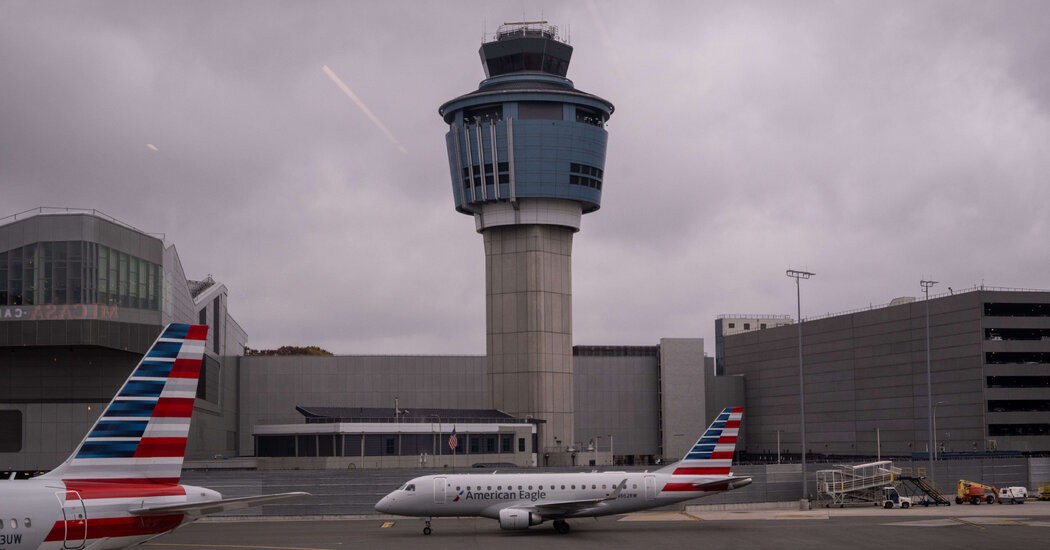
The recent fatal collision at LaGuardia Airport between an Air Canada jet and a fire truck has intensified scrutiny over minimum staffing levels in air traffic control towers nationwide. Investigators are now questioning whether the standard requirement of just two controllers during overnight shifts is adequate to ensure safety. The accident occurred at 11:37 p.m. last Sunday when a landing plane struck a vehicle crossing the runway, resulting in the deaths of both pilots.
Current Overnight Staffing Practices
At medium-sized airports like LaGuardia, two controllers typically work the overnight shift, covering hours from roughly 10:30 p.m. to 6:30 a.m. This minimum level ensures that the tower is always staffed, even accounting for breaks or potential illness.
However, this contrasts sharply with daytime operations where at least eight controllers are usually on duty due to higher traffic volume. The exact number varies between facilities and shifts, but the disparity in staffing raises questions about risk mitigation during periods of reduced visibility and potential fatigue.
NTSB Signals Possible Change
The National Transportation Safety Board (NTSB) chair, Jennifer Homendy, has publicly stated that the two-person overnight standard has been a long-standing concern for air traffic control teams.
“Our air traffic control team has stated that this is a problem, that this is a concern for them, for years,” Homendy told reporters this week.
This suggests that the NTSB is prepared to recommend changes in staffing requirements, potentially increasing the minimum number of controllers on duty during overnight hours. The debate comes at a critical time, as the aviation industry faces increasing pressure to enhance safety protocols amid growing passenger numbers and complex airport operations.
The crash at LaGuardia underscores the potential consequences of understaffing and highlights the need for proactive measures to prevent future incidents. The question now is whether regulators will act on the NTSB’s warnings and mandate higher staffing levels, even if it means increased costs for airports and airlines.