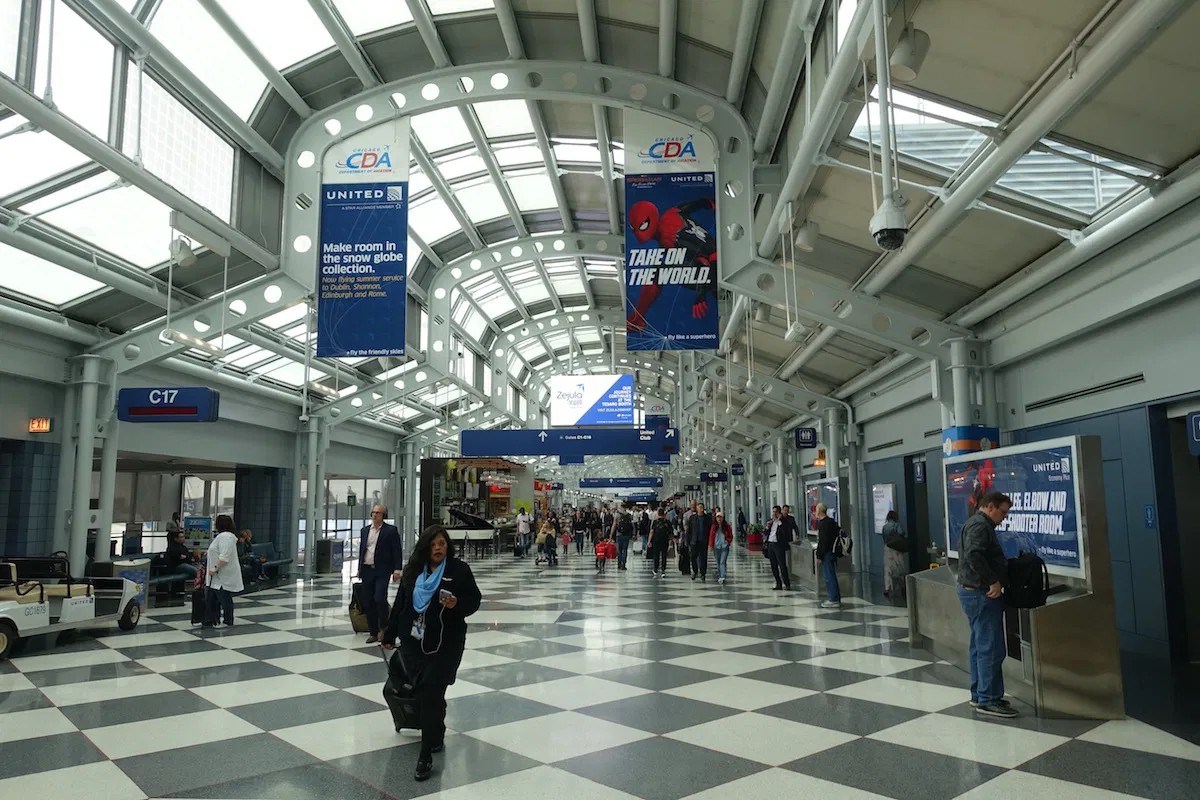
Recent headlines declare Chicago O’Hare (ORD) as the new busiest airport in the United States, surpassing Hartsfield-Jackson Atlanta (ATL)’s long-held title. However, this shift in ranking depends on how “busiest” is measured, and the distinction matters for understanding air travel trends.
The Numbers: Movements vs. Passengers
Chicago’s claim rests on the total number of takeoffs and landings. In 2025, O’Hare recorded 857,392 aircraft movements, a roughly 10% increase from 2024’s 776,036. This beats Atlanta, which saw 807,625 movements in the same period — about 6% less than Chicago.
However, when considering passenger volume, Atlanta retains a significant lead. Data from OAG shows ATL had 63.1 million departing seats in 2025, while O’Hare had 50.6 million — a roughly 25% difference. This is why Atlanta remains the world’s busiest airport by conventional metrics.
Why the Discrepancy? Aircraft Size
The key difference lies in aircraft size. Chicago O’Hare serves as a major hub for both American and United Airlines, with a high frequency of regional jets operating on shorter routes. Atlanta, dominated by Delta Air Lines, relies more heavily on larger, mainline aircraft.
The average plane in Atlanta carries far more passengers per flight than in Chicago… it’s that simple.
This means that while Chicago may see more individual takeoffs and landings, Atlanta moves significantly more people overall. The type of traffic matters.
Beyond the Metrics: Congestion and Capacity
Defining “busiest” depends on the concern. If congestion is the issue, total movements matter. O’Hare’s notoriously crowded taxiways highlight this point. If passenger volume is the focus, Atlanta remains the leader. Different airports prioritize different metrics, and the choice impacts how we perceive their activity.
The Future of Air Travel
Chicago’s growth suggests increased regional connectivity and competition between airlines. While O’Hare may not immediately surpass Atlanta in passenger numbers, the gap could narrow as airlines adjust capacity. The competition between Chicago and Atlanta, driven by airline strategy, will shape the future of air travel in the United States.
In conclusion, Chicago O’Hare has become the busiest airfield in terms of aircraft movements, but Atlanta still dominates when measuring passenger volume. The choice of metric determines the story, underscoring the need for clear definitions in aviation statistics.