


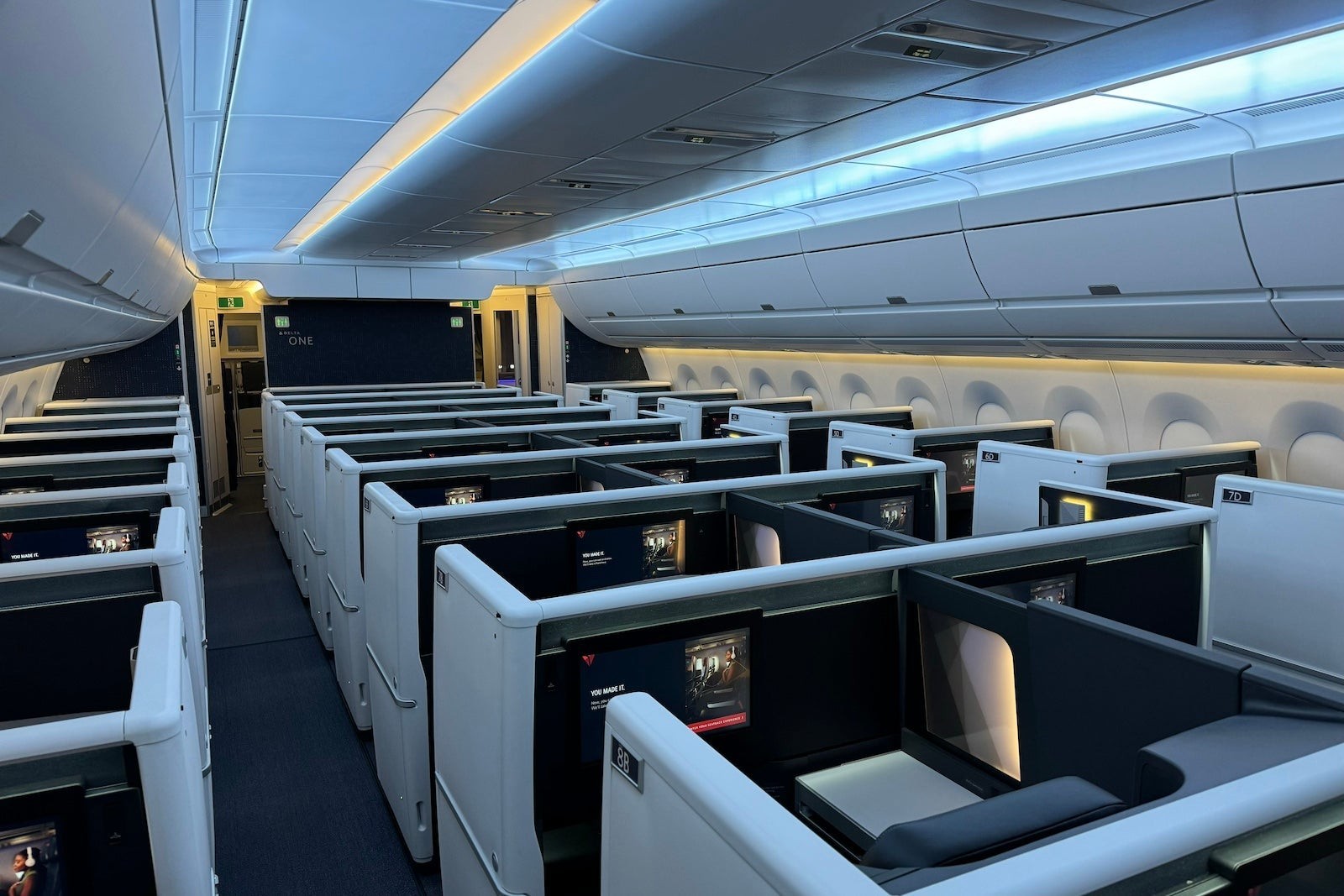
Delta Air Lines is embarking on a sweeping aesthetic and functional overhaul of its fleet. Over the next five years, the Atlanta-based carrier plans to roll out a new cabin design across more than 800 aircraft, marking the end of an era for its long-standing “enchanted blue” interior.
This initiative is part of a broader strategy to modernize the passenger experience, blending cosmetic updates with functional improvements to its premium and economy products.
A New Visual Identity
For nearly three decades, Delta’s signature “enchanted blue” seating has defined the airline’s brand. The new design moves toward a more sophisticated, modern palette:
– Color Palette: Darker navy-blue seats accented with pops of red.
– Atmosphere: A “celestial sky” design paired with enhanced mood lighting.
– Branding: A more prominent display of the Delta widget throughout the cabin.
While much of this update is visual, Delta is also addressing passenger comfort through material changes. Notably, the airline is transitioning from faux leather to cloth seats in business class, a move intended to provide a more comfortable and breathable sleeping experience for Delta One passengers.
Implementation and Fleet Rollout
The rollout is a dual-track process involving both the delivery of brand-new aircraft and the retrofitting of existing ones. Currently, the new aesthetic has been implemented on 18 aircraft, including:
– 6 Airbus A350s
– 8 Airbus A321neos
– 3 Boeing 767-300s
– 1 Boeing 757-200
Beyond these cosmetic shifts, Delta is planning more intensive structural overhauls for specific fleets. For example, older Airbus A330-200 and -300 models are slated for “nose-to-tail” revamps, which will introduce genuine Delta One suites and onboard snack bars—upgrades that represent a significant leap in service level for those specific aircraft types.
Looking Ahead: The Next Generation of Flight
This cabin refresh coincides with a major period of fleet renewal. Delta is preparing to integrate several new aircraft types into its operations, which will serve as the standard-bearers for its updated brand identity:
* Airbus A350-1000: Expected to debut in 2027.
* Boeing 787-10 Dreamliners: Part of a large order placed earlier this year.
This massive undertaking suggests that Delta is not just updating its look, but is aggressively repositioning itself in the competitive premium travel market by prioritizing cabin consistency and modern amenities.
Conclusion
By refreshing 800 aircraft, Delta is executing a long-term strategy to unify its brand identity and modernize the passenger experience. This transition from legacy designs to contemporary, high-comfort interiors marks a significant pivot in how the airline intends to compete in the global aviation market.


