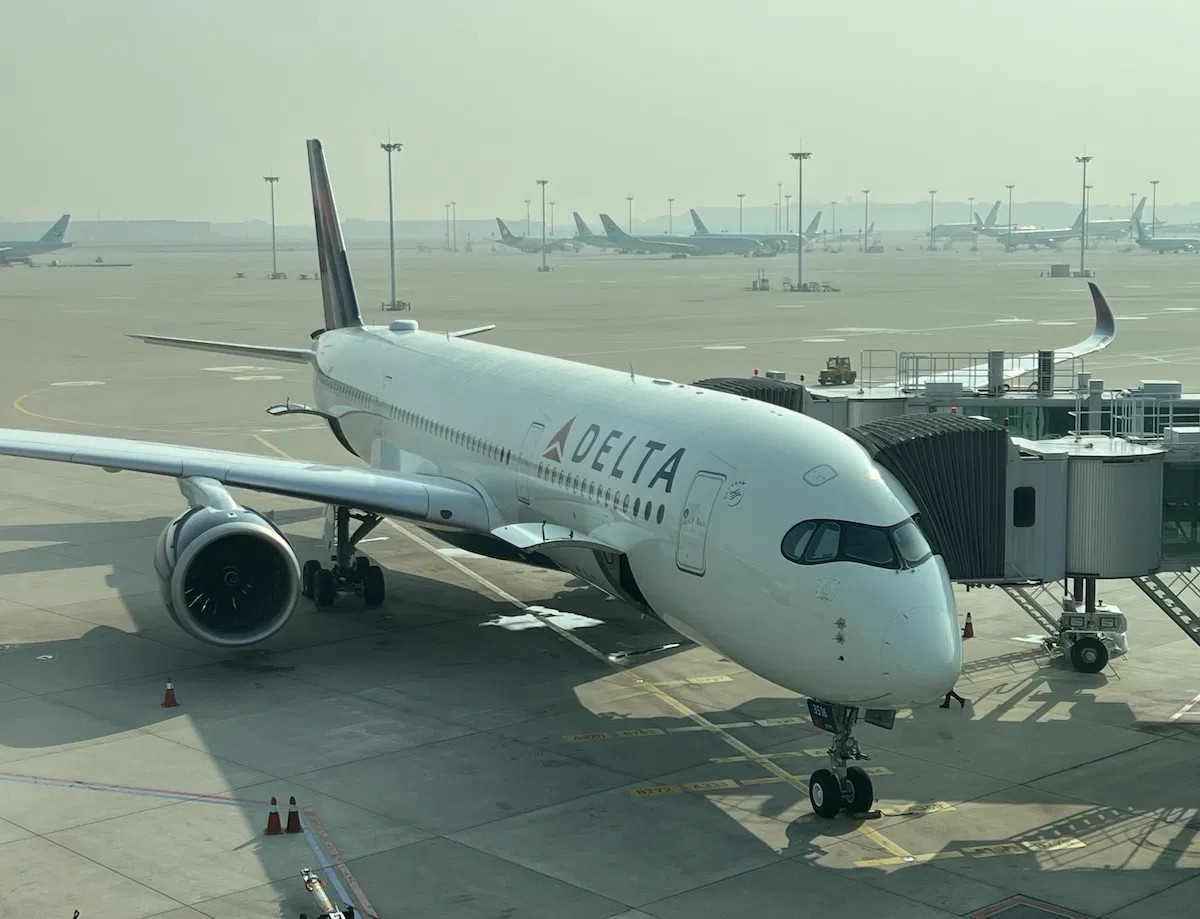
Delta Air Lines has announced plans to introduce daily, non-stop flights between Los Angeles (LAX) and Manila, Philippines (MNL) beginning in the summer of 2027. The airline filed a notification with the U.S. Department of Transportation (DOT) in response to a Philippine Airlines application for Chicago service, revealing its intention to operate the route using Airbus A350-900 aircraft. This expansion marks a notable step in Delta’s growing long-haul network, but raises questions about the airline’s evolving strategy in the competitive Asia-Pacific market.
A Change in Strategy
Historically, Delta has focused on more moderate long-haul routes, with limited ultra-long-haul services. Recent additions to Hong Kong (HKG) and Riyadh (RUH) signaled a shift, but the Manila announcement is particularly notable. The route represents a 7,000+ mile journey into a market with high demand yet relatively low yields. Delta positions itself as a premium airline, but the economics of this route are not immediately obvious given its high operating costs.
West Coast Expansion
The decision to launch the Manila route from Los Angeles rather than Seattle is also interesting. For years, Delta prioritized Seattle (SEA) as its primary Pacific gateway, developing significant transpacific routes. Now, the airline appears to be re-investing in Los Angeles (LAX), a market where United and American Airlines already have strong footprints. This move could be driven by the larger Filipino-American population in the LA area, but it also highlights the difficulty in establishing dominance in the crowded LA market.
Competition and Context
United Airlines already added San Francisco to Manila flights in 2023. Delta’s entry will increase competition for travelers between the U.S. and the Philippines. The airline argues that expanded service will benefit consumers through greater choice and improved connectivity. However, industry experts have questioned whether the route will be profitable in the long term. Airline economics have shifted, loyalty programs now play a larger role in revenue, but the route remains a gamble.
Delta’s expansion into Manila, while strategically ambitious, demonstrates a willingness to compete in a demanding market. The airline’s success will hinge on its ability to attract premium travelers while managing operational costs.
Ultimately, Delta’s Manila launch is a significant move that will reshape the competitive landscape for flights between the U.S. and the Philippines. It remains to be seen whether the airline can successfully navigate the challenges of this long-haul route and establish a sustainable presence in the region.