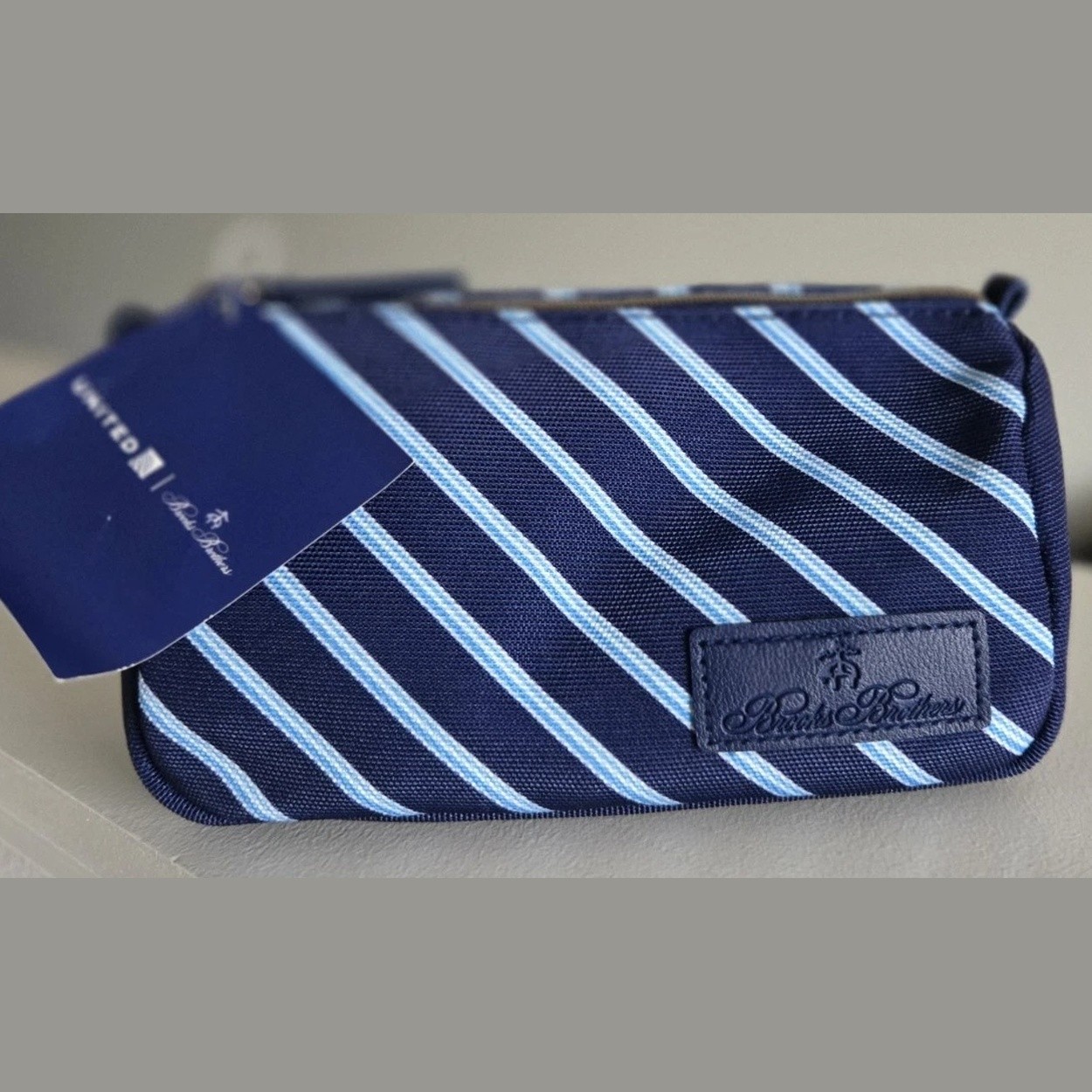
United Airlines’ decision to prominently display Brooks Brothers branding on its business class amenity kits, while downplaying United’s own logo, isn’t an oversight – it’s a calculated move driven by the economics of airline marketing. This arrangement illustrates how brands pay airlines for exposure to high-value customers, rather than the other way around.
The Rise and Fall of Brooks Brothers: A Brand in Need of Exposure
Brooks Brothers, once a dominant force in American menswear, has faded from its mid-20th-century peak. Founded in 1818, the brand historically outfitted presidents and defined conservative business attire. However, years of aggressive discounting, outlet expansion, and declining quality led to bankruptcy in 2020 and a subsequent acquisition by Authentic Brands Group + SPARC.
Today, Brooks Brothers needs to rebuild its brand image and reach affluent consumers. Placing its logo on United’s long-haul business class kits is an effective way to achieve this: the kits offer both practical items and a branded takeaway that passengers may share with others.
How Amenity Kit Partnerships Work
Airlines don’t usually pay to use a brand’s name. Instead, the reverse is true. Brands subsidize the kits to gain exposure to high-income travelers. This can take several forms:
- Brand Pays the Airline: The cosmetic or lifestyle brand supplies products at low cost (or free) and may pay a placement fee.
- Cost-Sharing: The airline pays for the pouch, while the brand provides products at a deep discount.
- Licensing Fees (Rare): Airlines pay for prestige associations with luxury brands like Bulgari or Ferragamo, though even these brands typically offer discounted products.
- Multi-Brand Advertising: Airlines sell space to multiple brands, reducing costs to near zero.
The key is that the airline gets a premium product at a lower cost, or even free, while the brand gains access to a captive, affluent audience.
The Value of a Branded Takeaway
Beyond providing useful inflight items (toothpaste, moisturizer, pens), the amenity kit is a portable advertisement. A well-branded bag serves as a reminder of the flight and encourages passengers to share their positive experiences. This word-of-mouth marketing is invaluable.
The Cost of Premium vs. Commodity Kits
A bare-bones, generic business class kit can cost as little as $5–$10. However, a premium co-branded kit with a high-quality pouch and curated skincare products can easily reach $10–$25 before brand subsidies. This means that airlines can secure premium amenities at a lower cost by partnering with brands willing to invest in exposure.
Airlines Are Willing to Spend on Branding, But Not Always
Some airlines prioritize branded kits as part of their premium cabin marketing, even spending more on luxury partnerships like Bulgari or Ferragamo. Brooks Brothers, however, is likely a cost-conscious play, with the brand footing the bill to regain relevance.
The trend extends beyond amenity kits: airlines also partner with brands for champagne (Bollinger) and Wi-Fi (AT&T), often at a reduced cost thanks to sponsorship deals. But even with these partnerships, some airlines still skimp on contents to save pennies.
In conclusion, the United-Brooks Brothers amenity kit isn’t about airline branding; it’s a clear demonstration of how brands leverage airline passengers to revitalize their image, and how airlines benefit from cost-effective marketing. The arrangement highlights a simple truth: in premium travel, perception is often more valuable than ownership.