
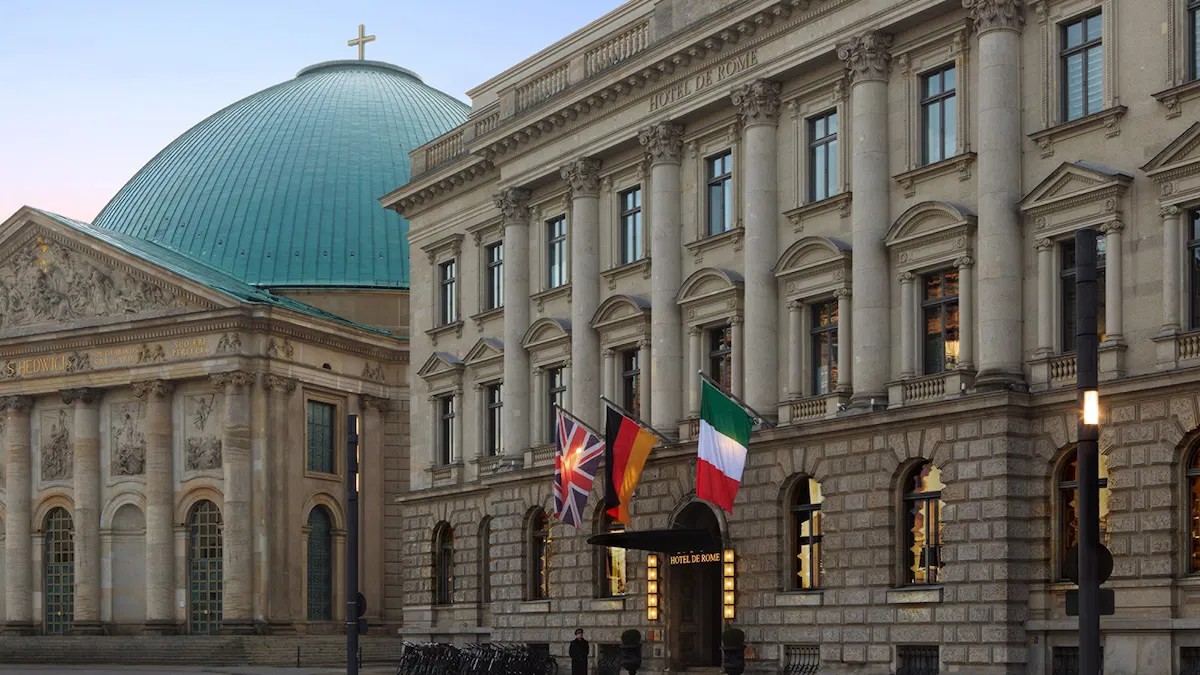
The Four Seasons brand is set to return to Berlin in late 2027, following a comprehensive renovation of Rocco Forte’s Hotel de Rome. This marks the luxury hotel group’s re-entry into the German capital after a two-decade absence. The Hotel de Rome, currently managed by Gruppo Statuto, will operate under its existing branding through 2026 before transitioning into a fully-fledged Four Seasons property.
Historic Building, Modern Luxury
The renovation will retain the property’s iconic façade while modernizing interiors and amenities. The reimagined hotel will feature approximately 140 guest rooms and suites, three distinct dining and bar venues, an expansive rooftop terrace with city views, and a large wellness center with a full-service spa. The design aims to merge the building’s historical character—originally the headquarters of Dresdner Bank, built in the late 1800s—with contemporary luxury. The hotel is located in Berlin’s Mitte district, on the cobblestone streets of Bebelplatz.
Germany’s Hospitality Landscape
The Four Seasons’ return to Germany fills a significant gap in the luxury hospitality market. While the brand shares a name with several independently-owned “Hotel Vier Jahreszeiten” properties across Germany (with no affiliation), this marks Four Seasons’ first fully branded presence in the country. The German market is notably business-focused, with more limited leisure tourism compared to other global hubs, which may affect brand recognition and pricing power.
Competitors such as Rosewood already maintain a footprint in the region, with properties in Munich, Vienna, and Salzburg. The Four Seasons’ expansion is likely intended to capitalize on the rising demand for luxury accommodations in Berlin, a city known for its historical significance, creative energy, and growing international appeal. The property previously operated as a Four Seasons from 1996 to 2004 before being converted into the Regent Berlin, which has since closed.
The return of Four Seasons to Berlin signifies a renewed investment in the German luxury hospitality sector, filling a long-standing brand absence and positioning the company to compete in a market where high-end accommodations remain in demand. The renovation of Hotel de Rome promises to blend the city’s rich history with contemporary design, setting a new standard for luxury travel in the German capital.