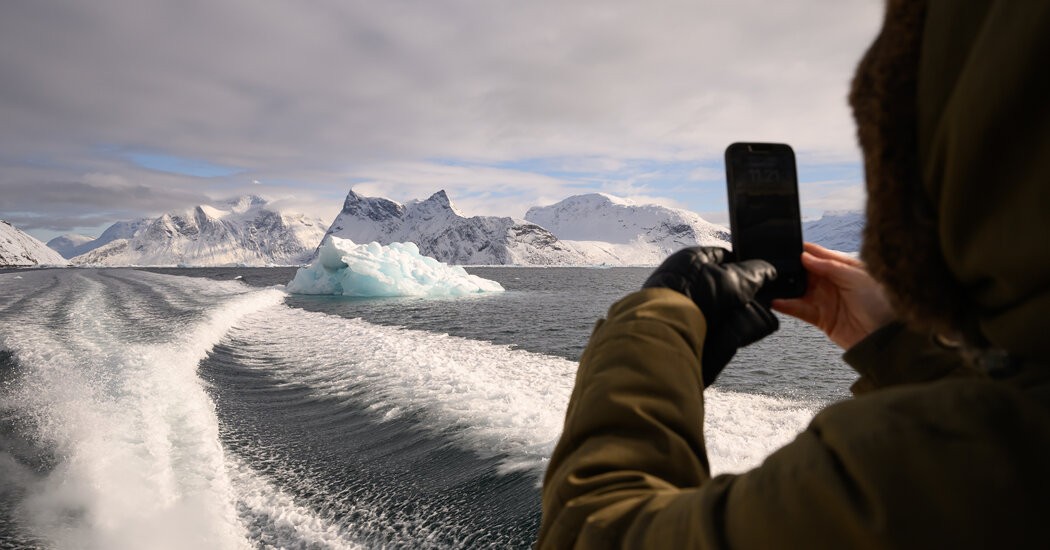
Tourism in Greenland, once boosted by global attention following President Trump’s repeated interest in acquiring the territory, now faces growing uncertainty as geopolitical tensions rise. While initial curiosity drove a surge in bookings for adventure tour companies like Raw Arctic, recent threats of acquisition are causing travelers to question the destination’s stability.
Early Boost From Global Attention
In mid-2024, when Trump first expressed his desire to purchase Greenland, the ensuing media coverage ironically benefited the local tourism sector. Casper Frank Moller, co-founder of Raw Arctic, reported a significant increase in demand for their fly-fishing and whale-watching tours. The company was forced to expand operations to accommodate the influx of curious tourists eager to visit the territory.
Shifting Perceptions and Safety Concerns
This year, however, the situation has changed. Moller notes that Greenland is now associated with “the potential disturbance of the current world order,” leading to increased inquiries about safety. The initial positive side effect of putting Greenland on the map has been overshadowed by geopolitical instability.
Rising Tourism Before Recent Tensions
Prior to the latest escalation, tourism in Greenland had been steadily increasing for years. The growth is attributed to the territory’s efforts to diversify its economy, melting ice opening previously inaccessible ports, and growing global fascination with the Arctic region. A 2025 survey revealed that 44% of Greenland’s tourism businesses reported higher bookings compared to the previous year, with optimism for further growth in 2026 if infrastructure improvements continue.
New Infrastructure and Expanded Access
The opening of a new international airport in Nuuk in late 2024 played a key role in this expansion. The airport facilitated the first direct flights from the United States to Greenland since 2008, with United Airlines launching service the following summer. This improved connectivity has broadened Greenland’s visitor base beyond traditional Scandinavian tourists. Avaaraq Olsen, Nuuk’s mayor, notes that even local artisans selling bone carvings have seen a significant increase in sales.
The combination of increased accessibility and global interest has created a fragile economic boom for Greenland, one now threatened by external political forces.
The situation highlights the complex interplay between geopolitics, tourism, and economic development in a rapidly changing Arctic landscape. The long-term stability of Greenland’s tourism sector remains uncertain as long as the threat of external acquisition looms.