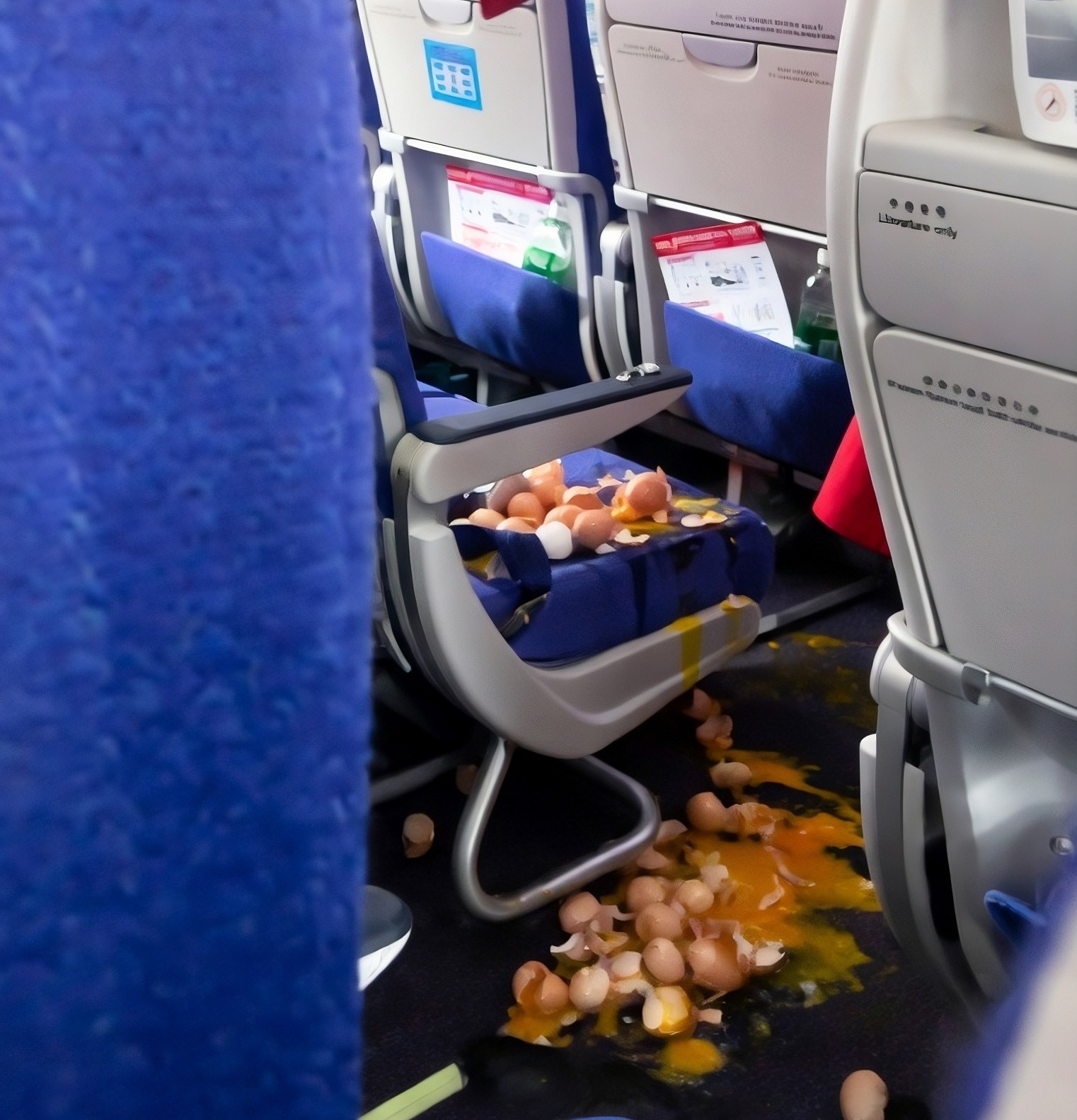
A recent viral video has highlighted a bizarre and highly unsanitary incident in an aircraft cabin: a passenger brought a large quantity of raw eggs on board, only to have them shatter across the floor and seating area. The footage shows flight attendants struggling to manage the mess, which included approximately a dozen broken eggs scattered throughout the economy cabin.
While the specific airline has not been officially confirmed, the incident appears to have taken place on a China Southern Airbus narrowbody aircraft.
The Logistics of Perishable Goods
The incident raises questions about how such items are permitted on flights in the first place. Regulations regarding food vary significantly by region and carrier:
- In the United States: The TSA permits fresh eggs to be carried in both checked and carry-on luggage.
- In China (China Southern): Guidelines generally suggest that fragile and perishable items are unsuitable for checked baggage and should instead be carried into the cabin.
While carrying perishables is legal, the lack of proper packaging can lead to significant operational headaches. This is not an isolated phenomenon; previous incidents have included passengers attempting to cook pasta using eggs at tray tables, and cases where poorly sealed food in overhead bins led to pest infestations.
Why a “Smelly Cabin” is More Than Just an Odor
One common misconception following such incidents is that the cabin air must be shut down to clear the smell. However, modern aircraft are equipped with advanced ventilation systems that refresh the air every two to three minutes, utilizing HEPA filtration.
The real challenge isn’t the air itself, but the volatile organic compounds (VOCs) —the tiny gas molecules that create odors. Standard HEPA filters do not trap these molecules; instead, planes rely on activated carbon filters to manage them.
More importantly, a major spill like broken eggs presents a deep-cleaning crisis:
* Residue Seepage: Egg matter can seep into seat cushions, carpet fibers, and the metal seat tracks.
* Sanitation Risks: Unlike a simple spill, organic matter can rot, creating long-term odor issues and hygiene concerns that require professional cleaning crews rather than just a quick wipe-down.
The Burden on Airline Staff
These incidents place an undue burden on flight attendants and ground crews. While some airlines, such as Southwest, have occasionally threatened to delay flights until passengers clean up their own messes, the high cost of flight delays makes this a rare occurrence.
When passengers bring pungent or messy food on board—whether it is raw eggs, canned tuna, or raw onions—they often overlook the logistical nightmare it creates for the crew. For those dealing with lingering food odors, cabin crews often suggest using coffee grounds from the galley as a natural deodorizer to help mitigate the scent.
The incident serves as a reminder that while flying with food is permitted, the responsibility for containment and cleanliness rests entirely with the passenger to avoid disrupting flight operations and hygiene standards.
Summary: This incident highlights the tension between passenger rights to carry food and the practical, sanitary, and operational challenges that poorly managed perishables pose to airline staff and cabin environments.