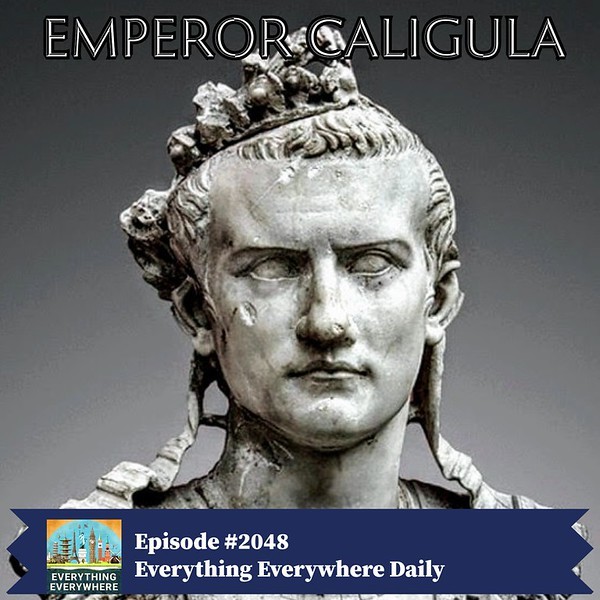
Emperor Gaius Julius Caesar Germanicus, better known as Caligula, remains one of history’s most notorious rulers. Born into the Roman imperial dynasty in 12 AD, his brief reign (37–41 AD) was marked by extravagance, cruelty, and ultimately, assassination. This episode examines the life and rule of Caligula, separating historical fact from sensationalized legend.
Early Life and Ascension to Power
Caligula’s lineage positioned him for greatness. His father, Germanicus, was a popular and respected military commander, while his mother, Agrippina the Elder, descended from Augustus, Rome’s first emperor. His childhood was unusually public, accompanying his father on campaigns where soldiers nicknamed him “Caligula” (“little boots”) after the military footwear he wore as a child.
This early exposure to the army and the brutal realities of imperial politics shaped his worldview. The death of Germanicus under suspicious circumstances, followed by the systematic persecution of Caligula’s family under Tiberius, instilled a ruthless survival instinct. Caligula learned to navigate the treacherous court by concealing his ambitions and mastering the art of obedience, as he allegedly quipped: “There is no better slave, and no worse master.”
When Tiberius died in 37 AD, Caligula was proclaimed emperor by the Praetorian Guard, with the Senate reluctantly confirming the decision. Initial enthusiasm was high; Caligula recalled exiles, honored his family, and abolished Tiberius’s terror-inducing treason trials. The Senate, the people, and the army all hoped for a return to stability.
The Descent into Tyranny
This brief period of goodwill proved short-lived. A severe illness in 37 AD appears to have triggered a dramatic change in Caligula’s behavior. Whether due to encephalitis, lead poisoning, or some other affliction, his recovery coincided with an increasingly erratic and oppressive rule.
His fiscal policies became aggressive, draining the treasury through lavish spending on games, buildings, and personal luxuries. New and revived taxes targeted wealthy senators and equestrians, creating deep resentment among the elite. More disturbingly, Caligula elevated his own status to near-divinity, demanding worship and erecting temples in his honor. His attempt to install a statue in the Jewish Temple in Jerusalem nearly sparked a major conflict, averted only by intervention from local officials.
The stories of Caligula’s madness are legendary: appointing his horse Incitatus as consul, forcing senators into degrading performances, and engaging in incestuous relationships with his sisters. Historians debate the accuracy of these accounts, but they reflect the terror and humiliation he inflicted on Rome’s ruling class.
Downfall and Assassination
By 41 AD, Caligula’s rule had become unsustainable. The Senate and the Praetorian Guard, both alienated by his cruelty and mismanagement, conspired to remove him. On January 24, 41 AD, during the Palatine Games, Caligula was assassinated by Cassius Chaerea, a tribune of the Praetorian Guard, along with several other conspirators.
The assassination was brutal. Caligula received approximately thirty wounds, and his wife and infant daughter were murdered to eliminate any potential claimants to the throne. However, the conspirators’ plans for restoring the Republic failed. The Praetorian Guard, fearing chaos, instead proclaimed Caligula’s uncle Claudius as emperor, setting a dangerous precedent for military interference in imperial succession.
Legacy and Historical Debate
Caligula’s legacy remains controversial. Ancient sources, primarily from hostile senatorial historians, depict him as a mad tyrant. Modern historians question this uniformly negative portrayal, suggesting that senatorial bias, political agendas, and the destruction of opposing records may have exaggerated his depravity. While his cruelty and extravagance are undeniable, some of his actions may have been misinterpreted or deliberately distorted by his enemies.
Regardless of the truth, Caligula’s reign serves as a cautionary tale about the corrupting influence of absolute power. He became a symbol of tyranny, forever etched in history as one of Rome’s most infamous and dangerous emperors.