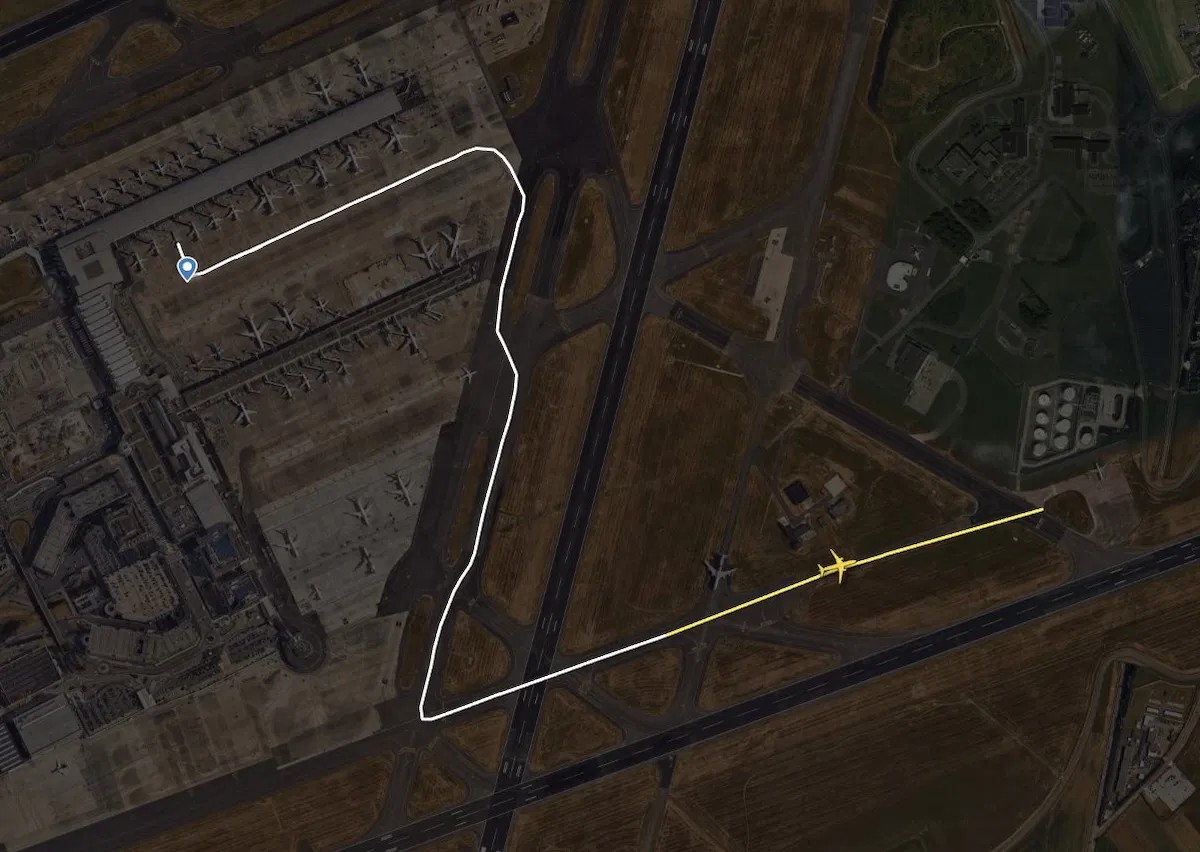
On Thursday, February 5, 2026, Scandinavian Airlines (SAS) flight SK2590 narrowly avoided a major incident at Brussels Airport (BRU). The Airbus A320neo, registered SE-ROM, carrying 135 passengers and crew, mistakenly initiated takeoff from a taxiway instead of the designated runway 7R. The aircraft accelerated to over 123 miles per hour (107 knots) before the pilots aborted the roll just meters from the taxiway’s end.
A Critical Misalignment
The flight, scheduled for a 470-mile journey to Copenhagen (CPH), was already delayed by two hours when the error occurred. Instead of aligning with the runway, the pilots turned prematurely, commencing takeoff on taxiways E1, F2, and V1 – parallel strips significantly shorter than a standard runway. As the aircraft gained speed, it became apparent that the remaining taxiway length was insufficient for a safe takeoff.
The incident highlights the importance of situational awareness in aviation, as the plane reached speeds approaching normal takeoff velocity (130+ knots) before the pilots initiated deceleration roughly 300 meters from the taxiway’s end. The aircraft ultimately stopped with overheated brakes, requiring passengers to disembark via stairs and board buses to the terminal.
A Close Call With Serious Consequences
The situation was particularly dangerous due to the taxiway’s proximity to the airport’s fuel tanks. An overrun or loss of control could have resulted in a catastrophic fire or explosion. Passengers described the abrupt deceleration as terrifying, and the incident serves as a stark reminder of the potential for disaster in even seemingly routine operations.
Weather conditions were not a factor, raising questions about pilot error and procedural failures. SAS has launched an internal investigation in collaboration with local authorities to determine the sequence of events.
Recurring Risk, Exceptional Severity
While attempts to take off from taxiways are rare, they do occur. This incident stands out due to its severity: the pilots allowed the aircraft to reach a dangerously high speed before aborting, leaving virtually no margin for error. The absence of available ATC audio adds to the mystery surrounding the decision-making process.
The fact that the pilots accelerated for an extended period before realizing their mistake is puzzling. Runways and taxiways are easily distinguishable by their lighting, and the taxiway in question lacked a clear centerline, suggesting a breakdown in basic visual cues.
The incident underscores the critical need for vigilance in pre-flight checks and adherence to standard operating procedures. A similar incident could have ended in tragedy.
This near disaster highlights how a single error can escalate into a life-threatening situation. Investigations will focus on why the pilots failed to recognize the misalignment early enough, and whether systemic factors contributed to the mistake.