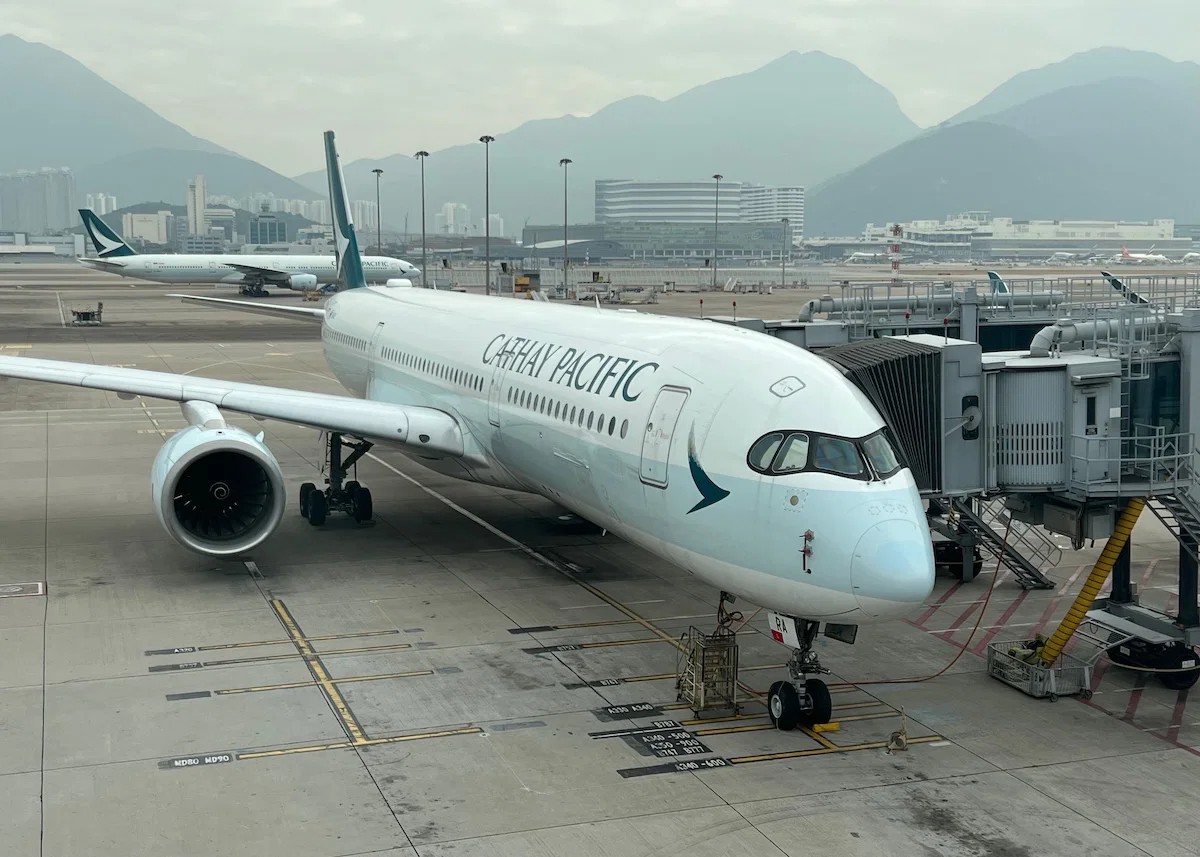
It’s July 4, 2025. Cathay Pacific flight CX256 is halfway to London from Hong Kong. It’s an Airbus A350. Big plane. Four crew members on board. Routine flight, supposedly. Then silence.
Romanian airspace turns quiet. No transmission.
The clock stops for air traffic control.
By 13:42, NATO calls up a Quick Reaction Alert. The alarm isn’t subtle. Two fighter jets peel away from the base at 13:51. They aren’t going for a joyride. They’re hunting for a ghost in the sky.
The interception
Hungary Defense Minister Romulusz Ruszin-Shendi spilled the details on Facebook. He said the interceptors spotted the Cathay Pacific jet at the Hungarian border. Just a visual warning was enough. A wing nudge, essentially. The commercial jet responded immediately. Radio chatter resumed.
The task is over… Thank you to the guardians
The fighters went back to Kecskes. The Cathay Pacific A35-100 kept flying toward London. Total flight time? 13 hours 40 minutes. A massive 5,900 miles. No deviation from the route. No safety threats to passengers. That’s the good part.
Hong Kong’s Civil Aviation Bureau isn’t having it though. They call it serious concern.
Cathay Pacific plays it cool. “Temporary loss of communication.” They claim standard protocols were followed. The plane stayed on course. Nothing exploded.
So what happened?
Did they fall asleep?
The radio didn’t break. The aircraft wasn’t failing mid-air. Contact came back the second soldiers appeared. This implies the silence wasn’t mechanical. It was human.
Maybe the pilots missed a frequency switch? Usually, that doesn’t trigger a fighter response. If ATC misses a call, they try the next frequency. It’s not usually a Code Red scenario.
Unless.
Unless both pilots are asleep.
Long haul flights use two crews. Four pilots total. Two fly while two sleep in jump seats behind them. It’s legal. It’s called controlled rest. But sometimes “rest” becomes “unconsciousness.”
Both pilots asleep? It happens.
Remember 2022? ITA Airways. Two pilots out cold on a transatlantic run. Ethiopian Airlines, shortly after. Two pilots slept through the entire descent over an airport at cruising altitude.
This case? Light out the whole way. Morning departure. Fresh legs.
Doesn’t fit the profile perfectly.
But does a technical malfunction fix itself the moment you fly alongside in a warplane? Unlikely.
We might be looking at a fatigue issue. A momentary blackout of responsibility. Or maybe a radio button simply refused to press down. The investigation is open. The answer remains stubbornly elusive.