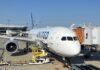
The aviation and travel sectors are currently navigating a complex landscape defined by rapid technological shifts and significant economic volatility. While new tools like Agentic AI promise to revolutionize how travel is booked and managed, traditional industry giants are simultaneously grappling with rising fuel costs and the struggle to return to pre-pandemic profitability.
The Rise of Agentic AI in Travel
Google Cloud is currently demonstrating the practical applications of Agentic AI —a more advanced evolution of artificial intelligence that doesn’t just answer questions but can autonomously execute complex tasks.
By focusing on the travel sector, Google is showcasing how these “agents” can move beyond simple chatbots to become active participants in the travel ecosystem. For airlines and Online Travel Agencies (OTAs), this technology represents a shift from mere automation to true digital transformation.
Why this matters:
In a highly competitive market, the ability to optimize revenue through AI-driven decision-making—such as dynamic pricing or automated customer service workflows—allows companies to remain agile. This technical agility is becoming a prerequisite for survival in an era of unpredictable consumer demand.
Economic Headwinds: Fuel and Profitability
Despite the technological optimism, the underlying economic reality for many carriers remains precarious.
The Fuel Crisis and Margin Pressure
Air New Zealand is currently facing significant headwinds due to the global fuel crisis. CEO Nikhil Ravishankar has expressed caution regarding the industry’s future, noting that the airline is struggling to recover the full costs associated with rising fuel prices.
This highlights a growing trend: even as travel demand remains high, the soaring cost of operations is squeezing profit margins, making long-term financial forecasting increasingly difficult.
The Long Road to Profitability
The recovery from the COVID-19 pandemic continues to be uneven. H World International has reported its first profitable year since its acquisition in 2019. This milestone follows a grueling period marked by restructuring costs and the heavy burden of lease obligations that had previously kept the company’s international arm in the red.
The Luxury Arms Race: Redefining First Class
While some airlines struggle with operational costs, others are doubling down on high-end differentiation to secure market share. Emirates is reportedly exploring the introduction of private en-suite bathrooms in its First Class cabins.
This move is part of a broader industry trend where premium carriers use luxury as a “brand