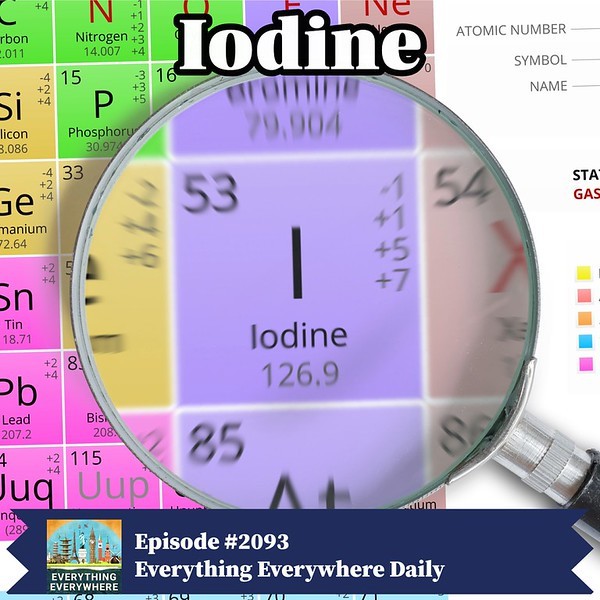
Iodine, an element often overlooked, is quietly essential to human survival. Its story is a blend of accidental discovery, critical health impacts, and surprising modern applications. Without it, entire populations historically suffered devastating consequences, while today, it underpins everything from thyroid function to the screens we stare at daily.
A Serendipitous Discovery in Napoleonic France
The tale of iodine begins in 1811 Paris, amid the Napoleonic Wars. Bernard Courtois, a saltpeter manufacturer, was crucial to France’s gunpowder production, extracting potassium nitrate from seaweed ash. While cleaning copper vats with sulfuric acid, an accidental excess of acid released a violet vapor that crystallized into a dark, metallic substance. Courtois recognized something new but lacked the means to fully investigate. Within two years, chemists Joseph Louis Gay-Lussac and Humphry Davy confirmed it as a new element, naming it “iode” (Greek for violet) and “iodine,” respectively.
This discovery was not intentional, but it revealed an element present in trace amounts yet powerful in its effects. The irony is that an element born from the demands of war would later become vital for peace-time health.
The Geography of Deficiency: A Global Health Crisis
Iodine isn’t uniformly distributed across the planet. It accumulates in coastal regions and floodplains due to marine sediment deposits, while inland mountainous areas—the Himalayas, Alps, Andes, and Great Lakes region—suffer severe deficiencies. This geographical imbalance has historically driven widespread health problems.
The human body needs only a tiny amount of iodine (15–20 milligrams total) for thyroid hormone production. These hormones regulate metabolism, heart rate, body temperature, and neurological development. Without enough iodine, the thyroid enlarges in a desperate attempt to compensate (goiter), and severe deficiency leads to intellectual disability in children (cretinism). Before modern intervention, goiter was so common in some regions it was considered normal.
From Saltpeter to LCD Screens: Iodine’s Industrial Reach
Beyond health, iodine has found its way into various industries. It’s a catalyst in plastics and synthetic fibers, used in pharmaceuticals, dyes, and even animal feed supplements. Surprisingly, it’s critical in manufacturing polarizing films for LCD screens: the thin filters in televisions, computers, and smartphones rely on iodine-treated polyvinyl alcohol to control light. As demand for flat-panel displays surged, iodine consumption rose accordingly.
Its historical use as a disinfectant—tincture of iodine—remains relevant today in modern surgical scrubs and water purification tablets. The same reactivity that makes it toxic in large doses allows it to kill bacteria, viruses, and fungi effectively.
The Salt Solution: A Public Health Triumph
The recognition that iodine deficiency caused goiter led to one of history’s most successful public health campaigns: iodizing table salt. The logic was simple: salt is universally consumed, centrally produced, and cheap to fortify. Adding a small amount of potassium iodide or iodate ensured even inland populations received adequate iodine.
Switzerland pioneered national-scale iodization in 1922, followed by the United States in 1924. Today, roughly 88% of the world’s population has access to iodized salt, dramatically reducing iodine deficiency disorders. While some specialty salts lack iodine, the overall impact has been transformative.
A Delicate Balance: Poison and Panacea
Iodine exemplifies the principle that “the dose makes the poison.” While essential in trace amounts, elemental iodine is highly reactive and toxic in larger quantities. This duality explains why it kills microorganisms yet sustains human life. The human body tightly regulates iodine intake, but imbalances can have severe consequences.
Iodine is a quiet reminder that often, the most significant forces are those we never notice—invisible in our food, required in the smallest amounts, yet capable of profoundly impacting populations. The smallest things can have the biggest effects.