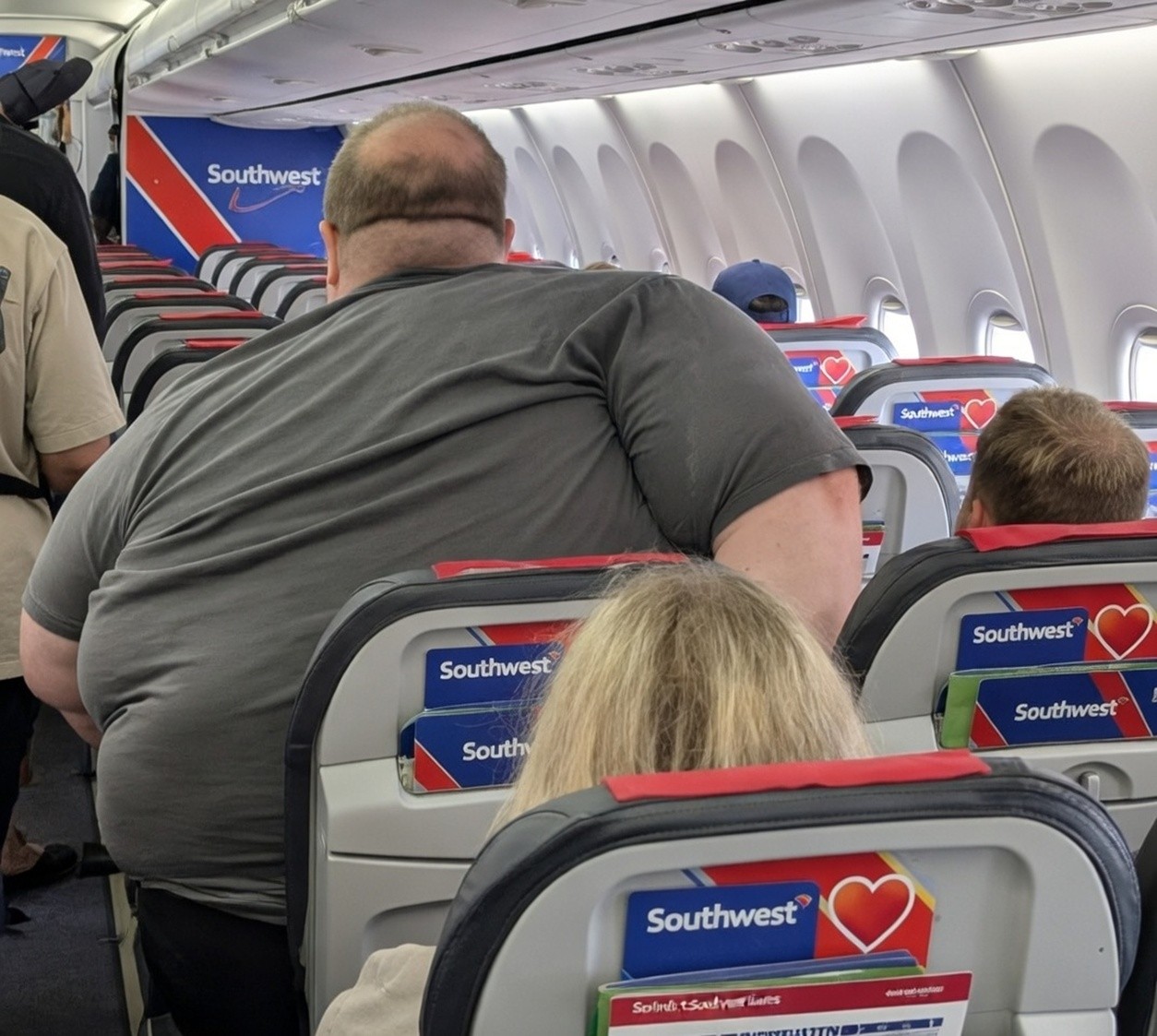
Southwest Airlines recently changed its policy regarding passengers who require more than one seat, shifting from a previously generous system to stricter enforcement. The airline now requires passengers who encroach on neighboring seats to purchase a second seat at full fare or risk being denied boarding or rebooked. This change, implemented on January 27, 2026, has led to complaints of humiliation and discrimination.
From Generous to Strict: A Policy Shift
Before the policy shift, Southwest allowed passengers to pre-purchase an extra seat with a refund option or request one at the airport if space was available. In some cases, passengers received automatic refunds even on fully booked flights, effectively granting larger passengers a free second seat. With its open seating arrangement, passengers could also pre-board and reserve the seat next to them.
The new policy eliminates these accommodations. Passengers deemed to need two seats must now buy them upfront at walk-up prices if an adjacent seat exists or face rebooking. Refunds are no longer automatic and are conditional on flight availability and fare class, requiring requests within 90 days.
Discretion and Enforcement Concerns
Southwest retains “sole discretion” in determining whether a passenger needs a second seat, leading to inconsistent enforcement and public shaming incidents documented on social media. Some passengers report being flagged arbitrarily, while others express frustration over the lack of clear guidelines or objective criteria for enforcement.
The policy’s inflexibility extends beyond individual passengers. Even when a passenger is allowed to board without purchasing a second seat, neighboring passengers may still suffer encroachment without recourse, as Southwest prohibits seat changes even when empty seats are available elsewhere on the plane.
Market Dynamics and Airline Revenue
The policy change reflects broader industry trends toward maximizing revenue per passenger. Airlines like United Airlines already offer the option to purchase extra seats, though the process is often convoluted. Companies like PlusGrade sell solutions for airlines to integrate seat purchases into the booking flow, but many airlines fail to implement these options effectively, leaving potential revenue untapped.
The shift also highlights a tension between passenger comfort and airline profitability. While some passengers advocate for wider aisles and more generous seating policies, airlines face economic pressures to increase seating density and generate higher revenue from each flight.
The Future of Airline Seating
The controversy surrounding Southwest’s new policy raises questions about fairness, accessibility, and the evolving landscape of airline travel. As weight-loss drugs like Ozempic become more accessible, demand for larger seats may decrease, potentially leading to further seat shrinkage and increased revenue per passenger. However, regulatory constraints regarding evacuation standards may limit how aggressively airlines can reduce seat size.
The policy shift underscores a fundamental trade-off: while some passengers may benefit from generous accommodations, airlines must balance these considerations with economic realities and the need to maximize revenue. The debate over seating fairness is likely to persist as long as airlines continue to grapple with these competing priorities.