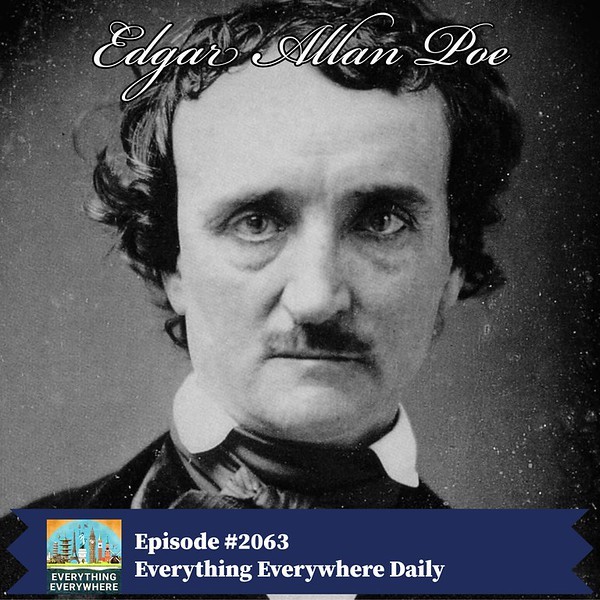
Edgar Allan Poe remains one of the most significant figures in American literature. His work reshaped horror, crime writing, and the short story form itself. Despite a life plagued by poverty, loss, and professional setbacks, Poe forged an enduring legacy through masterpieces like “The Raven,” “The Tell-Tale Heart,” and “The Fall of the House of Usher.” His poetry delved into obsession and grief, while his tales explored the darkest recesses of the human psyche.
Early Life and Instability
Born in Boston in 1809, Poe’s childhood was marked by tragedy. His father abandoned the family when he was a year old, and his mother died from tuberculosis the following year, leaving him orphaned. He was then taken in by John Allan, a wealthy merchant who never formally adopted him but provided a tumultuous upbringing. Allan oscillated between strict discipline and indulgence, yet ensured Poe received a basic education.
The Allans spent five years in the UK, where Poe attended school in Scotland and England before returning to the United States. In 1826, Poe briefly enrolled at the University of Virginia, but his gambling debts and strained relationship with Allan forced him to drop out. He moved back to Boston and worked odd jobs while struggling financially.
Military Service and Early Writing
In 1827, desperate for stability, Poe enlisted in the army under the alias Edgar A. Perry. He served for two years, earning a promotion to sergeant major, but sought an early discharge. To achieve this, he revealed his true identity to his commanding officer, hoping for reconciliation with Allan. This effort failed until Allan’s wife died in 1829.
During his military service, Poe published his first collection of poetry, Tamerlane and Other Poems, under the pseudonym “A Bostonian.” The book received little attention at the time but now holds immense value: a copy sold for $662,500 in 2009. Poe’s early writing foreshadowed his later mastery of atmosphere and psychological depth.
West Point and Disownment
With Allan’s reluctant support, Poe attempted to attend the United States Military Academy at West Point in 1830. However, his defiance of Allan and his foster father’s infidelities led to a final, bitter break. Allan disowned Poe, who then deliberately court-martialed himself to secure a dismissal from the academy.
Professional Struggles and Personal Tragedy
After being discharged, Poe moved to New York and published Poems, funded by donations from fellow cadets. He then returned to Baltimore, where his brother Henry succumbed to illness. This loss pushed Poe further into a life of writing, though financial success remained elusive.
Poe secured a position at the Southern Literary Messenger in Richmond, but his alcoholism led to his dismissal. In 1835, he married his 13-year-old cousin, Virginia Clemm. Their relationship remains shrouded in mystery, though Poe often referred to her affectionately as “Sissy”.
The Birth of Detective Fiction and Rising Fame
In 1837, Poe moved to Philadelphia and penned “The Murders in the Rue Morgue,” widely considered the first modern detective story. This tale introduced the archetype of the “eccentric genius” detective, later popularized by Sherlock Holmes. Poe also experimented with early science fiction, though his reputation rests primarily on his horror works.
“The Raven,” published in 1845, cemented Poe’s fame. The poem’s themes of lost love and melancholy resonated with audiences, making Poe a household name. Despite this success, Poe struggled financially and continued to battle personal demons.
Final Years and Mysterious Death
Virginia’s death from tuberculosis in 1847 plunged Poe into further despair. He descended into drug and alcohol abuse, pursued multiple romantic interests, and became increasingly erratic. He died in Baltimore in 1849 at the age of 40 under mysterious circumstances.
Found delirious and wearing unfamiliar clothing, Poe died at Washington University Hospital after uttering the cryptic word “Reynolds.” The cause of death was officially listed as “phrenitis” (brain inflammation), but the true reason remains unknown. The mystery surrounding his death has only added to his legend.
A Lasting Influence
Edgar Allan Poe’s influence on literature endures. He revolutionized the horror genre, pioneered detective fiction, and explored the darker aspects of human psychology. His techniques – rhythmic language, atmospheric description, psychological complexity – continue to inspire writers like H. P. Lovecraft and Stephen King. Poe’s legacy is secure as one of America’s most haunting and enduring literary voices.