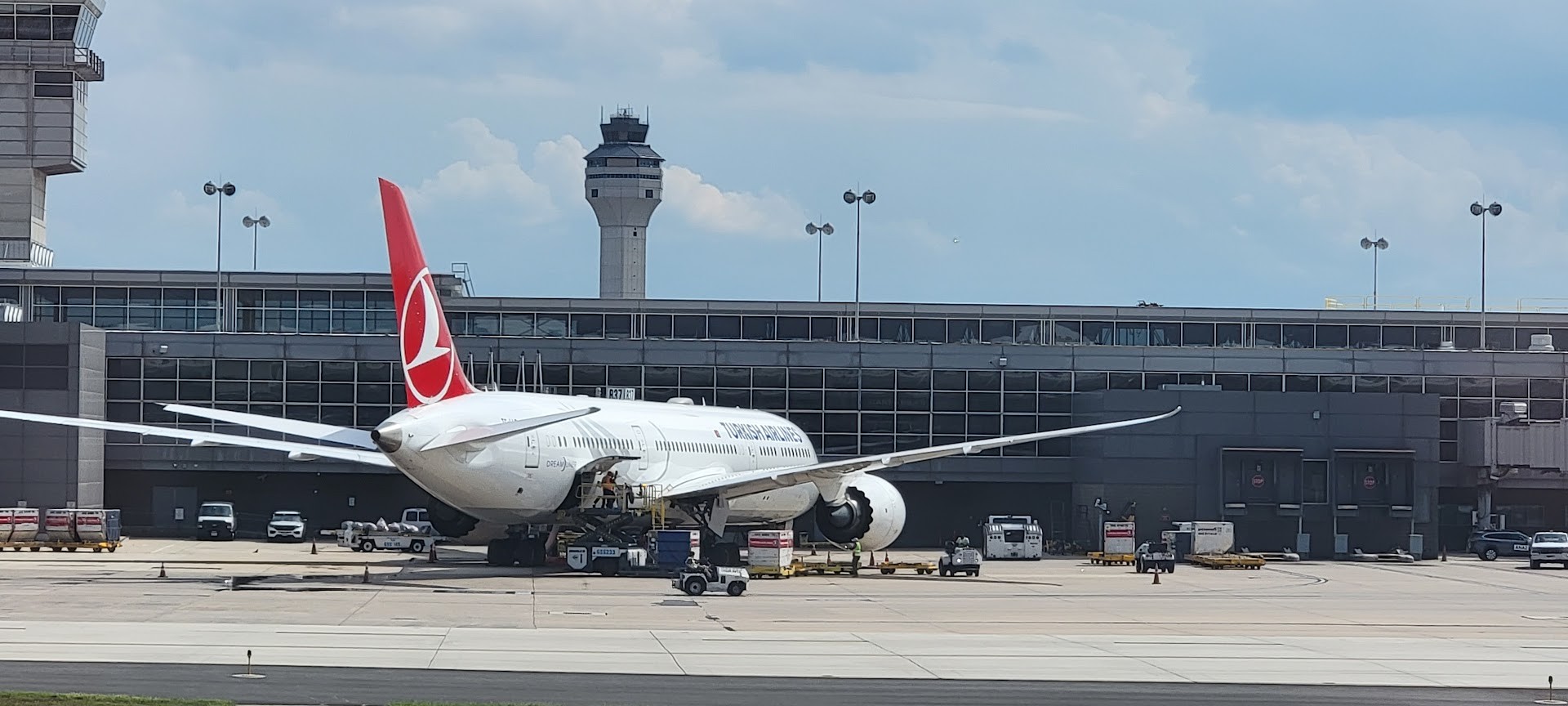
In a sudden move that has caught the aviation industry by surprise, Turkish Airlines has replaced its top leadership. Board Chair Ahmet Bolat and CEO Bilal Ekşi have been removed from their positions, replaced by Murat Şeker and Ahmet Olmuştur, respectively.
While the airline officially framed the departures as “retirements,” the timing and circumstances suggest a much deeper strategic or political shift within the national carrier.
A High-Stakes Transition
The abruptness of the change is underscored by several key details:
– Lack of Scandal: There have been no reports of financial misconduct or operational failures. In fact, Turkish Airlines has been performing exceptionally well, reporting a $2.2 billion operating profit on $24 billion in revenue for 2025.
– Political Proximity: The new leadership met with President Erdoğan at the presidential complex just one day before the changes were announced.
– The “Leak”: The news was not broken by the airline itself, but rather leaked prematurely by the Turkish National Olympic Committee.
Given that the Turkish government owns more than 49% of the airline, Turkish Airlines operates not just as a commercial entity, but as a strategic instrument of the state. This makes leadership changes highly sensitive to the political climate of the country.
New Leadership: Continuity Through Expertise
Despite the sudden nature of the exit, the profiles of the incoming leaders suggest a desire for stability and specialized management:
Murat Şeker (New Board Chair)
A former World Bank economist, Şeker brings deep financial expertise. Having previously served as the CFO of Turkish Airlines, his appointment signals a finance-driven approach to the board’s oversight.
Ahmet Olmuştur (New CEO)
Olmuştur is an industry veteran who rose through the ranks of Turkish Airlines, starting in the call center. His experience spans revenue management, pricing, distribution, and sales. His appointment suggests a focus on commercial optimization and operational continuity.
The Global Context: A Wave of Aviation Turnover
The leadership change at Turkish Airlines does not exist in a vacuum. The aviation industry is currently experiencing a massive wave of CEO departures and transitions across the globe. This trend suggests a period of significant restructuring or generational shifts within major carriers.
Recent leadership changes include:
– IndiGo: Pieter Elbers to be succeeded by Willie Walsh (March 2026).
– Air India: Campbell Wilson resigned (April 2026).
– Virgin Atlantic: Shai Weiss stepping down (Dec 2025), replaced by Corneel Koster.
– Qatar Airways Group: Hamad Ali Al-Khater appointed Group CEO (Dec 2025).
– Air Canada: Michael Rousseau to depart in late 2026, a move influenced by regional political considerations in Quebec.
Other notable transitions have occurred at Frontier Airlines, Avianca, Malaysia Aviation, Eurowings, SunExpress, Transavia, airBaltic, Air Europa, ANA, Flair Airlines, Air Niugini, Air Tahiti Nui, and Cape Air.
The sheer volume of executive turnover across diverse markets suggests that the aviation sector is navigating a period of intense recalibration, whether driven by economic pressures, post-pandemic restructuring, or shifting political landscapes.
Conclusion
The leadership overhaul at Turkish Airlines appears to be a highly orchestrated move that prioritizes financial and commercial expertise. While the airline remains profitable, the alignment between the new appointments and state interests highlights the carrier’s role as a vital pillar of Turkish national policy.