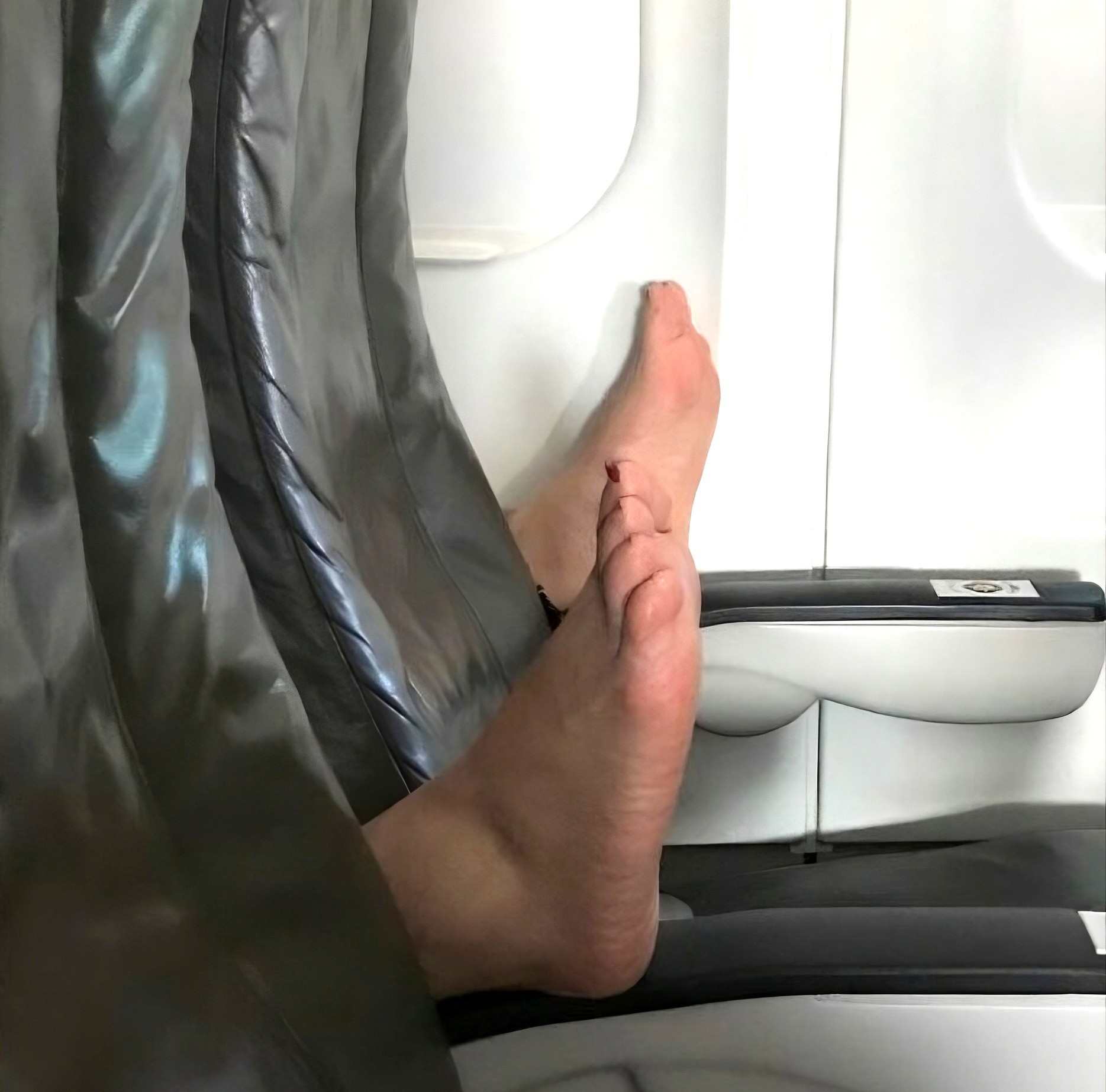
A recent viral report from a passenger on an American Airlines flight has reignited a long-standing debate regarding personal space and etiquette in the skies. A traveler in First Class reported a recurring breach of boundaries when a fellow passenger repeatedly placed her feet on his armrest, despite his initial attempts to move them.
The Incident: A Breach of Personal Space
The conflict began when the passenger noticed a fellow traveler using his armrest as a footrest. After he physically moved her feet away, the passenger claimed the woman simply relocated them to the window ledge of his seat just five minutes later.
While seemingly a minor grievance, this incident highlights a growing tension in modern aviation: the struggle to maintain personal boundaries in high-density environments. In premium cabins, where passengers pay a significant markup for extra space and privacy, these “micro-aggressions” regarding personal territory can lead to heightened frustration.
The Internet’s “Solutions” to In-Flight Etiquette
Following the report on Reddit, the online community responded with a mix of humor and increasingly absurd suggestions for handling such encounters. These “solutions” range from subtle social cues to outright chaos:
- Physical deterrents: Using elbows to nudge feet away or reclining the seat “hard and fast.”
- Social discomfort: Using loud coughing, sneezing, or “accidentally” spraying cologne near the offender.
- Psychological warfare: Acting as if the behavior is welcomed—such as commenting on “selling foot pics”—to make the offender feel deeply uncomfortable.
- Medical concern: Pretending to be a doctor and expressing concern about potential infections to shame the passenger into moving.
While these suggestions are clearly satirical, they reflect a genuine sense of helplessness many travelers feel when faced with blatant disregard for cabin etiquette.
A Pattern of Cabin Disruptions
This is not an isolated phenomenon. The aviation industry has seen a documented rise in “air rage” and bizarre passenger behaviors. The lack of social boundaries in confined spaces has led to several notable precedents:
- Extreme Etiquette Breaches: Passengers have been known to clip their nails mid-flight, paint toenails, or even engage in indecent exposure.
- Aggressive Escalations: In extreme cases, disputes over hygiene or personal space have escalated into physical violence once passengers disembark.
- Airline Intervention: To manage these tensions, airlines have occasionally resorted to unconventional methods. In one reported instance, a United Airlines flight attendant reportedly offered a passenger a $1,000 voucher just to remove their feet from a tray table.
Why This Matters
The rise in these incidents points to a larger trend in the post-pandemic travel era: a decline in “social contract” adherence. As air travel becomes more crowded and stress levels rise, the invisible rules of shared space—such as respecting armrests and personal bubbles—are increasingly being ignored.
For airlines, this presents a growing operational challenge. They must balance the comfort of paying customers with the need to manage disruptive or unhygienic behavior without escalating conflicts into safety risks.
As cabin density increases and passenger stress levels fluctuate, the battle for the armrest is becoming a microcosm of the larger struggle for civility in public spaces.
Conclusion
The incident underscores the growing friction between passenger expectations and social etiquette in confined spaces. As airlines struggle to police behavior, the line between a minor annoyance and a major disruption continues to blur.