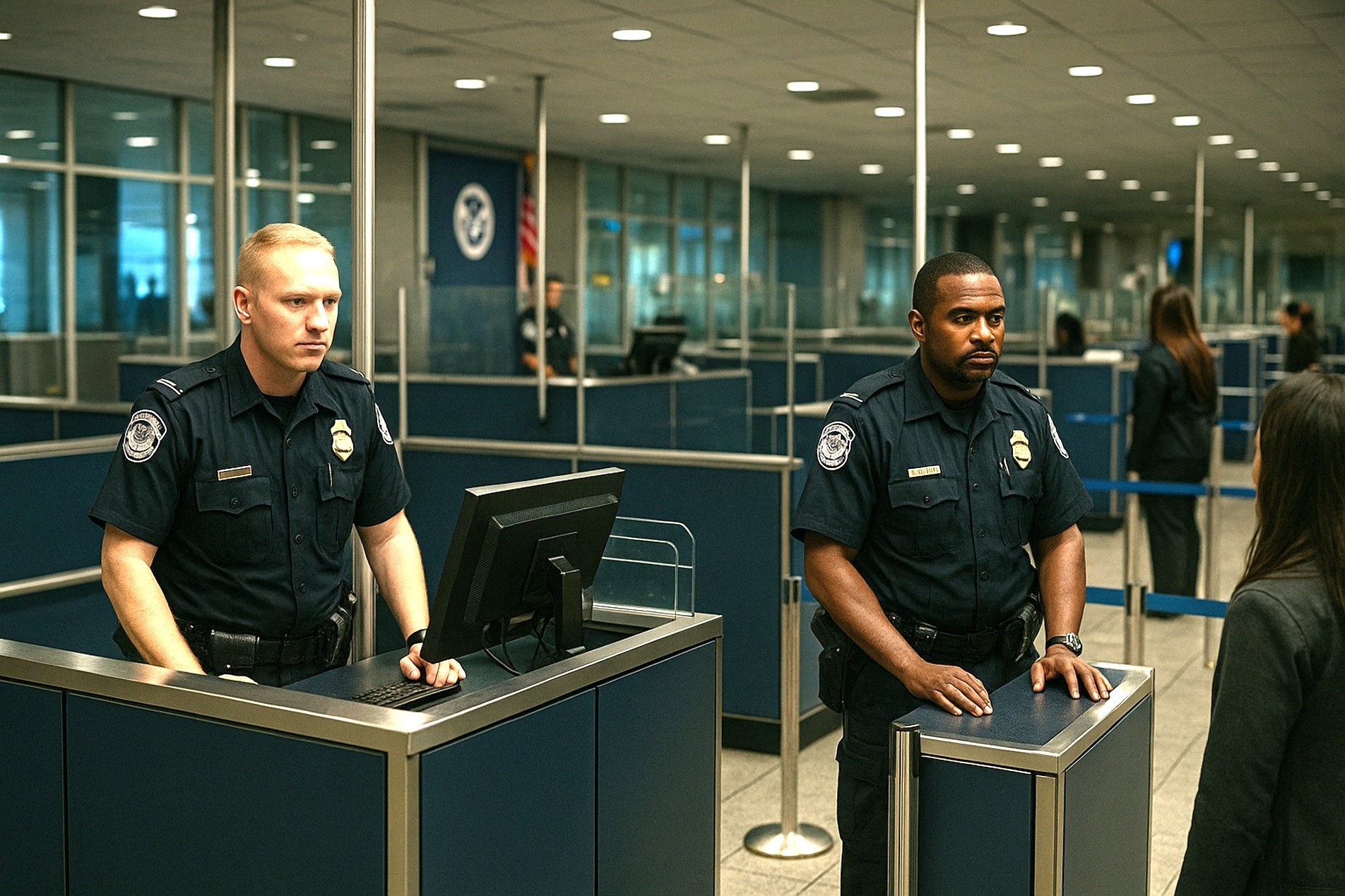
Department of Homeland Security (DHS) Secretary Markwayne Mullin has suggested a radical shift in federal operations: removing Customs and Border Protection (CBP) officers from airports located in “sanctuary cities.”
The proposal aims to restrict international flight access to these hubs, ostensibly as a response to Democratic lawmakers’ refusal to fund the DHS. However, the plan raises significant logistical, legal, and economic questions that could disrupt the entire American aviation landscape.
The Scope of the Proposal
If implemented, the withdrawal of federal inspection services would effectively end all international arrivals at several of the nation’s most critical transit hubs. The list of potentially affected airports includes:
- New York: JFK
- Los Angeles: LAX
- Chicago: O’Hare
- San Francisco: SFO
- Other major hubs: Seattle, Denver, Boston, Philadelphia, Portland, and Newark.
Because international flights require a Federal Inspection Station (FIS) to process arriving passengers, the removal of CBP officers would make it impossible for airlines to land international flights at these locations. While flights with pre-clearance (where travelers clear customs at their departure point) might continue, they would function essentially as domestic routes, stripping these airports of their status as global gateways.
Logistical and Jurisdictional Flaws
Critics point out several fundamental issues with the plan’s logic, particularly regarding geography and jurisdiction:
- Misaligned Jurisdictions: Many “sanctuary cities” do not actually host the airports in question. For example, Washington National Airport is located in Arlington, Virginia, not D.C., and San Francisco International (SFO) is located in unincorporated San Mateo County.
- Regional Impact: Major hubs like LAX and JFK serve massive metropolitan regions far beyond city limits. A decision targeting a specific city would inadvertently disrupt travelers from surrounding suburbs and neighboring counties who rely on these gateways.
- The “Self-Own” Dilemma: The proposal seeks to penalize local governments for non-cooperation with immigration enforcement. However, by removing federal inspection points, the administration would be targeting U.S. citizens, airlines, cargo shippers, and airport employees rather than the municipal officials making policy decisions.
Economic and Aviation Consequences
The ripple effects of such a move would extend far beyond passenger travel, potentially destabilizing the national economy:
1. Disruption of Global Supply Chains
The Port of Los Angeles alone handles roughly 31% of all U.S. containerized international shipping. Removing customs capabilities from major coastal hubs would create massive bottlenecks in cargo movement, affecting retailers, exporters, and consumers nationwide.
2. Airline Operational Chaos
Airlines operate on complex, interconnected schedules. If international arrivals are banned at major hubs, airlines would face a crisis:
– Where do the flights go? Redirecting hundreds of international flights to secondary airports would be costly and inefficient.
– The Connection Problem: International travelers often use these hubs to connect to domestic flights. Without international arrivals, the “hub-and-spoke” model used by major carriers would collapse, potentially requiring massive government subsidies to prevent airline insolvency.
Legal Context: The “Anti-Commandeering” Principle
The plan also faces a constitutional hurdle. While the federal government can withhold certain funds to influence state policy, the “anti-commandeering” doctrine prevents the federal government from directly ordering state or local officials to enforce federal laws. Targeting the federal infrastructure (Customs) to punish a state’s refusal to assist in immigration enforcement is a highly unconventional and legally untested approach.
Conclusion: While intended as a political lever against sanctuary city policies, the proposal to withdraw Customs services threatens to disrupt global trade, cripple airline networks, and penalize the very American citizens and businesses the administration seeks to protect.