


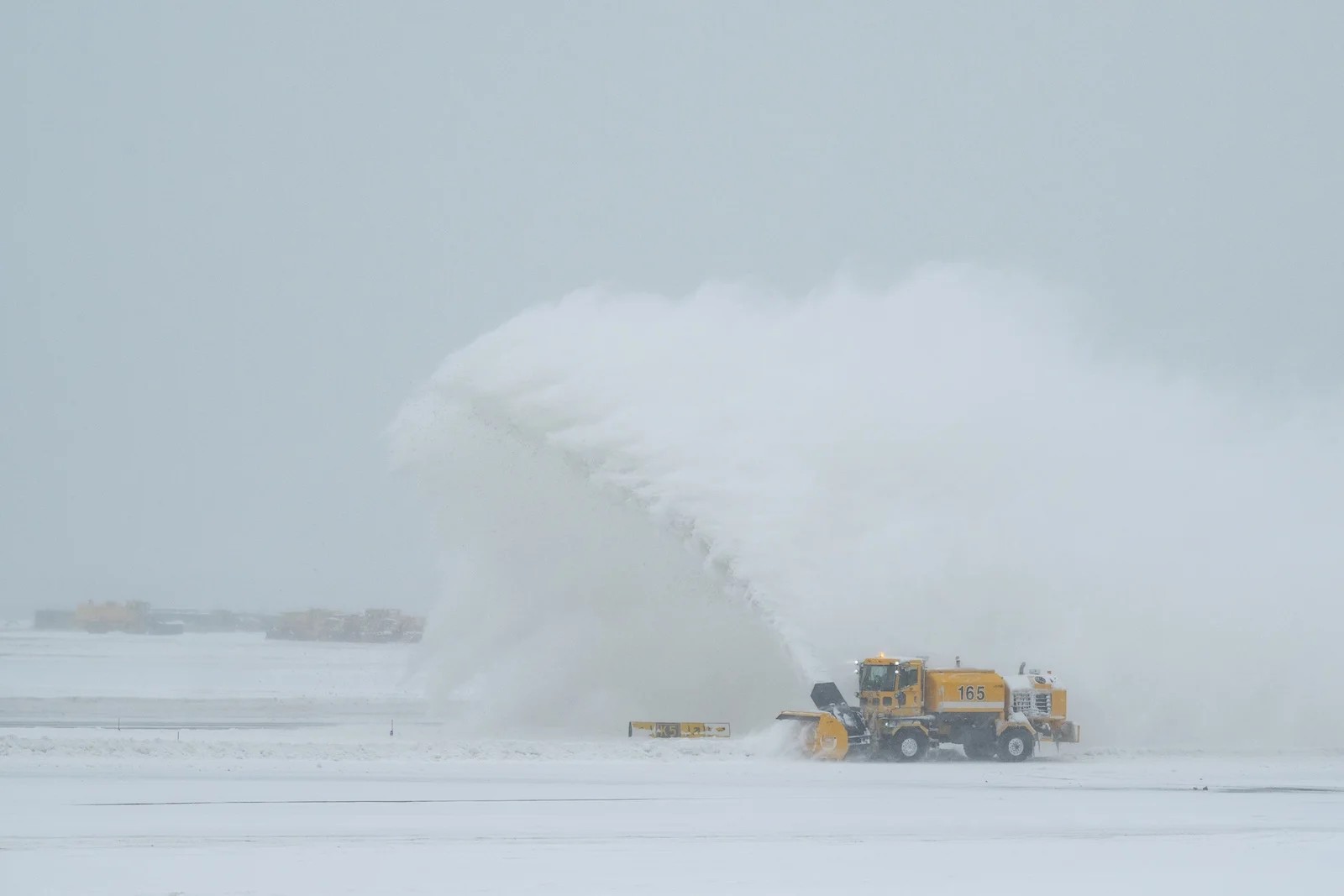
A powerful winter storm, dubbed “Gianna,” has triggered widespread flight cancellations across the East Coast for the second consecutive week, leaving millions of travelers stranded or delayed. As of Sunday morning, airlines had already canceled over 3,700 flights, with disruptions expected to continue in the coming days. The severe weather, particularly heavy snowfall in the Carolinas, has crippled major airport hubs, causing ripple effects across the national air travel network.
Major Airports Face Crippling Disruptions
American Airlines bore the brunt of the cancellations, axing over 425 flights – approximately 13% of its scheduled departures. The carrier’s Charlotte Douglas International Airport (CLT) hub was particularly hard hit, with 86% of Saturday departures canceled and over half of Sunday flights already scrapped. This latest storm is especially problematic for American, which had just begun to recover from major disruptions last weekend at several hubs.
Delta Air Lines also faced significant disruptions, canceling over 500 flights on Saturday due to severe conditions at its Atlanta Hartsfield-Jackson International Airport (ATL) mega-hub. While cancellations dropped on Sunday as operations stabilized, the impact was substantial. Raleigh-Durham International Airport (RDU) in North Carolina was the third most affected airport this weekend.
What Passengers Need to Know
Airlines have issued travel advisories allowing passengers to change flights without fees, even on restrictive basic economy tickets. The U.S. Department of Transportation mandates refunds for canceled or significantly delayed flights (at least three hours for domestic, six for international) if passengers choose not to travel.
Travelers with upcoming trips should closely monitor weather forecasts at their departure, connection, and destination airports. Disruptions can spread beyond the storm’s immediate path, affecting even airports with clear conditions.
How to Mitigate Travel Chaos
To avoid airport chaos:
- Change flights proactively: Utilize airline travel waivers to rebook without penalties.
- Use airline apps: Skip long customer service lines by rebooking through mobile apps.
- Consider alternate routes: If connecting through Atlanta or Charlotte, explore rerouting via less-affected hubs.
- Document expenses: Keep receipts for potential reimbursement if stranded, especially if using travel credit cards with trip insurance.
While airlines promise vouchers for flight disruptions, these are typically reserved for issues caused by the carrier (such as maintenance) and rarely apply to weather-related disruptions.
The widespread travel chaos underscores the fragility of air travel in the face of extreme weather. Passengers should remain vigilant, proactive, and informed to navigate these disruptions effectively.


