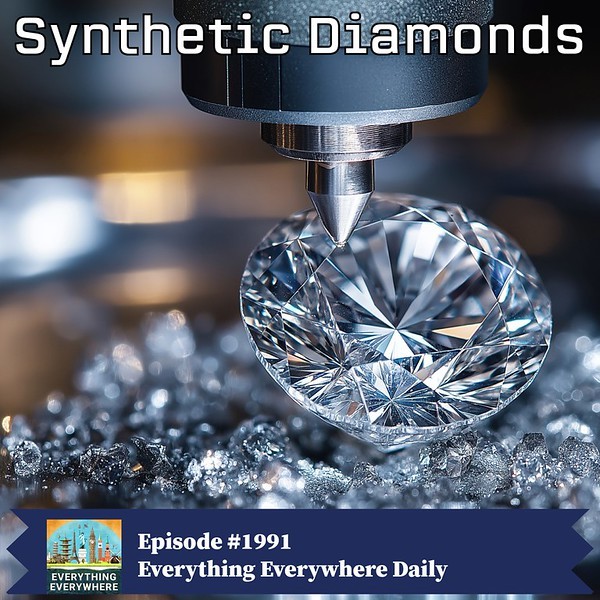
For millennia, diamonds have captivated humanity with their brilliance and rarity. But the story of diamonds is undergoing a dramatic shift, as lab-grown synthetic diamonds disrupt a multi-billion dollar industry and unlock new technological possibilities. This isn’t just about cheaper bling; it’s about reshaping materials science, manufacturing, and even the very definition of value.
The Natural Rarity & The Quest for Replication
Diamonds, composed of pure carbon, are renowned as the hardest naturally occurring substance. Their formation requires immense pressure and heat found deep within the Earth, making natural diamonds exceptionally scarce. This scarcity has historically driven their high value. However, the inherent limitations of natural supply spurred decades of research into artificial diamond creation.
The breakthrough came in 1954 with General Electric’s successful synthesis of diamonds using high-pressure, high-temperature (HPHT) techniques—mimicking Earth’s conditions in a lab. This was not merely a scientific feat, but the beginning of a revolution. The ability to reliably create diamonds artificially challenged the foundations of the diamond market, and opened the door to a world of industrial and commercial applications previously limited by cost and availability.
Two Paths to Creation: HPHT vs. CVD
Today, synthetic diamonds are produced primarily through two methods: HPHT and Chemical Vapor Deposition (CVD).
- HPHT simulates the extreme pressures and temperatures of diamond formation, dissolving carbon in a molten metal catalyst before precipitating it onto a seed crystal. It’s a brute-force, engineered version of nature’s process.
- CVD, a more modern approach, grows diamonds from a carbon-bearing gas in a vacuum chamber. Energized by plasma, carbon atoms deposit onto a seed crystal layer by layer.
Both methods yield diamonds chemically identical to their natural counterparts. The critical difference is origin, not substance.
The Disruption of the Diamond Market
For decades, synthetic diamonds remained largely confined to industrial uses. But in the late 1990s and accelerating through the 2010s, gem-quality lab-grown diamonds became commercially viable. This shattered the myth of scarcity in luxury jewelry.
The price disparity is now staggering. A natural diamond costing $4,000 to $6,000 can be replicated in a lab for $400 to $800—a 70-90% price difference. This isn’t just about affordability; it’s about economics. Unlike mined diamonds, synthetic diamonds behave like manufactured goods: as production scales, costs plummet.
The diamond industry has responded by repositioning natural diamonds as luxury goods defined by origin and narrative rather than material properties. Certification schemes now emphasize provenance, and marketing focuses on “billions of years of formation” to justify higher prices. But the underlying truth remains: chemically, they are identical.
Beyond Bling: Industrial Applications Exploding
The real story isn’t just about jewelry. Synthetic diamonds are poised to revolutionize numerous industries.
- Cutting & Grinding: Diamond abrasives are essential in manufacturing, oil drilling, and even electronics, where they slice silicon wafers with unparalleled precision.
- Heat Management: Diamond’s exceptional thermal conductivity makes it the ultimate heat spreader for high-power electronics. Imagine diamond-cooled CPUs… this is becoming increasingly viable as costs fall.
- Customizable Defects: Researchers are now manipulating diamond’s properties by introducing controlled impurities (nitrogen, boron, etc.). This allows for tailored color in jewelry, but more importantly, creates specialized semiconductors and sensors with unmatched performance.
The Future is Synthetic
Production of synthetic diamonds has exploded in the last two decades, increasing from negligible quantities to over ten million carats annually. As techniques improve and costs decline, diamonds will infiltrate more everyday applications.
The era of synthetic diamonds isn’t just about cheaper jewelry; it’s about unlocking a new era in materials science, where one of Earth’s most prized substances becomes accessible, customizable, and integral to the future of technology. The diamond industry has been disrupted, and the implications extend far beyond the sparkle of a gemstone.