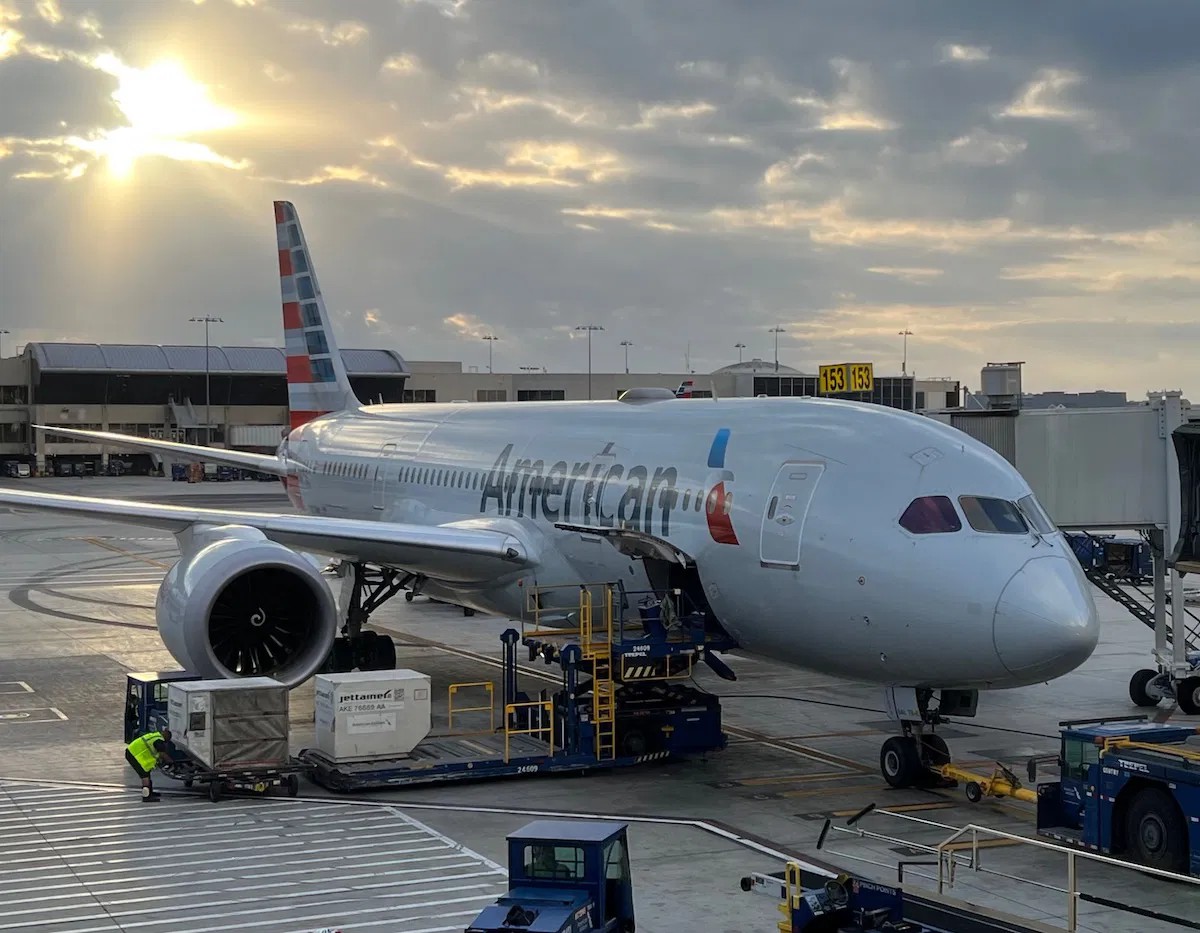
American Airlines recently announced its 2025 employee profit sharing distribution, revealing a meager 0.3% payout. This starkly contrasts with industry leaders Delta and United, and underscores a growing disparity in financial performance and employee compensation within the US airline sector.
Performance Discrepancies and Profit Sharing
The numbers speak for themselves: American Airlines lags behind competitors in profitability, resulting in a significantly lower profit sharing pool. For employees earning $50,000 annually, this translates to a bonus of just $150. This is a sharp decline from the 1-1.5% profit sharing received in 2024, and a far cry from the 3% peak seen in 2016.
By comparison, Delta Air Lines is distributing 8.9% of eligible pay, roughly 30 times higher than American’s figure. This difference isn’t merely numerical; it reflects a fundamental gap in company performance and executive compensation strategies. While Delta employees may enjoy substantial bonuses, American employees are left with a token gesture.
Executive Pay vs. Employee Rewards
The disparity extends to the executive level. American Airlines CEO Robert Isom earned $15.6 million in 2024 and $31.4 million in 2023. This raises questions about the board’s tolerance for underperformance and the alignment of incentives between leadership and the workforce.
The current structure appears to reward executives generously despite lagging financial results, further fueling employee frustration. One potential solution—tying executive pay directly to profit sharing percentages—would force leadership to align its interests with those of the broader workforce.
A Systemic Issue in Corporate America
The American Airlines situation is symptomatic of a larger trend in US corporate governance: a disconnect between executive compensation and company performance. Boards often fail to hold underperforming leaders accountable, perpetuating a cycle of stagnation and employee dissatisfaction.
This misalignment creates a demotivating environment for frontline staff, who are unlikely to see meaningful financial rewards for their efforts. American Airlines appears stuck in a high-cost, low-reward model, failing to capitalize on its loyalty program effectively.
Ultimately, the 0.3% profit sharing payout highlights a deeper issue: American Airlines’ leadership struggles to develop a cohesive strategy, leaving employees with minimal financial benefit while executives continue to reap substantial rewards.