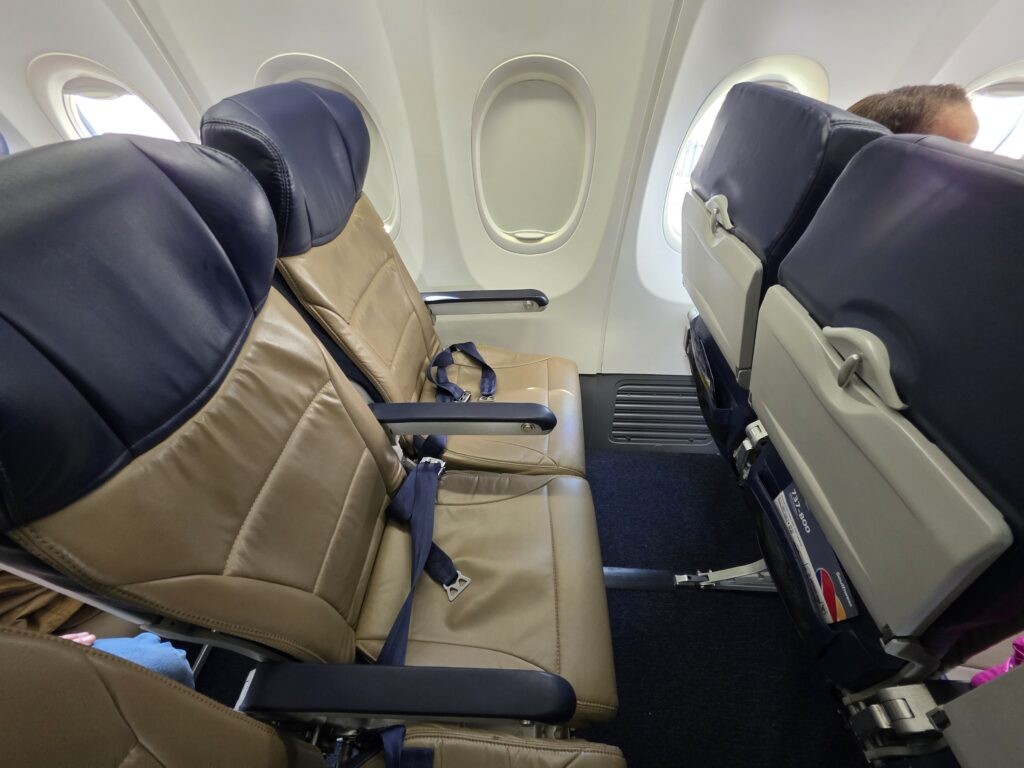
Southwest Airlines maintains a rigid seating policy that prevents passengers from moving to unoccupied seats, even if they’ve paid for preferred boarding or specific seat assignments. This was illustrated recently when a passenger on an emergency row was told to return to their originally assigned seat after briefly moving to an empty window seat.
The airline’s first-come, first-served boarding process is the core issue. Passengers board in groups (A, B, C), and those with earlier boarding groups have the advantage of claiming empty seats. However, even passengers who paid extra for preferred seating are not permitted to relocate once a flight attendant has verified seat assignments.
The policy is frustrating for travelers, particularly on flights with open seats. One passenger reported paying for an emergency row seat only to find themselves wedged between two other travelers while adjacent rows remained sparsely occupied. The airline does not accommodate requests to spread out, even when seats are available.
This is a unique aspect of Southwest’s business model. Other airlines generally allow passengers to move to unoccupied seats after boarding is complete. Southwest, however, enforces strict adherence to assigned seating. This can be particularly confusing for international travelers unfamiliar with the airline’s practices, as demonstrated by a European passenger who inquired about why they were asked to move back to their assigned seat.
Southwest’s seating policy prioritizes operational efficiency over passenger comfort, leading to situations where paid seats do not guarantee flexibility or additional space.