Amsterdam’s history is deeply intertwined with the tragedy of the Holocaust. During World War II, the city’s vibrant Jewish community was systematically dismantled. Of the approximately 140,000 Jews living in the Netherlands before the war, more than 100,000 were deported and murdered by the Nazis. This devastation left an indelible mark on the city’s landscape and its collective memory.
The Tragic History of Nieuwe Keizersgracht
One of the areas hardest hit by this persecution was the Nieuwe Keizersgracht, a canal located southeast of the city center. Constructed in the 17th century, this waterway became a central artery of Amsterdam’s historic Jewish Quarter, often referred to locally as the Joodse Keizersgracht (Jewish Keizersgracht).
The buildings lining the south side of the canal are centuries old, having housed generations of Jewish families. However, during the Nazi occupation, these homes became targets. The residents were stripped of their rights and possessions. In a devastating blow to this specific community, over 200 Jewish residents living along this single canal were deported to concentration camps or murdered directly by the occupying forces.
From Memory to Monument
In the decades following the war, Amsterdam has worked tirelessly to preserve its Jewish heritage and honor those lost. While national and citywide memorials exist, there has also been a growing movement toward hyper-local remembrance. Communities sought to ensure that the stories of victims were tied to the specific streets and canals where they once lived.
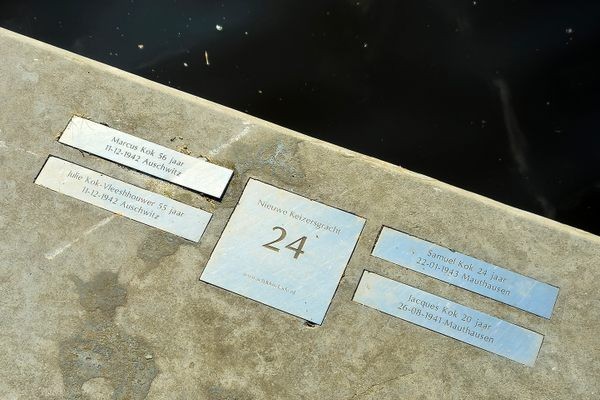
In 2012, current residents of the Nieuwe Keizersgracht organized a grassroots effort to create a memorial dedicated specifically to the victims from their neighborhood. The result was the Schaduwkade, unveiled in 2013.
Understanding the ‘Shadow Wall’
The name Schaduwkade translates to “Shadow Quay” or “Shadow Embankment,” though it is frequently referred to in English as the “Shadow Wall.” The memorial is located on the north side of the canal, directly opposite the historic buildings on the south side where the victims once resided.
The design is subtle yet profound, consisting of metal markers set into the ground:
- Square markers list the house numbers of the buildings on the opposite bank.
- Smaller metal markers list the names of individual residents who perished in the Holocaust, along with their dates of death and the locations where they died.
This layout creates a powerful visual and emotional connection between the present-day canal edge and the tragic history of the buildings across the water. It serves as a physical bridge between the living and the lost.
A Place for Reflection
While the Schaduwkade may not draw the crowds of Amsterdam’s larger tourist attractions, it offers a poignant space for quiet reflection. It reminds visitors that the Holocaust was not just a distant historical event, but a tragedy that unfolded in specific homes, on specific streets, and affected real families in their immediate neighborhoods.
The memorial stands as a testament to the power of local memory, ensuring that the individual stories of the 200+ victims from Nieuwe Keizersgracht are never forgotten.
By grounding history in place, the Schaduwkade invites passersby to pause and consider the human cost of hatred, transforming a quiet canal embankment into a lasting tribute to resilience and remembrance.