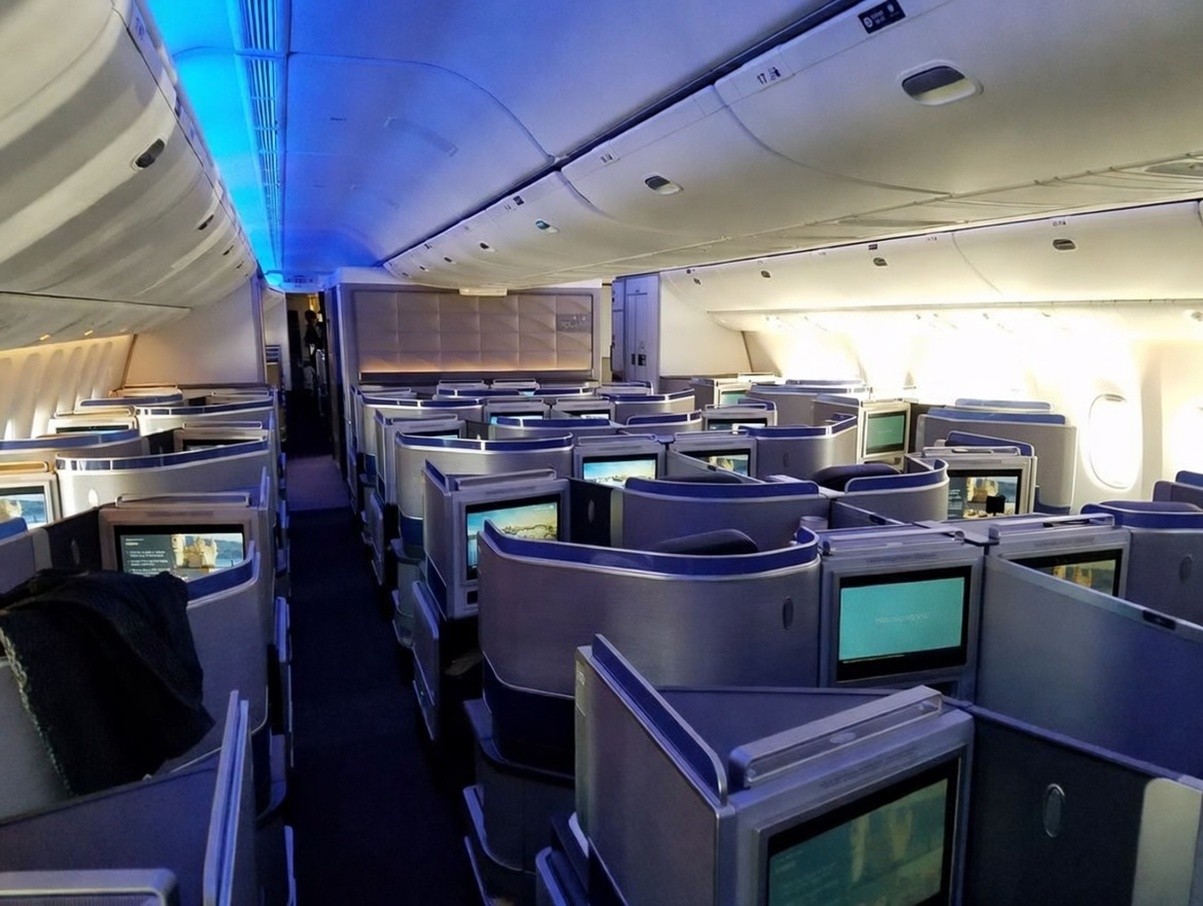
United Airlines is implementing a series of significant restrictions on its lowest-tier premium offerings. While initial reports focused on reduced amenities, new details reveal that “Basic Business” and “Basic Premium Economy” tickets will also suffer from heavily restricted mileage earning and status progression.
This move marks a strategic shift in how the airline treats its entry-level premium passengers, effectively creating a “stripped-down” version of the business class experience that offers far less long-term value than traditional premium fares.
The New Restrictions: More Than Just Amenities
Previously, travelers understood that United’s cheapest business class fares came with trade-offs, such as seat assignment fees, no flight changes, and access to standard United Clubs rather than the exclusive Polaris lounges. However, the new policy extends these limitations to the very core of the MileagePlus loyalty program.
1. Reduced Mileage Earning
The most significant blow is to how many miles passengers earn per dollar spent. For general members without a United credit card, “Basic” fares—including Business and Premium Economy—will now earn zero miles.
For those with credit cards or elite status, the earning rates have been restructured. While United claims cardmembers can earn “twice as much” as general members, the math shows a net loss for many:
– General Members: Earning has dropped from 5 miles/$ to 3 miles/$ (for cardholders).
– Elite Members: The gap between those with a United credit card and those without has widened significantly, essentially incentivizing credit card usage to offset the loss in base earning rates.
2. Impact on Elite Status
Airlines typically reward frequent flyers through two metrics: money spent and number of flights taken. United is decoupling these for “Basic” fares.
– What counts: The money spent on a Basic Business ticket will still count toward Premier Qualifying Points (PQP).
– What doesn’t count: These flights will not count as Premier Qualifying Flights (PQF).
This is a critical distinction for travelers aiming for Silver, Gold, Platinum, or 1K status through the “Spend + Flights” path. By removing the flight count from these tickets, United makes it harder for travelers to reach higher status tiers, even if they are spending significant amounts on premium seats.
The Competitive Landscape: A Risk for United?
This strategy places United at a potential disadvantage compared to its major U.S. rivals. Currently, airlines like Delta, American, and JetBlue offer premium tickets that do not carry these same heavy restrictions on mileage and status.
| Feature | United “Basic” Business | Competitor Standard Business |
|---|---|---|
| Seat Selection | Often extra fee | Usually included |
| Changes/Refunds | Restricted | Flexible/Standard |
| Lounge Access | Standard United Club only | Premium/Brand-specific lounges |
| Mileage Earning | Highly restricted/Zero | Full earning rates |
| Status Progress | PQP only (No PQF) | Full PQP and PQF |
While Delta has signaled plans to introduce its own “basic” premium tiers, the airline has yet to announce the specific rules. If Delta’s version remains more generous than United’s, United risks losing price-sensitive business travelers who are beginning to realize that “all airlines are not created equal.”
Summary for Travelers
The “Basic Business” fare is designed to fill empty seats at a lower price point, but it comes at a high cost to loyalty enthusiasts.
The Bottom Line: If you are booking a premium seat, check the fine print. If the price is similar to a competitor, a standard Business Class ticket on Delta or American may offer significantly better value through increased miles, lounge access, and easier paths to elite status.