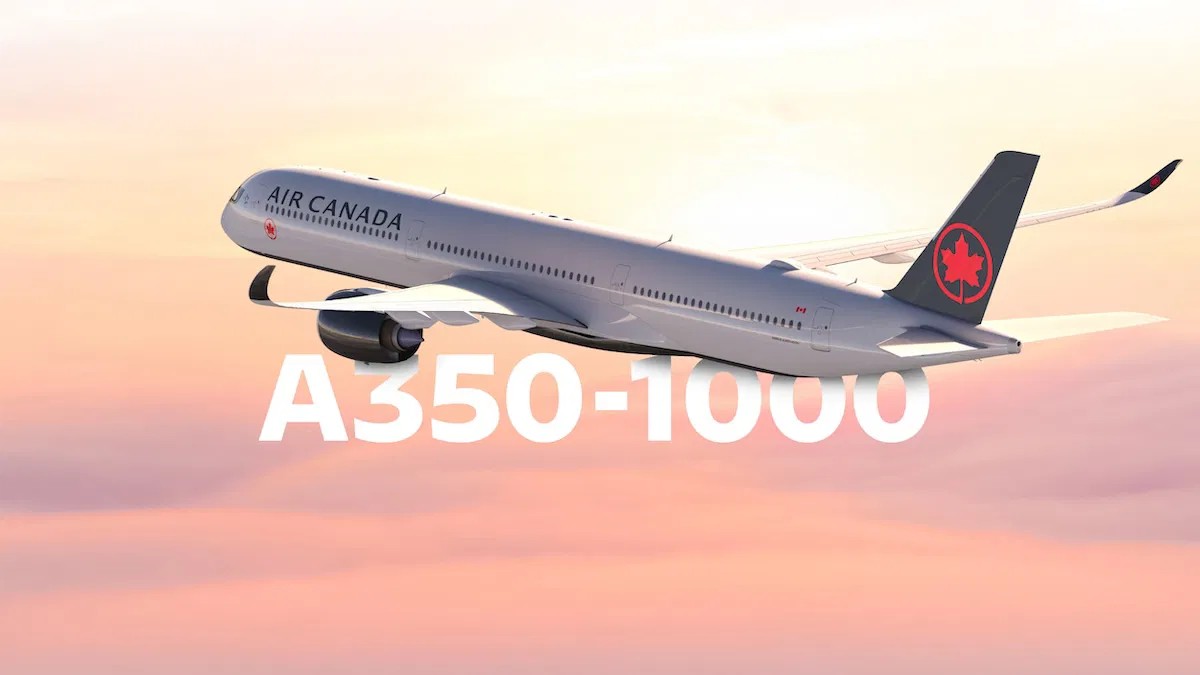
Air Canada has announced a significant order for up to 16 Airbus A350-1000 aircraft, with firm commitments for eight planes and options for eight additional units. Deliveries are scheduled to begin in the second half of 2030, marking a major step in the airline’s long-term fleet modernization strategy.
Modernizing Long-Haul Capabilities
The A350-1000 offers a range of approximately 9,000 nautical miles, enabling Air Canada to serve destinations across Asia, Europe, and other long-haul markets with increased efficiency. The airline estimates that operating costs with the A350-1000 will be 25% lower compared to older generation aircraft, significantly improving profitability on key routes.
Air Canada currently operates a wide-body fleet consisting of Boeing 787s, 777s, and Airbus A330s. The addition of the A350-1000 complements ongoing fleet upgrades, including the delivery of 14 Boeing 787-10s and 30 Airbus A321XLRs in the coming year. All new aircraft will feature Air Canada’s next-generation cabin design, with enhanced inflight entertainment and connectivity.
Strategic Implications for Air Canada
This order positions Air Canada as only the second North American airline to acquire the A350-1000, following Delta Air Lines. The move underscores the airline’s ambition to solidify its position as a leading global carrier over the next decade.
According to Mark Galardo, Air Canada’s Chief Commercial Officer, the A350-1000 is crucial for unlocking new long-haul opportunities:
“Air Canada’s acquisition of the Airbus A350-1000 will further solidify our position as a leading global airline through the next decade. This state-of-the-art aircraft adds a new dimension to Air Canada’s long-haul capabilities…connecting our customers, our hubs, and our country to the world.”
Why the A350-1000 Matters
The A350-1000 is ideally suited for Air Canada’s geographic advantage, connecting North America to key markets in Asia and Europe via hubs in Montreal, Toronto, and Vancouver. The airline’s favorable cost structure, due to currency exchange rates, further enhances the economic viability of ultra-long-haul routes.
The A350-1000 will effectively replace Air Canada’s aging Boeing 777-300ER fleet, offering greater range, fuel efficiency, and passenger capacity. The 777-300ER currently accommodates between 336 and 450 passengers, while Air Canada’s 787-9s seat 298. The A350-1000 provides the capacity and range needed to operate high-demand, long-distance flights efficiently.
In conclusion, Air Canada’s investment in the Airbus A350-1000 is a strategic move to enhance its long-haul network, reduce operating costs, and maintain its competitive edge in the global aviation market. The new fleet will allow the airline to operate more efficiently and expand its reach, solidifying its position as a leading international carrier.