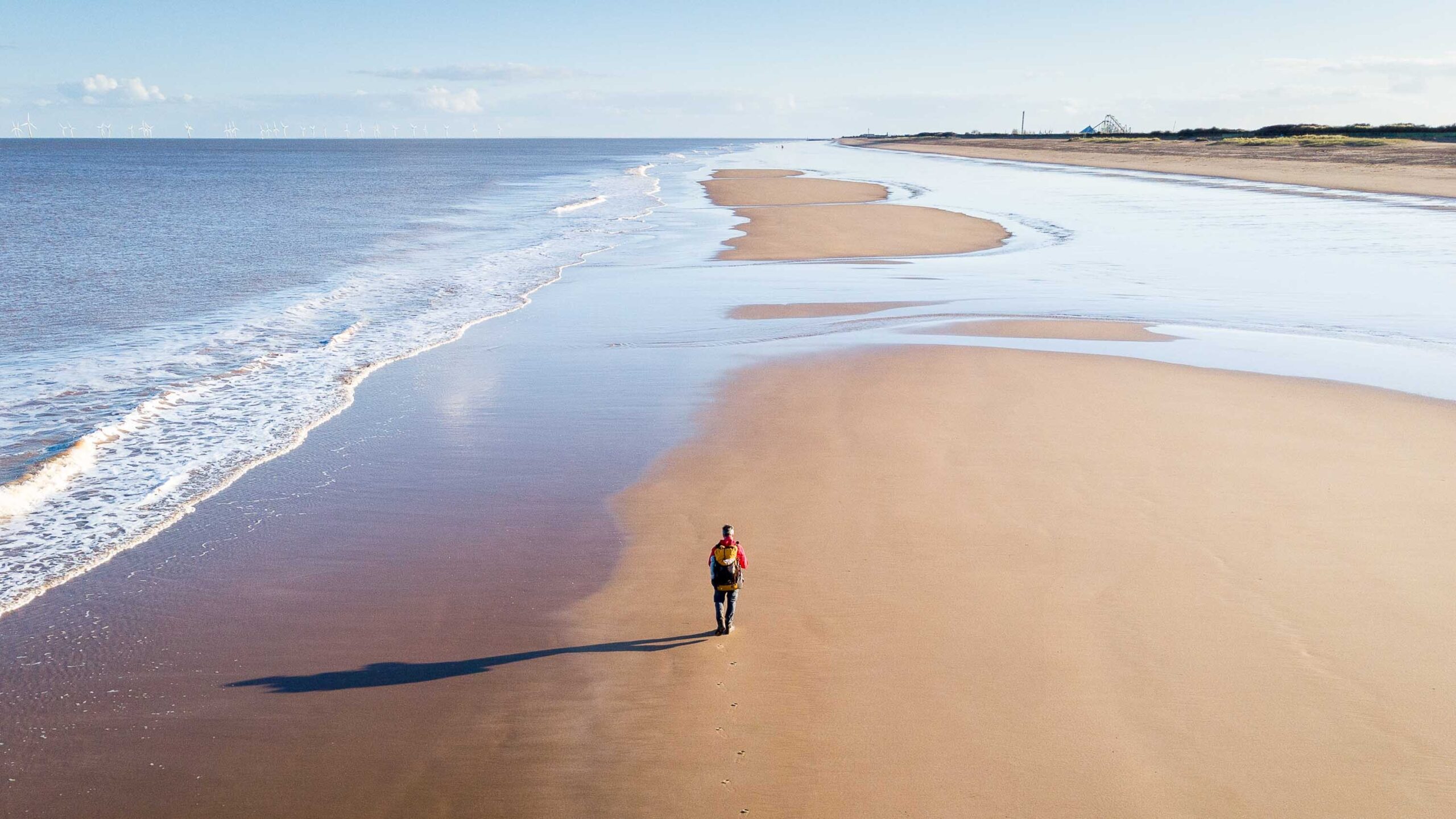
For most, a coastline is a boundary—a place to look at from a distance or a quick stop on a summer holiday. But for British photographer Quintin Lake, the coast became a way of life. Through his ambitious project, The Perimeter: A Photographic Journey around the Coast of Britain, Lake spent five years tracing the island’s outline on foot, covering more than 6,835 miles (11,000 kilometers).
His journey was not a single, unbroken trek, but a rhythmic cycle of returning, leaving, and re-engaging with the land. From April 2015 to September 2020, Lake moved through diverse landscapes—from the rolling greens of Devon to the rugged, untamed wilderness of Scotland—to capture a side of Britain that is often missed by those moving at high speed.
A Shift in Pace: From Architecture to the Elements
Lake’s transition from architectural photography to long-distance walking was born of necessity rather than pure wanderlust. Following a bout of meningitis that forced him to slow down, he began to find a new sense of purpose in the deliberate, slow movement of walking.
What started as a way to navigate river paths eventually crystallized into a grander vision: to understand the deep geography and history of the British Isles through the lens of a traveler on foot. This “slow unravelling” of the country allowed him to move past iconic landmarks and focus on the extraordinary in the ordinary.
The New Era of Coastal Walking
Lake’s personal odyssey arrives at a landmark moment for British tourism and outdoor recreation. In March 2026, England officially opened the King Charles III England Coast Path. Spanning 2,700 miles (4,500 kilometers), it is now the longest managed coastal walking route in the world.
This development is significant for several reasons:
– Accessibility: By stitching together previously disconnected cliffs, beaches, and estuaries, the path makes the entire English coastline legally and physically walkable.
– Lowering Barriers: As Lake notes, well-marked paths invite people who may not identify as “walkers” to experience the mental and physical benefits of nature.
– A Counter-Trend: In an era of “checklist travel”—where tourists rush to see a sight and move on—the official path encourages a more immersive, lingering connection with the landscape.
Lessons from the Long Walk
Walking such vast distances demands more than just physical stamina; it requires a psychological shift. Lake describes the profound solitude of the journey, noting stretches where he went five days without seeing another soul. To cope with the physical toll, he relied on small rituals: the comfort of a morning coffee in bad weather or the driving beat of techno music to push through the aches of the trail.
His experience highlights a fundamental truth about travel: scale changes with speed.
“Places that seem ordinary from a distance become extraordinary up close,” Lake observes.
Through his photography, he captured the nuance of the coast—the way light hits a dune, the sound of echoing waves, or the quiet emptiness of a seemingly crowded area. He found that the “wildness” of Britain was much more pervasive than most realize, particularly in remote areas like the Rough Bounds of Knoydart in Scotland.
The Value of the Slow Approach
While the completion of a national trail might tempt some to treat it as a “bucket list” item to be ticked off, Lake suggests the true value lies in the accumulation of moments. The journey is not about the finish line, but about the layers of beauty, resilience, and presence discovered along the way.
Even as he moves on to new challenges—currently walking and camping across England and Wales’ mountains—Lake maintains that the essence of his work remains the same: finding discovery in the everyday and connection in the quiet.
Conclusion
Quintin Lake’s journey proves that walking a coastline is less about reaching an endpoint and more about the profound intimacy gained through slow observation. As new paths open across the UK, the coast offers a rare opportunity to trade the rush of modern life for a deeper connection to the natural world.