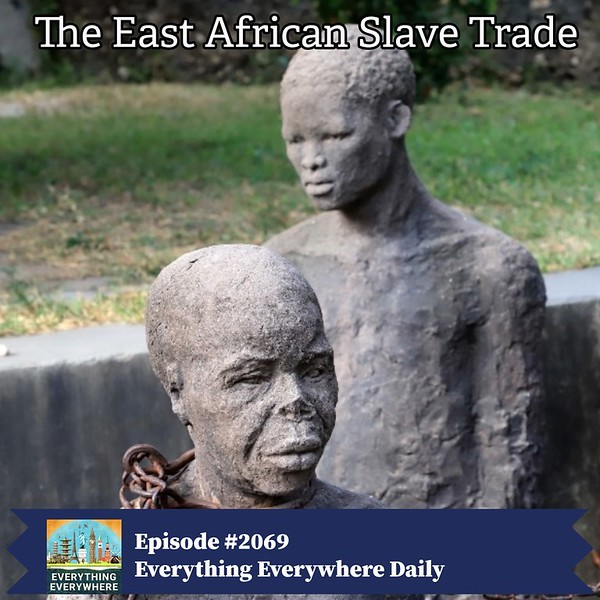
The transatlantic slave trade, which forcibly displaced over ten million Africans over centuries, is widely recognized. However, a parallel and often overlooked system of enslavement operated for far longer in Eastern Africa, along the Indian Ocean coast. This trade predated the Atlantic system by nearly a millennium and persisted well into the 20th century, leaving a devastating human legacy that demands greater recognition.
Origins and Expansion
The East African slave trade evolved from ancient, localized practices into a major commercial enterprise after the 7th century with the rise of Islamic trade networks. Unlike the Atlantic trade, which peaked in the 18th and 19th centuries, the Indian Ocean system had a longer arc, finally diminishing under pressure from European imperialism and international anti-slavery movements in the early 20th century. While slavery existed across Africa before external trade, its scale and brutality intensified dramatically with outside demand.
Internal Slavery Before Trade
Before the arrival of Arab and European traders, slavery in Africa was often embedded in social hierarchies and obligations. Enslaved people were acquired through warfare, debt, or criminal offenses, but their status wasn’t always equivalent to chattel slavery. Some could own property, marry, and even rise to positions of authority. In kingdoms like Mali and Songhai, royal slaves sometimes commanded armies or administered provinces. Slavery also functioned as a means of social integration, with captives gradually absorbed into households over generations. Despite this, harsh plantation-style slavery existed in some regions, particularly along the Swahili Coast.
The Rise of the Zanj Trade
The Arab expansion across the Arabian Peninsula and Persian Gulf in the 7th century fueled demand for enslaved labor. Merchants navigated the Indian Ocean, calling the East African coast Zanj (meaning “black” in Arabic), and began large-scale enslavement. By the 10th to 12th centuries, coastal city-states like Kilwa, Mombasa, and Zanzibar became commercial hubs, exporting ivory, gold, and enslaved people to Arabia, Persia, India, and even China. Zanzibar under the Omani Sultanate became the largest slave market in the Indian Ocean, handling 40,000–50,000 people annually at its peak in the 19th century.
Methods and Brutality
Enslavement relied on armed raids. Arab merchants and African allies attacked villages, killing resistance and capturing women, children, and surviving men. The violence was extreme; for every person enslaved, estimates suggest several more died resisting or fleeing. Captives were force-marched hundreds of miles to the coast, often in neck yokes, with minimal food or water. Mortality rates were catastrophic: one or more enslaved person died for every one who reached the coast alive. Explorer David Livingstone documented routes littered with bones and bodies in the 1860s.
The Trans-Saharan Connection
The East African slave trade overlapped with the Trans-Saharan route, which transported enslaved people across the desert to North Africa and the Middle East. This system dates back to the 3rd century BC, with Egyptian kings enslaving prisoners of war. By the Middle Ages, Arabs conducted violent raids, sending captives across the Sahara on brutal forced marches. Roughly 66% of the value shipped across the Sahara was comprised of enslaved people. The practice continued into the 20th century, with over a million people forced to complete the journey.
Gendered Exploitation
The demand for enslaved people differed from the Atlantic trade. While Europeans favored men for plantation labor, Arab merchants primarily sought women for sexual exploitation, selling them as concubines and sex slaves at a premium. Male slaves still worked in harsh conditions but were often castrated to ensure compliance and safety. Multiple uprisings by enslaved Zanj people occurred between 869 and 883 in Iraq, but the trade persisted.
The End of the Trade
The East African slave trade outlasted the Atlantic system by decades. Abolition efforts began in 1873 when Great Britain pressured Zanzibar’s Sultan to sign a treaty outlawing the trade. Britain also intervened by protecting African rulers from slave kingdoms and capturing slave ships. Despite this, the trade continued, shifting to islands like Madagascar. France and Britain outlawed slavery in their African territories but enforcement was limited. International pressure from the League of Nations and the United Nations in the mid-20th century finally led to its decline.
The East African slave trade remains less well-known than its Atlantic counterpart. Yet, it began centuries earlier, lasted longer, and displaced a comparable number of people. Both systems were brutal networks of exploitation that reshaped global history, leaving a legacy of suffering that must be acknowledged and studied to understand the full scope of human enslavement.