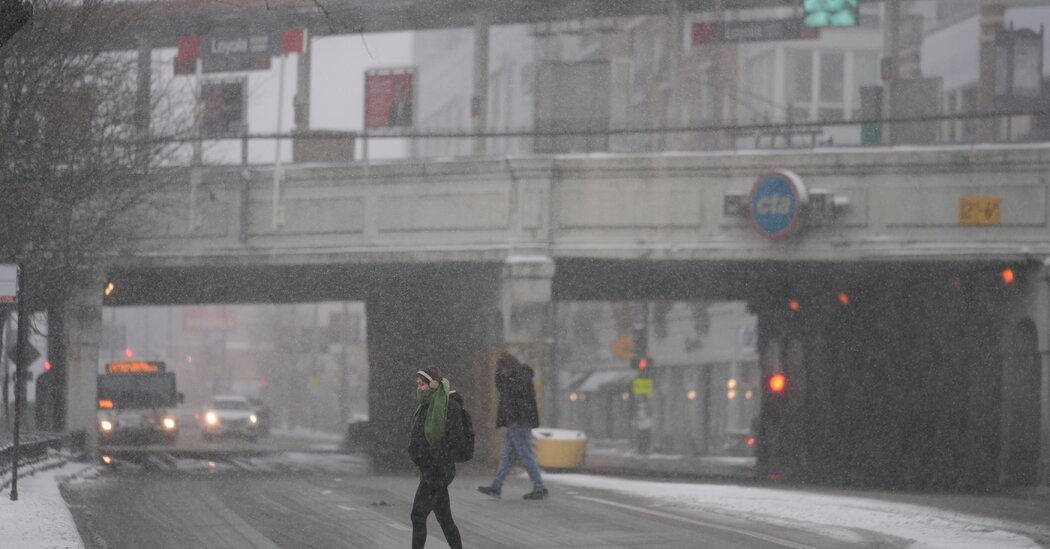
A powerful winter storm swept through the Midwest and Great Lakes over the weekend, dumping heavy snow, driving strong winds, and causing widespread travel disruptions for those returning home after the Thanksgiving holiday. The storm impacted a broad region, stretching from Des Moines, Iowa, to major cities like Milwaukee, Chicago, and Lansing, Michigan.
Severe Conditions Across the Region
Meteorologists forecast that conditions would remain hazardous through Sunday, with some areas expected to receive over a foot of snow. Andrew Orrison of the Weather Prediction Center stated, “We’re looking at six to 12 inches of snow, and some areas getting over a foot when it’s all said and done.” The combination of heavy snowfall and high winds created blizzard-like conditions in several locations.
Mass Flight Cancellations
The storm triggered widespread flight cancellations across the United States. By Sunday morning, more than 2,450 flights had been canceled, primarily affecting travel within the Midwest. Chicago’s O’Hare and Midway International Airports bore the brunt of the disruption, with over 1,100 flights canceled on Saturday alone. The intense snowfall, beginning early Saturday, intensified throughout the day, with the National Weather Service reporting accumulations of four to ten inches across the Chicago area.
Why This Matters
This storm highlights the vulnerability of transportation networks to severe winter weather. Post-holiday travel is already heavily burdened; major weather events like this can cause cascading delays and financial losses for airlines and passengers. The increasing frequency of extreme weather events due to climate change raises concerns about infrastructure resilience and the need for better preparedness measures. The situation underscores the importance of real-time weather monitoring, flexible travel planning, and potential investments in more robust transportation systems to mitigate future disruptions.
The storm has subsided, but the disruption serves as a reminder that winter weather remains a significant threat to travel across the Midwest.