The aviation industry has undergone a profound transformation. While modern travel is more accessible and technologically advanced than ever, the “romance of flight” has largely vanished. Flying has shifted from a premium, highly choreographed experience to a standardized mode of mass transportation.
For aviation enthusiasts (AvGeeks) and industry professionals, looking back at the archives of Pan American World Airways offers more than just nostalgia; it provides a fascinating window into a lost era of service standards and corporate culture.
The Art of the “Wrong Way” vs. “Right Way”
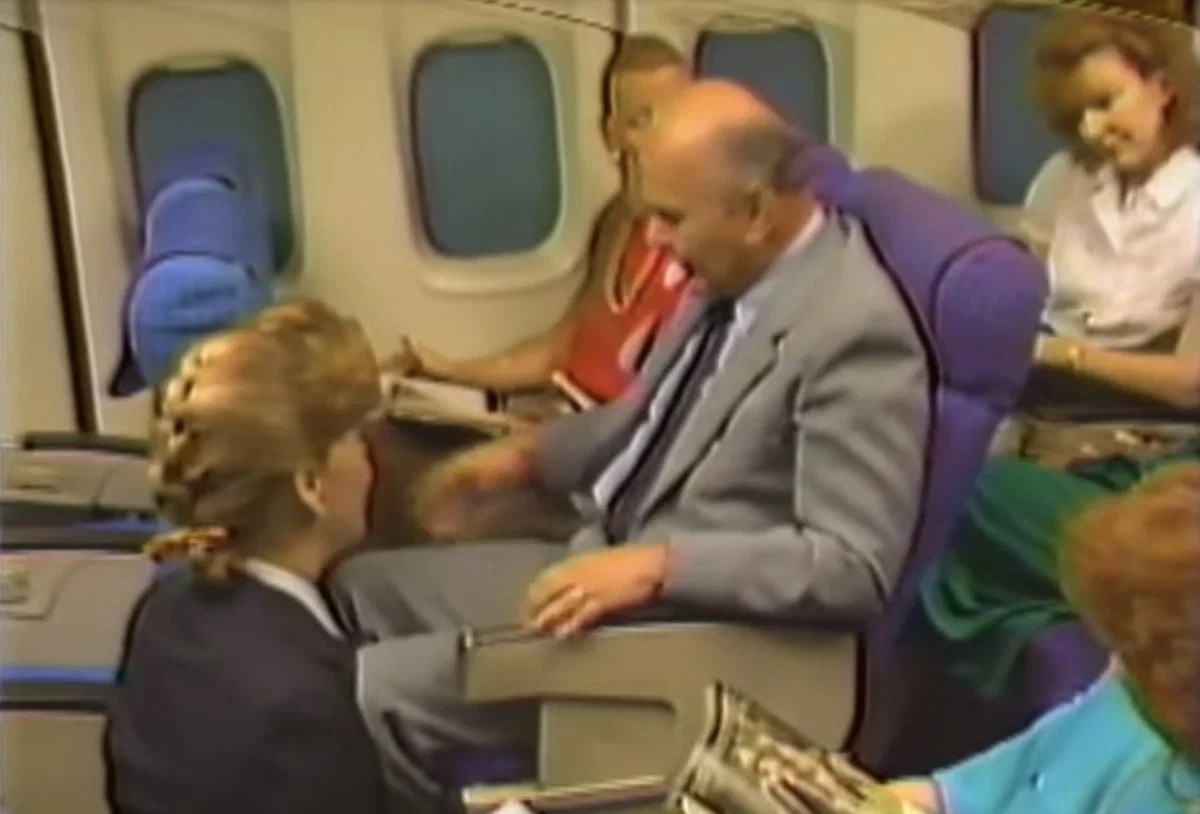
A unique aspect of the Pan Am training archives—many of which have been preserved by the Pan Am Museum Foundation on YouTube—is their instructional method. Unlike modern, dry corporate modules, these 1980s videos utilized a theatrical approach to teaching:
- Scenario-based learning: Videos often begin with a dramatized “incorrect” way to handle a situation, followed by the “correct” professional response.
- Common conflict points: The training covers essential passenger interactions, such as handling upgrade requests, managing missed connections, and enforcing non-smoking policies.
This method makes the videos highly engaging, as they use human error and social friction to illustrate the necessity of poise and protocol.
Behind the Scenes: Cabin Crew Dynamics and Etiquette
Beyond passenger interaction, the archives reveal the complex social hierarchy and professional expectations placed on flight attendants during the 1980s. These videos offer a rare glimpse into the internal pressures of the cabin:
1. Internal Conflict and Hierarchy
The videos document the interpersonal tensions that can arise in a confined workspace. Examples include:
– Disputes over “territory,” such as which crew member has authority over the galley.
– Friction between different sections of the aircraft, such as tensions between “Upper Deck” and “Lower Deck” crew members.
2. The “Always On” Professionalism
Perhaps most striking is the emphasis on total brand representation. Pan Am trained its employees to maintain a professional image even when they were off the clock. This included:
– Behavior at layover hotels: Crew members were warned that customers might observe them in public spaces, meaning their professional persona had to extend beyond the aircraft.
– “Shop Talk” and Non-Rev Etiquette: The training strictly regulated how employees spoke to one another in front of passengers and how they conducted themselves when traveling as “non-revenue” (discounted) passengers.
3. Shifting Social Norms
The archives also serve as a historical time capsule regarding changing social regulations. One notable video depicts a flight attendant being reprimanded for her reaction to a passenger smoking in a jump seat—a practice that was legally permitted at the time but required a specific, controlled disciplinary approach.
Why These Archives Matter Today
While some of the footage may feel dated or even “cringeworthy” by modern standards, the core lessons in service technique and professional presence remain relevant.
As major airlines move toward automation and cost-cutting, the high-touch, highly disciplined service model demonstrated by Pan Am serves as a benchmark for what premium passenger experience used to look like. These videos are not just entertainment; they are a reminder of an era when the airline’s brand was defined by the conduct and grace of its people.
These Pan Am archives provide a rare, dual perspective: they show both the perfection airlines strive for and the human errors they seek to prevent, offering a masterclass in the evolution of hospitality.