


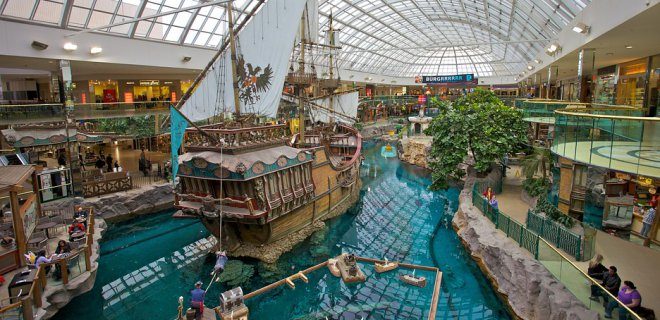
West Edmonton Mall is not just a shopping center. It is a behemoth. Covering 492,000 square meters, it dominates the landscape in Edmonton and ranks among the largest malls in all of Canada. The scale is almost hard to grasp until you are standing on the floor. You might think you’re in a city. You’re not. You’re inside a postmodern architectural experiment designed by Maurice Sunderland.
Opened in 1981, the mall was built to look like a miniature urban environment. It has layers. It has depth. It has everything a traveler might need, except a passport. Over 30 million people walk through its doors every year. That is a lot of foot traffic. That is a lot of retail therapy. But if you are planning a trip to Alberta, you need to understand what this place actually is. It is an icon. It is synonymous with Edmonton. It is one of the city’s most famous landmarks, perhaps more so than any museum or park.
Why This Mall Matters to Travelers
Most visitors go for the shopping. That is the obvious draw. Hundreds of stores line the corridors. There are hotels tucked away in the wings. Restaurants serve food from every corner of the globe. But the real value for a traveler lies in the sheer logistical absurdity of it all. How do you navigate a space this size?
The mall is a destination in itself. You do not just go there to buy a shirt. You go there to experience the architecture. You go to see how Sunderland managed to pack so much into one roof. The design is distinct. It is bold. It is postmodern in a way that feels both dated and timeless.
What to Actually Do There
If you treat it like a standard mall, you will miss the point. Here is how to approach it.
1. Plan for time, not just budget.
You cannot rush this place. It is too big. Give yourself a full day. Maybe two. The sheer volume of goods can be overwhelming.
2. Look up.
The architecture is part of the attraction. Sunderland’s design uses space in unexpected ways. The ceilings are high. The light is bright. It is designed to keep you moving.
3. Eat well.
With so many restaurants, the food court options are endless. You can spend hundreds of dollars here without leaving the building. Choose a place with a view of the interior gardens or the indoor park areas.
4. Visit the hotel.
Staying at one of the malls hotels is an experience. You can walk from your room to the shops. No need to brave the cold. This is particularly relevant in winter. Edmonton gets cold. The mall is a warm sanctuary.
The Numbers Don’t Lie
- Size: 492,000 square meters
- Opened: 1981
- Annual Visitors: Over 30 million
- Architect: Maurice Sunderland
- Style: Postmodern
These figures are not just stats. They are proof of the mall’s endurance. It has survived the internet age. It has survived changing retail trends. It remains a physical anchor in a digital world.
How to Get There
The mall is located in Edmonton, Alberta. Getting there is straightforward. There
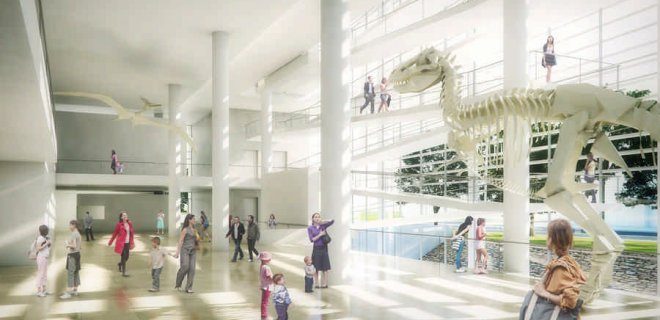

Royal Alberta Museum: Where history really lives
When you arrive in Edmonton, the Royal Alberta Museum is not just a stop on your journey. It’s an anchor. The facility opened in its current form in 2017 dates from 1967, but the current building is a serious architectural statement in itself.
The goal here is clear: to tell Alberta’s story. Not just dry dates and names, but also the raw, biological and cultural heartbeat of the province.
You’ll find natural history exhibits that seem more immersive than static. Entomological exhibits are surprisingly attractive. You walk past boxes of insects preserved in amber and you are amazed at how small the world really is. Then there is the wildlife section. It’s not just stuffed animals behind glass. It’s the context. Habitat dioramas that show exactly where these creatures live, how they hunt and why they are important to the ecosystem.
The real emphasis is on the archaeological exhibits.
You can see the tools. Ceramic shards. The remains of the indigenous peoples who have called this land home for thousands of years. The museum does a good job of connecting these stories together. They are not treated as separate chapters. It shows continuity.
For travelers planning a trip to Edmonton, this is a non-negotiable first stop. It gives you some background stories before you hit the road. You can’t fully enjoy a city’s parks or historic areas without understanding the geological and human history behind them. The museum adds layers. It turns a simple visit into a deeper commitment to a place.
Don’t rush through. Spend at least two hours. The displays are dense. They require attention.
Alberta Legislature Building: a castle on a hill
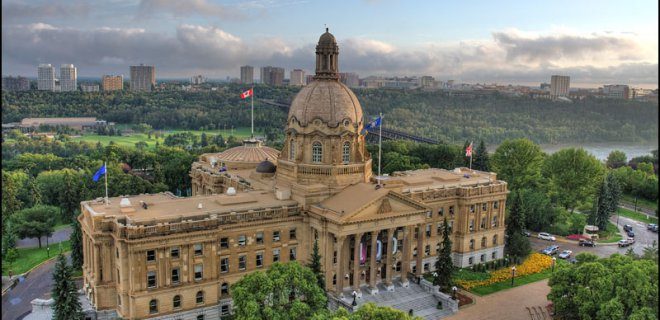
Just a short distance from the museum, on a high bluff overlooking the North Saskatchewan River valley, stands the Alberta Legislature Building. It looks like it fell from a different century. Or a different continent.
This is not your typical government office building. It is Beaux-Arts grandeur. It is limestone and iron. It is a statement of permanence.
Built in the 1900s and completed in 1913, the building is designed to stand the test of time. And it is. The Central Tower is one of the tallest structures in Edmonton, and the views from the top are unparalleled. Facing the city, the river and the parkland, the expanse of modern Alberta against the prairie.
The architecture inside is also impressive. In the Rotunda is a huge painting by Charles M. Russell depicting a buffalo hunt. It’s dramatic. It is bold. It reflects the era’s obsession with the “Wild West” narrative, even as this narrative is increasingly challenged by more accurate historical accounts.
The building is open to the public. Guided tours are possible. You can walk through the halls where the laws are enacted. You see the Senate and House chambers. But the real attraction is the grounds.
The gardens are carefully maintained. They form a calm contrast to the stone facade. In the summer you can find people picnicking on the lawns. In winter, the snow-covered paths create a surreal, peaceful atmosphere. The building glows at sunset. It’s every photographer’s dream.
Why is it important to you? Because
Ledge and Legislative Building
The Alberta Legislature Building in Edmonton is hard to miss. Locals call it “The Ledge” – a nod to its dramatic perch on a cliff overlooking the North Saskatchewan River. You can see it from miles away, rising 57 meters into the sky. It is not just a government office. It is the city’s most iconic landmark.
The structure was not built overnight. Construction lasted from 1907 to 1913, a slow, deliberate process that defined an era. Architects Allan Merrick Jeffers and Richard Blakey didn’t just design the building. They designed a statement. The result is a blend of grandeur and civic pride that is now considered one of Edmonton’s most important symbols.
William Hawrelak Park
Right at the foot of that bluff is William Hawrelak Park. This park is the city’s backyard, If the Legislature Building looks down on the city. It is a sprawling green area that provides a stark contrast to the stone and marble above.
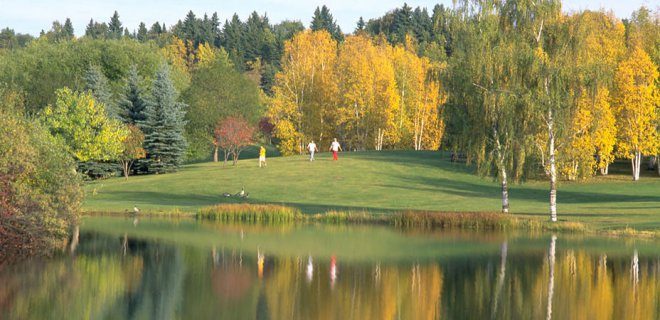
William Hawrelak Park: Edmonton’s green heart
If you are looking for the lungs of Edmonton, you must head to William Hawrelak Park. It’s not just a piece of grass; It’s a sprawling public park located right in the valley where the North Saskatchewan and Edmonton rivers meet. The geography here is dramatic. The river cuts through the landscape, creating a natural amphitheater that makes the park feel worlds away from the city skyline, even though the downtown core is directly across the water.
Before getting its current name, this space was known as Mayfair Park. The change was made in honor of William Hawrelak, a prominent local politician who actually served as mayor of Edmonton. It makes sense to name a public space after someone who has a strong commitment to community infrastructure.
The park is the center of activity. You will find designated picnic areas scattered among the old trees. Sports fields are open for occasional games. But the real attraction is the sheer size of the green spaces and views. The vegetation is dense and the topography changes from flat river banks to wooded hills. This diversity keeps the landscape interesting whether you’re walking the dog or hiking a trail.
Events are the lifeblood of the park. Numerous concerts and festivals are held there throughout the year. The open spaces are perfect for large gatherings. The acoustics can be surprisingly good for outdoor performances. You can plan your visit around these events or just go quietly and enjoy the solitude.
For anyone exploring Edmonton’s historical and tourist attractions, William Hawrelak Park is non-negotiable. It is often overlooked by travelers who head straight for Old Strathcona or the West Edmonton Mall. This is a mistake. The park offers a different perspective on the city. This is where the locals relax. The city breathes here.
Robertson-Wesley United Church
Not far from the edge of the park is the Robertson-Wesley United Church. This building is a testament to the city’s religious history. It is an architecturally significant place in the local community. For visitors, it offers a calm contrast to the outdoor energy of the park. The church is located in a residential area that stands out from the bustling city center.
The structure itself has historical weight. It reflects the architectural styles of the time. Inside, the atmosphere is calm. The design allows natural light to fill the room. It is a place of reflection. Many visitors stop here to appreciate the craftsmanship. The stained glass windows are particularly noteworthy. They tell stories through colors and light.
The surrounding neighborhood adds to the experience. It is tree-lined and peaceful. From the church, you can easily walk to the park. This proximity makes it possible to combine cultural visits with outdoor activities. The transition from the quiet interior of the church to the open sky of the park is striking. It highlights the dual nature of Edmonton. It is a city full of community institutions and natural beauty.
For those interested in local history, the church serves as a sign of the area’s development. It shows how the city has grown around these key points. The architecture is well preserved. It stands out from the modern buildings nearby. This contrast is part of its charm. It’s a reminder that Edmonton has layers. There is history beneath the surface.
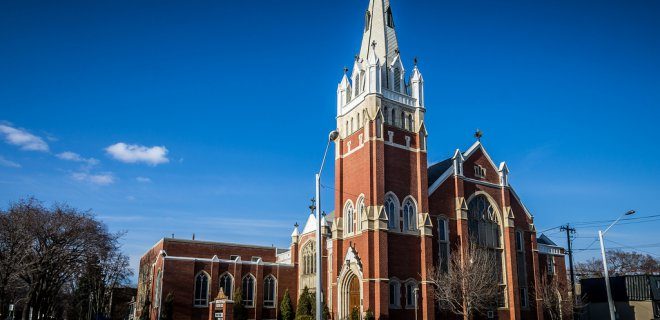
Deep in the city’s western Oliver neighborhood sits a building that defines Edmonton’s architectural soul. United Church of Edmonton is not just a place of wornave; It is a historical artifact made of red brick and stone, which is considered a testament to the development of the city. Open since 1914, this Gothic masterpiece was designed by renowned architects David S. Mcllroy and G. H. McDonald. The intricate stonework and steep gables capture the light differently depending on the time of day, creating a stark contrast to the nearby modern skyline.
The significance of the building goes beyond its aesthetics. In 1971, the church became a unified place for several congregations and opened its doors to the wider community. For travelers who want to understand the spiritual fabric of the city, this place is non-negotiable. It’s not just about religion; it’s about social history woven into mortar. You can walk through the nave and feel the weight of more than a century of local history.
Dawson Bridge
To the west of the church’s influence lies the Dawson Bridge, a critical artery connecting the river valley to the western neighborhoods of the city. This bridge spans the North Saskatchewan River and is made of more than just concrete and steel. It is an important link for anyone navigating Edmonton.
While the United Church of Edmonton will fascinate you with its neo-Gothic style, the Dawson Bridge will lure you to the river trails. It’s a pedestrian-friendly route, especially as you head north towards the River Valley. The view from the bridge offers a panoramic view of the city’s geography – steep cliffs meet urban sprawl.
Travelers often overlook this connection. Why not? Because the real magic of Edmonton lies in the transition between these two points. Start at the church in Oliver. Let the peaceful atmosphere settle. Then head west. Cross the bridge. The contrast between the solemn brickwork of the church and the open, windy river crossing is where the city reveals its true character.
The bridge is designed for heavy traffic, but the sidewalks are accessible. It’s a good time to stretch your legs. The river below moves slowly, reflecting the pace of life in the neighborhoods on either side. If you are planning a route, this is a logical stop. It is central. It is accessible. And it offers one of the best vantage points to understand the layout of the city.
Don’t rush across. Stop halfway. Look back at the Oliver neighborhood. Look forward to the river valley. That’s where the story is.
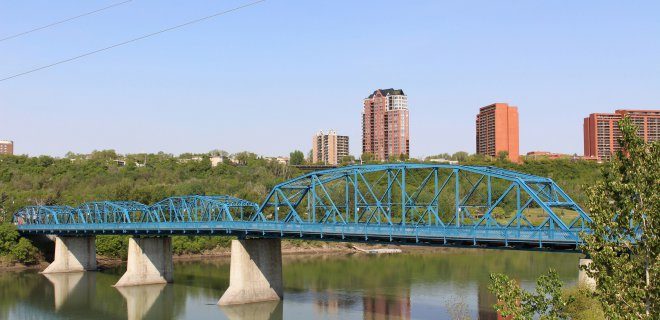
There is a very special calm across the bridge in the middle of winter. The river slows down. The air bites. And when you stand on the Whyte Avenue Bridge in Edmonton and look at the faded blue railings, you might feel like you’re floating between two different centuries.
The structure is not new. It’s old. Built about a hundred years ago, it spans the North Saskatchewan River in a stubborn, industrial grace. It is 237 meters long and 12.5 meters wide, so it is not a large monument. It’s a workhorse. But in a city obsessed with glass towers and modern art, this bridge offers something rarer: continuity.
The blue railings give it away. It’s a distinct, slightly faded shade that has become synonymous with the area. If you’ve seen photos of Old Strathcona, you’ve seen this bridge. It frames the view of the river valley and skyline in a way that seems intentional, even if it is painted just to be visible.
It has seen traffic. It saw snow. The city around it has changed, even though it has remained exactly the same. Then in 2010 it got a new lease on life. The stripped back the wear and tear by renovation. That same year it reopened, ready for another hundred years for pedestrians, cyclists and commuters who don’t have time for detours.
Why it matters to your itinerary
Most travelers head straight to the Royal Alberta Museum or West Edmonton Mall. Both are fine. However, if you want to understand the pulse of Edmonton, walk across this bridge.
It connects the city center with the river valley – a green lung that runs through the heart of the city. The crossing is short. You can do this in five minutes. But context is everything.
On one side, you have the historic charm of old Strathcona. Bars, vintage stores, cafes with outdoor terraces that disappear when the temperature drops below zero. On the other side, a river valley. It is a canyon of trees, trails, and quiet. The bridge is the seam that holds them together.
Crossing logistics
You don’t need permit. You don’t need a ticket. All you need are shoes.
The bridge is fully accessible. If you’re pushing a stroller or rolling a suitcase, the inclines are manageable. The width allows for two-way pedestrian and bike traffic. However, you should be mindful of commuters during rush hour. They move fast. They have places to be.
Best time to travel? Late afternoon in late October. The light hits the water at a sharp angle. The trees are gone, skeletal branches against a grey sky. The river looks black. The blue railings pop. It’s atmospheric. It is real.
Summer is different. Noisy. Full of tourists looking for the next photo opportunity. Winter is quiet. The river ice looks solid enough to walk on, but you stay on the bridge. Respect the ice. Respect the cold.
What to Look For
Don’t just walk through it. Stop. Look at the rivets. Look at the repeatedly painted steel beams. This is infrastructure. It is the skeleton of the city.
Notice how


