Before the United States formally entered World War II, it wasn’t merely neutral. Even as a non-combatant, America quietly shifted the balance of power through a program called Lend-Lease, fundamentally altering the course of the conflict. This initiative, born from lessons learned during the First World War and the subsequent Great Depression, transformed the U.S. into a lifeline for embattled Allies, cementing its role as the world’s dominant industrial power.
The Economic Foundations of Victory
By 1940, the United States stood alone as the world’s foremost economic and industrial giant. Decades of territorial expansion, population growth, technological innovation, and resource extraction had created a production capacity unmatched by any other nation. The U.S. was the leading producer of coal, oil, and steel – the core ingredients of modern warfare. American coal output exceeded that of Germany, Britain, and the Soviet Union combined. The nation possessed vast, easily accessible coal reserves, making production cheaper than anywhere else in Europe. Similarly, the U.S. controlled roughly two-thirds of the world’s oil supply, fueling not just its own economy but also providing a critical advantage to its allies. Steel production was similarly dominant; the U.S. outstripped the combined output of all Axis powers. This industrial might wasn’t accidental; it was the result of deliberate economic policy and sheer scale.
This mattered because wars in the 20th century weren’t just fought on battlefields. They were won through logistics, production, and the ability to sustain mechanized warfare. The nation that could reliably supply its troops—and its allies—with fuel, ammunition, and equipment held a decisive edge.
From Neutrality to the “Great Arsenal of Democracy”
After the fall of France in 1940, President Franklin Roosevelt recognized the peril facing Britain. Isolationist sentiment in the U.S. Congress, stemming from post-WWI disillusionment, had led to strict Neutrality Acts limiting arms sales. However, Roosevelt understood that Britain’s collapse would irrevocably harm American security. He initially implemented “cash-and-carry” policies, forcing Britain to pay upfront and transport goods themselves – a system that drained British reserves.
By late 1940, Britain faced financial ruin. Roosevelt proposed a radical solution: Lend-Lease. On December 29, 1940, in a nationwide “fireside chat,” he framed the program as helping a neighbor whose house was on fire—preventing the blaze from spreading. The concept was simple: the U.S. would supply war materials to nations vital to American security without immediate payment. The idea became law on March 11, 1941, authorizing the president to “sell, transfer, lease, or otherwise dispose of” defense articles.
The Scale of Support
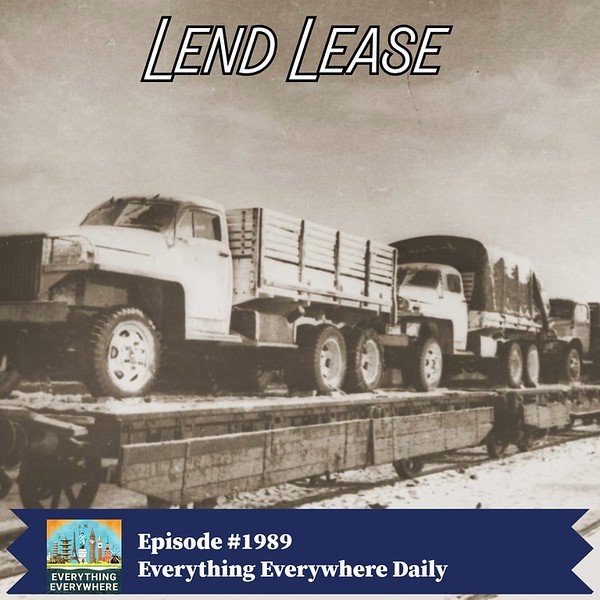
Lend-Lease wasn’t just symbolic; it was massive in scale. Over the course of the war, the U.S. funneled roughly $50 billion (over $1.1 trillion today) in aid to Allied nations. This included not just weapons but also food, raw materials, trucks, locomotives, rails, oil, and medical supplies. The program expanded beyond Britain to include the Soviet Union after Germany’s invasion in 1941, despite ideological tensions. China, already at war with Japan, also received substantial aid.
The impact was immediate. The Soviet T-34 tank was domestically produced, but the Red Army relied heavily on American trucks, steel, rails, and fuel for mobility. Britain received 17.5 million tons of military equipment, shipped across dangerous convoy routes. Lend-Lease accelerated U.S. industrial mobilization, eliminating unemployment and establishing the nation as the world’s leading arms manufacturer.
The Aftermath: Settling the Accounts
The program abruptly ended after Japan’s surrender in September 1945. Final settlements were complex, varying by recipient. Consumables like food and ammunition were often written off. Surviving equipment was supposed to be paid for, but the U.S. frequently accepted discounts or long-term settlements.
Britain’s case was the most protracted: Lend-Lease obligations were rolled into a low-interest loan in 1946, with final payment made in 2006 – 60 years later. China’s debts were largely forgiven, while the Soviet Union settled for a fraction of the total in 1972, with further payments stalled after the Afghan invasion. Russia finally cleared its remaining balance in 2006 as well.
A Decisive Intervention
Lend-Lease was not a war-winning factor alone, but it was undeniably essential to the Allied victory. It ensured Britain’s survival, allowing it to maintain operations long enough for the U.S. to enter the war. It bolstered China’s resistance against Japan, tying down Japanese forces. And for the Soviet Union, it addressed critical logistical bottlenecks, providing trucks, rails, and fuel that were vital to Red Army offensives.
As Nikita Kruschev later recounted, Stalin privately acknowledged that without American aid, the Soviet Union would have likely lost the war. The program transformed the United States into the “arsenal of democracy,” not just in rhetoric but in tangible, material support that reshaped the balance of power and secured an Allied triumph.