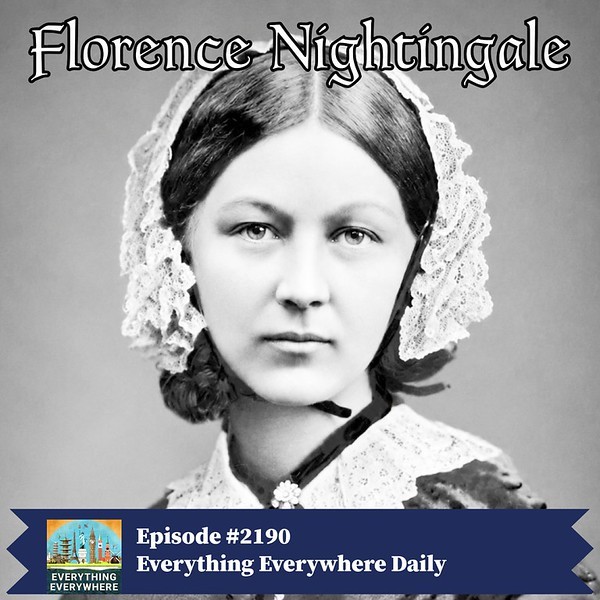
Florence Nightingale wasn’t just a nurse with a lamp. That image? It’s iconic, sure. But it misses the point entirely. She was a reformer. A statistician. A ruthless critic of systems that let people die because no one cared about dirty floors or bad air.
She made a name for herself in the Crimea, yes. But her real work happened in the quiet rooms where she forced governments to look at numbers and finally understand them. She didn’t just heal wounds. She rebuilt the modern medical system.
A Call (Or Just Conviction?)
Born in 1820 in Florence, Italy, to wealthy British parents, she was supposed to marry well. Live in London. Attend parties.
Her father, unusually for the time, educated her. Math. Statistics. History. She spoke multiple languages. While other young ladies of her station learned embroidery, Florence was learning how to run a household and, eventually, a hospital.
At 16, something shifted. She called it a divine call from God at Embley Park. She believed nursing was her purpose.
Her family hated the idea. In Victorian Britain, nursing was a job for the destitute. For drunk women. For those who couldn’t do better. Hospitals were filthy places, often more deadly than the diseases they tried to cure.
Nightingale didn’t care about their disdain. She rejected marriage proposals. No children. All that would distract her. Instead, she went to Germany, to Kaiserswerth, to learn how to care for patients properly. Observation. Organization. Discipline.
By 1853, she was running a hospital in London. When cholera hit, she didn’t pray it away. She scrubbed it away. Sanitation saved lives. It was obvious to her. To the medical establishment, it was still radical.
The Cesspool
Then came the Crimean War.
Russia pushed east. Britain pushed back. Soldiers were piled into hospitals in Constantinople, specifically one called Barrack Hospital. It sounds sturdy. It wasn’t.
Journalist William Howard Russell sent dispatches home for the London Times. His reports were brutal. The hospital was a nightmare. Incompetent doctors. No supplies. Soldiers rotting.
Public outrage exploded. Enter Sydney Herbert, Secretary of War, who was also a friend. He asked Florence to take charge.
She took 38 nurses. They arrived in November 1854 to a scene of pure horror.
The hospital literally sat on a cesspit. Drinking water was sewage-tainted. Patients lay in their own waste. Rats scurried through the corridors. Bandages were nonexistent.
The death rate? Staggering. Of every thousand men, 427 died. And the vast majority of those deaths weren’t from bullets. They were from cholera, typhus, dysentery. Diseases caused by dirt.
The Lady With The Lamp
Nightingale got to work.
She ordered hundreds of scrubbing brushes. She put able-bodied patients to work cleaning their own wards. She fought for better ventilation. Better food. Laundry that was actually clean.
At night, she walked the wards. Alone. Carrying a lamp.
The soldiers watched her. A wealthy English aristocrat, scrubbing floors, changing dressings, holding their hands while they died or recovered. They called her the Angel of the Crimea. The Lady with the Lamp.
It wasn’t just sentiment. It was results.
Under her care, the mortality rate dropped from 42.7% down to 2.2%.
Ninety-five percent reduction.
She also started the Invalids’ Kitchen, ensuring sick soldiers got food they could actually digest. She facilitated mail so soldiers felt connected to home. She treated the mind, not just the body.
When she returned to Britain in 1856 after the war ended, she was a celebrity. Queen Victoria gave her a brooch. People threw parties in her honor. Florence hated the fuss. She never sought fame. She sought survival rates.
The Power Of Data
Here is where she becomes modern.
Nightingale wrote an 830-page report detailing what happened. She argued for restructuring military hospitals entirely. But politicians don’t read 800 pages. They skim.
So she changed how they saw data.
She invented the Nightingale Rose diagram. A polar area chart. Segments radiating from a center, colored to show causes of death. Blue for disease. Black for wounds. Red for other causes.
The visual proof was undeniable.
The blue bars were massive. Most soldiers were dying not from the war, but from poor conditions. Before she arrived? The blue sections were huge. After? Tiny.
She forced the British Army to face reality. 16,000 out of 18,000 death in the war could have been prevented. With clean sheets. Clean water. Air.
She became the first female member of the Royal Statistical Association. A nurse, teaching statisticians how to tell the truth.
The Legacy
In 1860.
Using her fame, her influence, and some of her own fortune, she established the Nightingale Training School at St Thomas’ Hospital.
This changed everything.
Nursing went from a disreputable task to a trained profession. A respected career. Upper-class women began entering the field, which lifted its status for everyone else. It spread globally.
But Florence paid a price.
She contracted Crimean Fever during the war. By age 38, she was bedridden. For the rest of her life, she worked from a bed. Dictating letters. Writing reports. Consulting on sanitation in India. Advising on US Civil War hospitals.
She never left that room again. She died at 90, in 1910.
So, Was She A Saint?
The podcast reviewer Anna calls the show “perfect.” The audience wants clean answers. But Nightingale complicates things.
She was compassionate. Yes. She was kind to suffering men in the dark.
But she was also rigid. Intolerant. A disciplinarian who valued efficiency over emotion. She saw data before she saw human beings, not because she was cold, but because she knew that sentimentality kills. Compassion without structure is just pity. Pity doesn’t stop cholera. Statistics do.
We remember the lamp. The icon. The soft focus history lesson.
We forget the charts. The arguments. The years of lobbying against stubborn bureaucrats. We forget that she weaponized hygiene.
Florence Nightingale didn’t just comfort the dying. She attacked the causes of their death with the ferocity of a soldier.
And maybe that’s why we still clean our hospitals today. Not just out of kindness.
But out of fear that if we stop, the blue bars on the chart will start growing again.