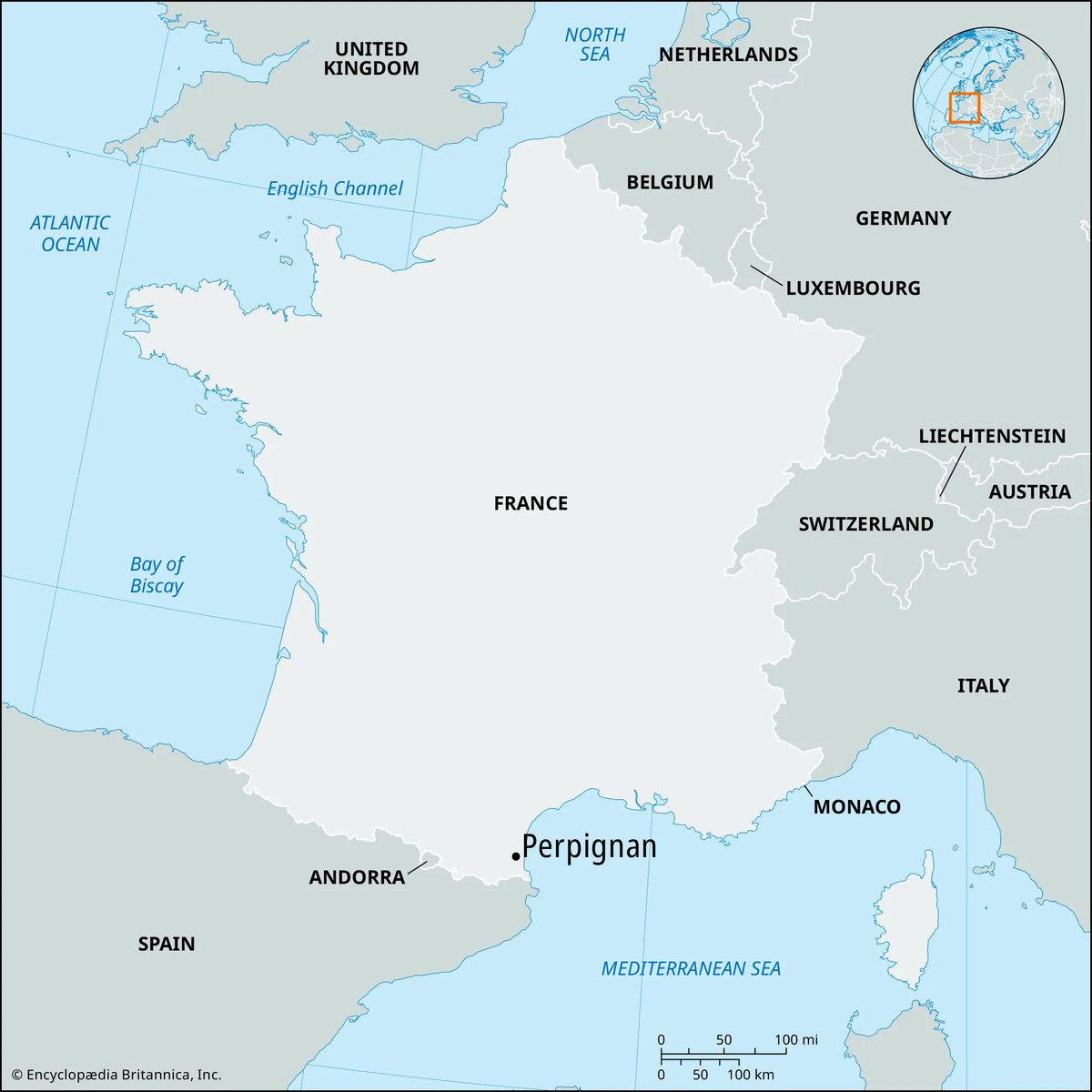
Most travelers head straight for Barcelona or the Riviera. They miss the point. Perpignan is the capital of the Pyrénées-Orientales department in the Occitanie region. It sits on the Têt River. The location is precise. It is eight miles west of the Mediterranean Sea. It is nineteen miles north of the Spanish border.
This is not just a stopover. This is a destination that demands attention. Historically, a stronghold town. It was once the capital of Roussillon. That old province had a distinct identity. It wasn’t just French. It wasn’t just Spanish. It was something else entirely. Today, the vibe has shifted. It is an administrative hub. It is a commercial center. But don’t let the bureaucracy fool you. There is life here. Real life.
Why Visit Perpignan Instead of the Coast?
The coastal cities are crowded. They are expensive. Perpignan offers a different kind of value. You get history without the tourist traps. You get authentic Catalan culture. This is the heart of Roussillon. The architecture reflects that. You will see Gothic spires. You will see Romanesque arches. The buildings tell the story of a borderland. A place where cultures collide and blend.
Consider the logistics. Getting there is easy. The TGV connects Perpignan to Paris in roughly six hours. That is faster than taking a train from Madrid to Barcelona. Flights land at Perpignan-Rivesaltes Airport. It is small. It is manageable. You won’t spend hours in security lines. This matters when you are trying to maximize your time.
The Royal Palace and Medieval Walls
You cannot walk through this city without seeing the Palais des Rois de Majorque. It is the main attraction. It was built in the 13th century. The kings of Majorque ruled here before the French crown took over. The structure is massive. The walls are thick. Some parts are ruined. Others are restored.
Visit in the morning. The light is good for photos. The courtyard is quiet. You can imagine the courtly intrigue. You can hear the echoes of debates. The palace museum inside is well-curated. It covers the history of the region. It explains why this place was so strategic. Control of Roussillon meant control of the passage between France and Spain. That was huge. Still is.
After the palace, walk the ramparts. The old city walls are intact. You can walk along them for free. The view of the Têt River is pleasant. The view of the Pyrenees is distant but present. On a clear day, you can see the mountains. They are white. They are majestic. They remind you that you are close to the border.
Food and Daily Life
This is where the real magic happens. Perpignan is a city of markets. The central market is open every day except Monday. It is noisy. It is colorful. It smells of spices and fish. Buy some local cheese. Buy some olives. Buy some bread. Eat it on a bench. Watch the locals. They are friendly. They are direct. They don’t have time for small talk. They have lunch to get to.
The cuisine is robust. It uses ingredients from the land and the sea. You will find socca.

The Castillet and the City’s Defensible Heart
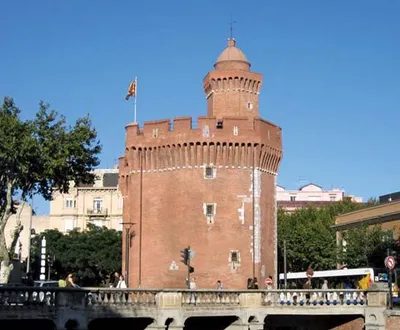
The heavy fortifications that once defined Perpignan are mostly gone. Those walls came down in the late 19th century, erased to make way for a modernizing city. But if you walk to the old southern gate, you still find the Castillet. This crenellated fort stands as a stubborn relic from the 14th and 15th centuries. It once defended the main entrance. Today, it’s a museum. You can step inside and imagine the weight of the stone that kept invaders out for centuries.
It is a tangible link to the city’s turbulent past. Perpignan was never just a quiet provincial town. It became a strategic prize. The counts of Roussillon held it until 1172. Then the house of Aragon took over. When James I of Aragon split his kingdom, Roussillon went to his younger son. This started a dynasty of hereditary kings of Majorca. They made Perpignan their capital between 1276 and 1344.
The city’s defenses grew stronger as tensions rose. The struggle between France and Spain for control of the region turned Perpignan into a fortress. It held out until 1659. The Treaty of the Pyrenees finally handed the city to France.
Refuge and Resilience
The city’s identity is shaped by its history as a shelter. It is not just about old stones. It is about who sought safety here.
In the 20th century, Perpignan opened its doors again. After 1936, the Spanish Civil War pushed refugees across the border. They came here. Decades later, around 1960, the city welcomed returning North African emigrants. This history of refuge is woven into the local fabric. It adds a layer of depth to the tourism experience. You are walking through streets that have seen waves of displacement and hope.
Art and Architecture to Explore
Beyond the Castillet, the old town holds more treasures. You should look for the Loge de Mer. This ancient building used to house the maritime tribunal. It is a reminder of Perpignan’s connection to trade and law. Nearby stands the Cathedral of Saint-Jean. It dates back to the 14th and 15th centuries. The architecture reflects the region’s Catalan influences.
Perpignan offers a distinct blend of Catalan heritage and French administrative history, visible in its medieval and early modern structures.
In the south of the city, the story continues. The citadel, built in the 17th and 18th centuries, still looms over the landscape. Its bastions surround the medieval palace of the kings of Majorca. The palace has been partially restored. You can walk among the ruins and see how the architecture evolved from defensive stronghold to royal residence.
Art lovers should head to the Rigaud Museum. It houses paintings by local Catalan artists. It also features works by Hyacinthe Rigaud. He was a native of Perpignan. His portraits are famous. Seeing his early work in his hometown adds context to his later success in the royal courts of France.
The Economic Engine
Perpignan is not just a museum city. It is a working hub. The surrounding plain is rich. Farmers here cultivate fruits and vegetables. The city processes