


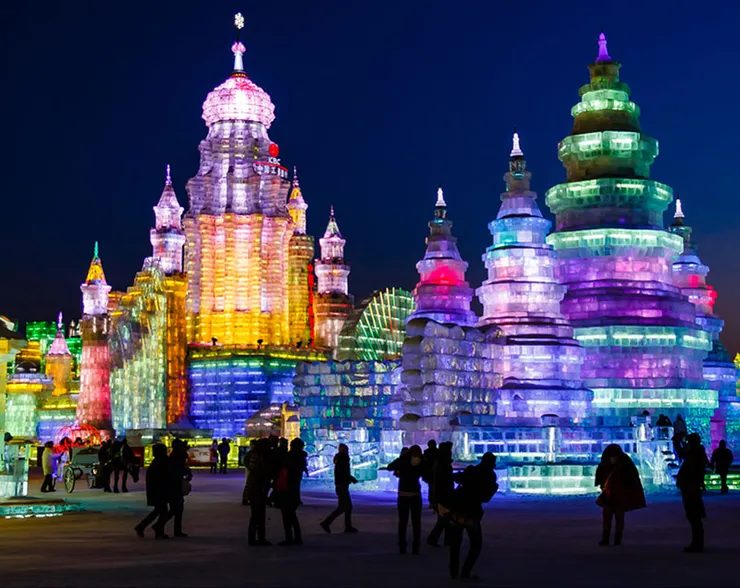
If you think Harbin is just a cold stopover on a Beijing-to-Moscow transit, you are missing the point entirely. Harbin is a city that refuses to apologize for its existence. It sits in Heilongjiang Province, the northernmost stretch of China, where the air is so crisp it feels like it might snap. This is not a place for the faint of heart or the poorly dressed. It is a place of brutal beauty, industrial grit, and a history written in ice, war, and Russian architecture.
Harbin itself is an anomaly. In a country defined by Han Chinese culture, this capital city pulses with a distinctly Eastern European vibe. The streets are lined with onion-domed churches and Byzantine-style buildings that whisper of tsarist influence. The locals speak Chinese, yes, but the rhythm of the city, the food, and the very soul of it feel different. It is distinct.
Why You Should Visit Heilongjiang Now
Heilongjiang, often spelled Hei-lung-chiang in older texts, has been sleeping for decades. It was little more than a frontier region until the 19th century. Before that, it was largely undeveloped territory under Russian dominance until 1917. Then came the Japanese occupation in 1931, followed by Soviet forces retaking it in 1945. The Sino-Soviet rift of the 1960s turned its border into a flashpoint for clashes. Today? It is one of the most under-visited provinces in China.
The population is around 31.8 million people across a massive 463,600 square kilometers. That is a lot of space for a relatively small crowd. For a traveler, this means you can walk through Harbin’s Central Street without feeling like you are in a tourist trap. You can stand on the banks of the Amur River (Heilong Jiang) and look across at Russia without seeing a single tour bus.
The Harbin Ice and Snow Festival: A Visual Assault
The main draw, the obvious draw, is the Harbin Ice and Snow Festival. It happens every January. The city transforms into a frozen wonderland of massive ice sculptures. These are not small blocks of ice. We are talking about buildings, castles, and intricate statues carved from blocks of ice pulled directly from the Songhua River.
The cost? It is cheap to visit, but expensive to prepare for if you are not from a cold climate. A hotel room in January can run you $50 to $100 a night if you book early. Flights to Harbin from Beijing or Shanghai are frequent and relatively affordable, often under $150 round-trip if you catch a deal. The key is timing. Go in late January to early February for the peak of the festival. The temperatures will be minus 20 degrees Celsius or lower. Yes, colder.
The sculptures are lit up at night with neon colors that reflect off the ice. It is surreal. You are standing in a city that looks like it was plucked from a fantasy novel and frozen in time. The cold is biting. Your ears will hurt. Your phone will die. But the visual experience is unmatched anywhere else on earth.


