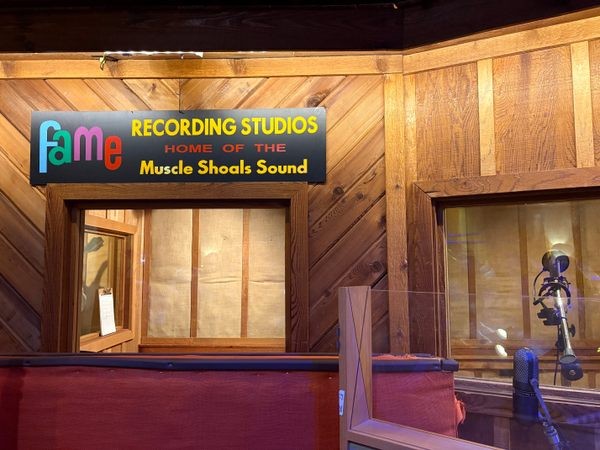
A sign on the front door of FAME Recording Studios in Muscle Shoals, Alabama, makes a bold claim: “Through these doors walk the finest Musicians, Songwriters, Artists and Producers in the World.”
While such a statement might initially sound like marketing hyperbole, the history of this modest building proves it is entirely accurate. Over the last six decades, a diverse roster of icons has passed through its threshold, including Otis Redding, Aretha Franklin, Wilson Pickett, Duane and Gregg Allman, Jason Isbell, and Demi Lovato.
From Drugstore to Destiny
Founded in 1959 as Florence Alabama Music Enterprises, FAME began its life in humble surroundings above a local drugstore in Florence. Founder Rick Hall later relocated the operation about 15 minutes away to Muscle Shoals, eventually settling on its current address on Avalon Avenue.
This geographic shift was pivotal. It was in this unassuming building that the famous “Muscle Shoals sound” was born—a distinctive, swampy blend of soul, R&B, pop, country, and gospel grit that would come to define an era of American music.
The Secret Ingredient: The Swampers
Part of FAME’s enduring appeal lay in its house band. Known as the Muscle Shoals Rhythm Section or, more famously, the Swampers, these studio musicians played on hundreds of classic tracks. Their tight, soulful musicianship became a major draw for artists seeking that specific, hard-to-replicate groove.
Why Muscle Shoals?
The studio’s success wasn’t just about talent; it was about atmosphere. Muscle Shoals was not New York, Detroit, Memphis, or Nashville. It was a quiet Alabama town where artists could escape the industry pressures of major hubs and find something raw and authentic.
The studio’s credibility was built on early hits like Arthur Alexander’s “You Better Move On” and Jimmy Hughes’s “Steal Away,” the latter being the first hit recorded at the Avalon Avenue location. But it was the arrival of legends that cemented its legacy:
- Wilson Pickett and Etta James brought their fiery performances to the floor.
- Otis Redding found his footing.
- Aretha Franklin recorded her first Atlantic session at FAME, producing “I Never Loved a Man (The Way I Love You).” This session was a career-defining moment that helped redirect her path to superstardom.
A Living Legacy
FAME is not merely a museum piece frozen in time. It remains a working recording studio, continuing to attract modern artists who seek the same magic that drew legends decades ago.
What makes FAME special is not just the celebrity residue, but the surprising compression of American music history into a plain-looking building in a town many listeners had never heard of.
Step inside, and the myth looms larger than the walls suggest. These two modest rooms did more than capture sound; they changed the trajectory of music forever, proving that great art often comes from the most unexpected places.