You’ve seen it. On postcards. In guidebooks. The Parliament in Budapest looks like a Gothic dream stitched out of limestone. Finished in 1906. Inspired by London. Better than London.
Most people go there. They snap the photo. They move on.
One woman didn’t.
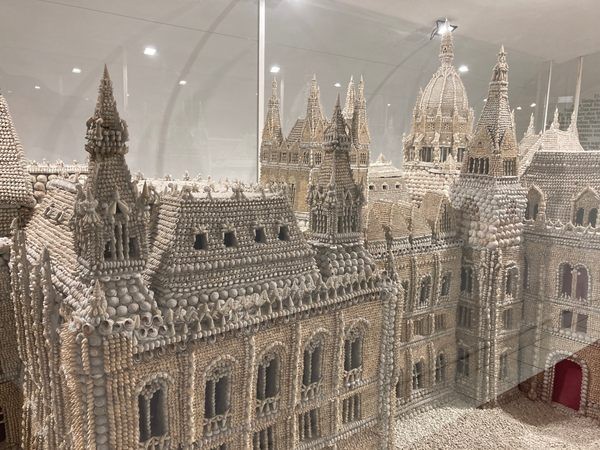
Ilona Miskei saw the building on the Danube and felt a pull she couldn’t shake. She went home. Down to her basement. In Keszthely. Northern shores of Lake Balaton. She decided to rebuild it. Not with marble. Not with steel.
With snails.
A Shell Obsession
It started in 1975. A basement room. An empty space. Miskei spent 14 years gluing down 4.5 million snail shells. She measured the replica to 7 by 2 meters.
Think about the scale. The patience.
Why snails? Because Keszthely sits on the rim of Lake Balaton, Europe’s largest lake. What’s left of the ancient Pannonian Sea is littered with fossilized shells. Miners dug them up. Nature buried them. Miskei used them.
It was passion project meets local geology.
“A jewel on the Danube,” they say about the real thing. This is different.
The Museum Mix
The result is startling. Intricate. If you stare at the spires, you see the tiny spirals. The curves of each shell line up to mimic stone carving.
You can visit it. Yes. It’s part of the Museum of Keszthely complex.
Walk in for the snails. You’ll see other things. The Doll Museum feels sweet. Wholesome even. Then there’s the Torture Museum. Less wholesome. And the Erotic Waxworks.
Variety is a strange comfort in a small town, isn’t it?
Miskei’s parliament stands quiet in the dark. Glittering. Cold. You finish looking. You aren’t quite ready to leave.