You don’t know him. Probably never heard the name.
Gil Eanes.
Obscure Portuguese mariner. Fifteenth century. He fixed a problem everyone else gave up on.
Before him? Ships stuck to the coast. Mediterranean sailors used oars. Why? Square sails sucked. You can’t tack with them. The wind has to be behind you. If it hits you square on? You’re dead in the water.
The Portuguese were worse off.
They used barcas. Heavy. Slow. Viking-style square sails on a single mast. Clunky things.
The maps lied too. Or rather, they screamed danger.
“Here there are even men with four-foot horns, serpents large enough to swallow an ox whole.”
The Borgia Map put teeth in the oceans. Medieval Europe believed in the Mare Tenebrosum. Sea of Darkness. Sailors whispered that past certain points—specifically Cape Bojador off Northwest Africa—the ocean would boil. Fog would swallow the ships whole. Monsters would eat the crew.
The Catalan Atlas? Just stopped drawing the coast entirely.
Reasons were sound. Mostly.
The West Coast of Africa is harsh. Desert. No ports. No cities until you hit the Gambia. But the real barrier was physics. And fear.
The Trap at the Cape
Portugal had a problem. They were small. Hemmed in by Castile (which became Spain) to the east. They wanted glory. Gold. Spice.
To get there? They had to go south.
The Canary Islands were the first stop. Spain wanted them too. Long war. Prince Henry the Navigator —son of King John I, obsessed with horizons—wanted them badly. He built a hub in Sagres. Mapmakers. Astronomers. Scholars from the Arab world who knew math.
Henry gathered knights who dreamed of the Donataria system. Get land. Get rich.
But the Canaries weren’t the goal. They were the warm-up.
The real wall was Cape Bojador.
Shallow reefs. Rocks tearing up the bottom. White foam boiling everywhere. And then the weather.
Hot Saharan air meets cold Atlantic currents.
Thick fog. Impossibly thick.
And then the wind.
Prevailing winds blew north to south. Easy enough to get there. But coming back? Good luck sailing upstream against a hurricane force wind.
Twelve years. Henry sent ships out. Twelve years of failure.
Gil Eanes tried first. Failed. Came back with stories of boiling water. Henry didn’t care about the stories. Sent him back in 1434
Into The Grey
Eanes was done trying to hug the coast.
It was terrifying. It meant leaving the landmark. Leaving the known. Steering straight into the abyss.
He turned West.
Deeper into the ocean.
This is where the magic happened. Unintentionally.
Eanes bumped into the Atlantic gyre.
Everyone thought winds blew one way. Wrong. The ocean moves in circles. A massive clock gear turning clockwise. South down Africa. Then West. Then North across the Atlantic.
By steering away from land Eanes found the current pushing him south. He rounded the Cape. Calm water on the other side.
No boiling. No monsters.
He claimed it for Portugal.
The Volta do Mar
Getting there was half the battle.
Getting back?
You couldn’t sail north. Winds pushed south. If you tried you’d just go backward into the reefs.
Eanes did the crazy thing again.
He didn’t turn North.
He turned away.
He sailed West. Then Northwest. Using the gyre. Letting the great ocean wheel spin them back to Europe in a massive arc.
Volta do mar. Turn of the sea.
It worked.
He came home. Alive. With a new way to sail the world.
This single trip broke the seal. The myth of the impassable south was dead. The “end of the world” on the map? Just more ocean.
Prince Henry realized the Canaries didn’t matter anymore.
What Happened Next
The technology had to catch up.
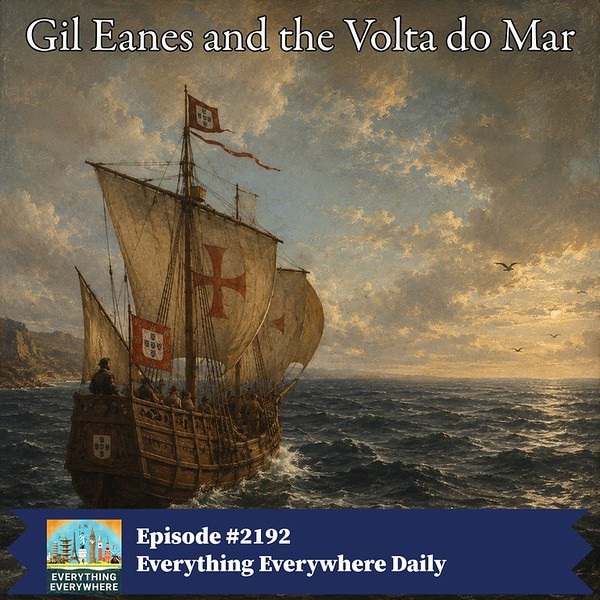
Square sails were useless for this. The Portuguese copied the Arabs. Adopted the lateen sail. Triangular. Flexible. You can sail against the wind by tacking back and forth.
They built the caravel. Lighter. Faster. Agile.
With the volta do mar and the caravel? The globe opened up.
1488: Bartolomeu Dias reaches the Cape of Good Hope.
End of the century: Vasco da Gama hits India.
A trading empire spans the globe.
But Eanes? He gets footnotes. Maybe silence.
He didn’t find India. He didn’t round Africa completely. He didn’t establish the forts or trade networks that made Portugal rich for centuries.
He just solved the math problem of leaving home.
Most people forget the person who unlocks the door. They remember the people who walked through.
The barrier wasn’t the ocean. It was the refusal to steer away from the shore.
History loves the conquerors. The kings. The admirals who raised flags on foreign shores.
Eanes just showed them the road.
Maybe you’ve heard of him. Maybe you have.
It’s a quiet sort of fame. Turning west to go south. Going out to come home.