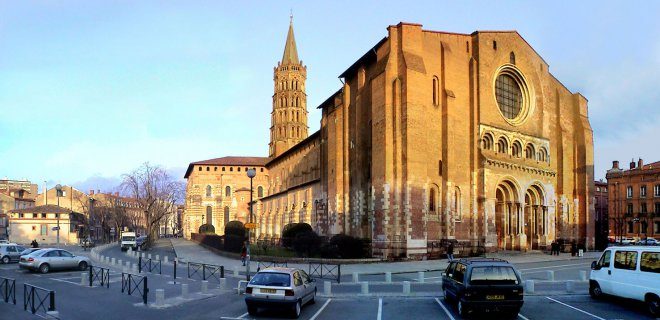
You think you know Romanesque architecture? Go to Toulouse. Specifically, go to the Basilica of Saint-Sernin. It is big. Not “nice local church” big. It is “you need a wide-angle lens to capture it” big. Built between 1080 and 1120, this structure sits on the ruins of a 4th-century monastery. It replaced the old stones with something that screams power and endurance.
How to navigate the largest Romanesque building in Europe
This isn’t just a pretty facade. It is a machine for pilgrims. For centuries, it was a critical stop on the Camino de Santiago. If you are walking the Way of St. James, this is where you go to prove you made it half the journey. The layout makes sense when you see it. The ambulatory lets people circle the relics without blocking the main aisle. It is practical genius.
“A place where history doesn’t just sit behind glass; it walks the floor with you.”
The sheer scale is the point. It is one of the largest Romanesque buildings in all of Europe. That is a heavy title. It carries weight. You feel it when you stand in the nave. The light filters through high windows. The air feels older.
Is the Basilica of Saint-Sernin a UNESCO World Heritage site?
Yes. Since 1998, it has been part of the UNESCO World Cultural Heritage list. This isn’t just for show. It protects the site from being messed with by modern developers or careless renovations. It means what you see is what they preserved. The structure itself tells the story of medieval faith. It tells the story of people who walked thousands of miles just to see a piece of cloth or bone.
Do you need a ticket? Usually, yes, to get into the crypt and the museum sections. The main church is open for mass, but the real treasure is underground. The crypt holds the relics of Saint Sernin. It is dim. It is quiet. It feels like the center of the world for those who cared about this specific saint.
Plan your visit for mid-morning. The light is best then. The crowds from the morning tours have moved on to the chocolate shops. You get the space. You hear your own footsteps echo off the stone arches. It is a rare feeling. To be small in a place built to hold thousands.
The Capitole Opera House: More Than Just a Building
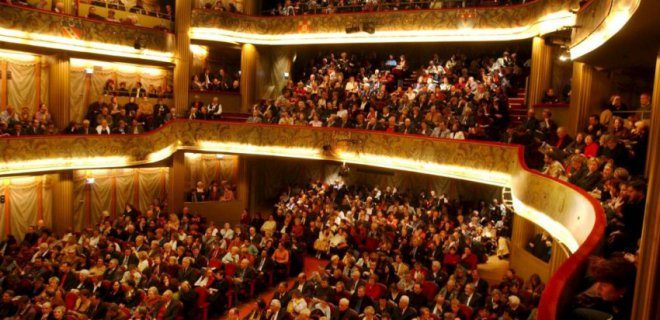
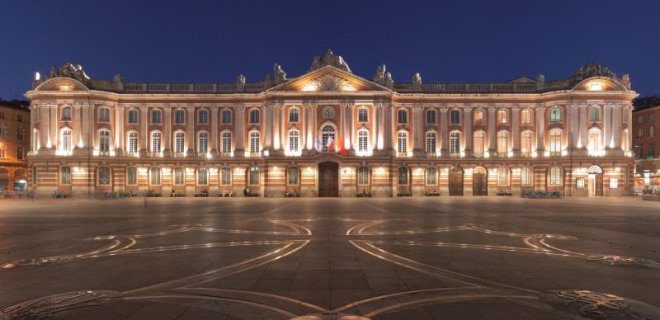
The Capitole isn’t just the city hall. It’s the stage. Built in 1736, this structure has survived earthquakes and fires to become the heart of Toulouse’s cultural life. It reopened in 1818 after a major rebuild, but it’s the recent restorations that make it feel alive today.
Inside, it’s an opera and ballet hall. Outside, it’s a pulse.
Why does this matter for your trip? Because the square in front is where life happens. It’s the go-to spot for newlyweds. Seriously. If you walk past, you’ll see couples who just got married at the town hall inside. They’re taking photos, crying, laughing. You witness their first step into eternity.
It’s not a tourist trap. It’s a living backdrop.
The area around the Capitole is the busiest in the city. Noise, movement, energy. You don’t need a ticket to feel the vibe, but if you catch a performance, you’re sitting in history.
Musee des Augustins: Art Without the Pretension
Next door, in a literal sense, sits the Musee des Augustins.
It used to be a monastery. Now it’s one of France’s largest museums. The name comes from the Augustinian friars who originally occupied the building.
What’s inside?
- Medieval religious art : Statues, paintings, altarpieces. Lots of them.
- Renaissance works : Frescoes, tapestries.
- 18th-century collections : Portraits, decorative arts.
- Modern and contemporary pieces : A surprising mix.
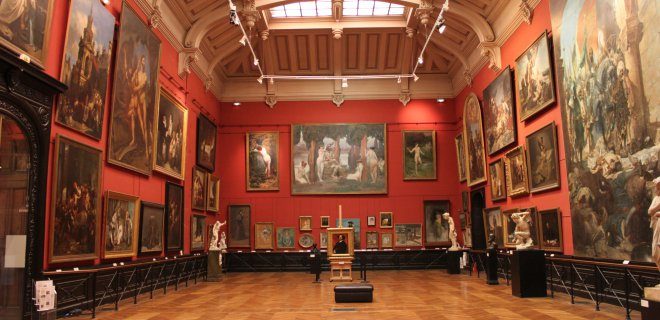
The museum doesn’t hide its history. The architecture is part of the exhibit. Vaulted ceilings, stone corridors, light filtering through old windows. It feels quiet. Intentionally so.
You don’t need a guide to get it. The labels are clear. The pacing is slow. You can spend two hours or half a day.
If you like art that tells stories, this is your place. If you prefer glass boxes with minimal context, skip it.
But here’s the thing: it’s free on the first Sunday of the month. After that, it’s cheap. Check the website for current hours. They change seasonally.
The collection isn’t just French. It’s European. Some pieces come from Spain, Italy, Germany. The museum collects broadly. It doesn’t stick to one era or style.
You’ll see saints. You’ll see nobles. You’ll see everyday people from centuries ago.
It’s not flashy. It’s steady. Like the city itself.
The Chaptal Museum: Medieval Art in a Gothic Shell
Toulouse isn’t just about pink bricks. It’s about stone.
Head to the Chaptal Museum. It opened in the early 19th century, but the building itself? That’s older. Much older. Built in 1309, the structure is a piece of Gothic architecture that feels heavy, grounded, real. Inside, the air smells like old paper and history.
Jean-Antoine Chaptal founded it. He kept adding pieces over time. Now the collection holds Romanesque sculptures that look like they’ve been waiting centuries for someone to notice them. The carvings are rough, expressive, distinct from the polished marble you see elsewhere. Local painters’ drawings share the space, offering a softer contrast to the hard stone.
Why go? Because it’s quiet. Because the sculptures are genuinely striking. It’s a small museum, easy to miss, but the medieval art here demands attention. You don’t need hours. An hour is enough to see the shift from Romanesque solidity to later styles.
Inside the Hôtel du Capitole
Step outside. Look up.
The Capitole de Toulouse dominates the square. It’s not just a government building. It’s the heart of the city’s civic life. Originally a palace for the Captials of Toulouse, it became the town hall in 1790. Now it houses the mayor’s office and the city council.
But look at the facade.
It’s neoclassical. Symmetrical. Grand. The bronze statues on the roof? They represent the Muses. Apollo sits in the center. It’s a statement of power, yes, but also of culture. The building has hosted everything from royal weddings to political revolutions.
Don’t just snap a photo and leave. Walk around the back. The gardens are hidden, green, surprisingly peaceful against the noise of the Place du Capitole. It’s a place where politics meets public space, and the architecture makes you feel small in the best way.
The Capitole isn’t just where decisions are made. It’s where the city’s identity is displayed in stone.
Inside, if you can get in during public opening hours, you’ll see the Great Hall. The ceiling paintings are bold. The wood paneling is dark. It feels like stepping into a period drama. But even from the outside, the sheer scale of the place tells you Toulouse takes itself seriously.
And then there’s the view from the square. The fountain. The pigeons. The tourists. It’s chaotic. It’s alive. The Capitole anchors it all, standing firm since the 13th century, watching it all change.
You can feel the weight of it. Not just the stone. The history.
Next stop? The river.
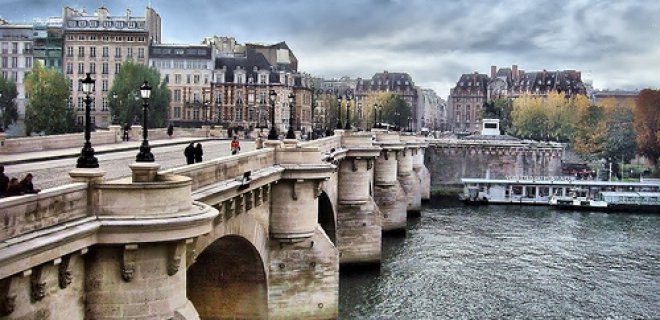
The Pont Neuf is actually the oldest bridge in Paris
Don’t let the name fool you. Pont Neuf means New Bridge. It sounds fresh. It’s not.
Built between 1578 and 1607, it’s the oldest standing bridge across the Seine. Henry IV signed off on it. He wanted a bridge that didn’t choke the city with houses. Earlier crossings were basically slums on stilts. This one was different. Open sidewalks. Arches for boats. A place to walk without feeling like you’re inside a medieval tenement.
It spans the Island of the City. Connects the Right Bank to the Left. The stone is limestone. It glows amber at dusk. Tourists lean on the railings to photograph the water. Locals walk past them, heads down, thinking about dinner.
The architecture is Renaissance. Not Gothic. Not Neo-Classical like that city hall building you just read about. This is earlier. More ornate. Look up at the arches. Each one has a coat of arms. Most are gone now. But the structure holds.
Is it crowded? Yes. Always. But it’s wide. You can lose people here. Or find them.
If you’re visiting, do it at night. The lights reflect on the water. The bridge feels older then. More real. During the day, it’s just traffic and selfie sticks.
Why the Pont Neuf in Toulouse isn’t actually new
The name is a lie. Or at least, it’s outdated. Pont Neuf translates to “New Bridge.” If you’re standing on it today, expecting something shiny and modern, you’re going to be confused. This arch bridge is a relic of the 16th century. Construction started way back in 1544. It took nearly a century to finish. The final stones were laid in 1632.
And then? It sat there. Unused.
The bridge didn’t actually open for traffic until 1959. A ceremony marked the occasion, finally handing the keys over to the public. That’s a long wait for a structure.
It’s asymmetric, slightly crooked in its charm. Seven arches span the gap. The total length hits 220 meters. It’s not the longest bridge in the world. It doesn’t need to be. For tourists visiting Toulouse, this is the spot. You can’t talk about the city without talking about the bridge. They’ve become one thing.
The Pont Neuf is synonymous with the identity of Toulouse.
It’s the postcard view. The place where locals meet. The spot where the river looks different because the angle is slightly off. Asymmetry works here. It feels human, not engineered by a spreadsheet.
If you’re planning a trip, don’t skip it because of the name. Go for the history. Go for the view. Just don’t expect it to be new.

Beyond the Postcard: The Cities You Actually Need to See
Paris gets the glory. Versailles gets the history. But if you’re looking for the pulse of France, you need to look elsewhere. The rest of the country isn’t just background scenery. It’s where the food is sharper, the wine is cheaper, and the streets actually feel lived in.
Lyon is the food capital. Not Paris. Lyon. If you care about eating, this is non-negotiable. The bouchons are cramped, loud, and serve dishes that have been made the same way for centuries. Quenelles. Saucisson brioché. It’s heavy. It’s rich. You’ll regret nothing. The Vieux Lyon district is a maze of Renaissance streets that don’t look like they belong in a modern city.
Strasbourg feels like Germany forgot it was French for a moment. The architecture is half-timbered and steep. The Cathedral is gothic chaos done right. But the real draw is the Petite France neighborhood. Canals. Bridges. It’s picturesque in a way that feels slightly staged, but the Alsatian food—choucroute, baeckeoffe—makes up for it. It’s cold in winter. The Christmas market is famous for a reason.
Bordeaux is often dismissed as just a wine stop. It’s not. The architecture is neoclassical perfection. The Place de la Bourse reflects in the Water Mirror so perfectly it looks like a glitch in reality. The wine is great, yes. But the city itself is walkable, clean, and surprisingly modern. You can drink a Sautern that costs more than your weekly grocery bill and stand on a bridge that looks like it was designed by someone who hated asymmetry.
Nice and Cannes are on the same coast but play by different rules. Cannes is for the film festival and the yacht owners. It’s shiny. Expensive. A bit hollow if you’re not there in May. Nice is grittier. The Promenade des Anglais is long and windswept. The Vieux Nice is a sensory overload of saffron, orange blossom, and narrow alleys that smell like dried herbs and old stone. The market on Cours Saleya is where you go to see what locals actually buy. Not souvenirs. Fruits. Flowers. Things that rot if you leave them out too long.
Montpellier is young. It’s a university town, which means the energy is different. Less polished, more chaotic. The Promenade du Peyrou offers a view of the city that looks like a painting from the 17th century. The Hérault river runs through it, warm in the summer, inviting in the evenings. It’s where you go if you want to feel like you’re in southern France without the Riviera prices.
Metz is the dark horse. The Centre Pompidou-Metz looks like a giant, translucent organ spilled onto the ground. It’s controversial. It’s stunning. The city itself is quiet, overlooked by most guidebooks. The cathedral has the highest vaulted ceiling in the world. Nobody talks about it. You’ll have the nave to yourself. That’s the point.
Nancy is Art Nouveau done right. Place Stanislas is a UNESCO site