The Sea of Cortez, famously dubbed “the world’s aquarium” by oceanographer Jacques Cousteau, is currently facing a complex ecological paradox. While it remains a biodiversity hotspot teeming with life, it is also the stage for a significant conservation crisis involving one of its most iconic residents.
For travelers arriving in Baja California, the expectation is often to witness the gray whale migration. However, recent data paints a stark picture: the Eastern North Pacific gray whale population has plummeted to roughly 13,000—the lowest level since the 1970s and a sharp decline from a peak of 27,000 in 2016. This drop is largely attributed to ecosystem changes in their Arctic feeding grounds, where shifting sea ice has reduced the availability of critical prey. Consequently, fewer mothers are reaching Baja, and calf numbers have dwindled.
During a recent seven-day expedition aboard the Venture with National Geographic-Lindblad Expeditions, this reality shaped the journey. Expedition leaders informed guests early on that they would not be visiting the gray whale birthing grounds. With only four mother-calf pairs counted in the 2026 season by researchers at Laguna San Ignacio—down from over 100 at the population’s peak—the crew prioritized animal welfare. They chose to avoid adding tourism pressure to stressed animals, redirecting the focus toward the region’s abundant alternative wildlife.
A Desert Meets the Sea
The biodiversity of Baja is so dense that avoiding wildlife is nearly impossible, even in developed areas. Before the expedition ship even set sail, guests observed hooded orioles and hummingbirds in the manicured neighborhoods of Nopoló, while stingrays wriggled in the nearby sands. This seamless blend of desert and marine ecosystems defines the region, which was voted the best wildlife destination by Matador Network in 2025.
The landscape itself is a character in the story. Dominated by the Cardón cactus —the tallest cactus in the world, reaching 20–30 feet—the terrain offers shade and nesting sites for birds and lizards. However, the beauty comes with a warning: the cholla, or “jumping cactus,” has spines that detach easily, making shorts and short sleeves ill-advised for hiking.
Despite the harsh environment, life thrives in unexpected places. At Puerto Los Gatos, a mysterious spot named for cats that were nowhere to be found, guests encountered a six-foot-long Baja California coachwhip. The non-venomous snake, known for its temper, slithered calmly up the reddish fossilized sandstone cliffs, unbothered by human presence. Similarly, western skinks with bright-blue tails darted through the desert, their shy nature requiring quick reflexes for photography.
Marine Spectacles: Whales, Dolphins, and Sharks
With gray whales off the menu, the ocean offered other spectacular performances. Humpback whales were a daily highlight. Guests observed these giants breaching from the deck of the Venture or from smaller Zodiac boats. Off Cabo Pulmo National Park, a calf and two adults breached in sequence, the sound of their return hitting the water before the splash even settled.
The expedition also provided sightings of two other great whale species:
* Fin Whales: The world’s second-largest mammal, reaching up to 85 feet. Though reclassified as “vulnerable” by the IUCN in 2018 due to some population recovery, they remain endangered under the US Endangered Species Act.
* Minke Whales: Smaller but equally majestic, adding to the diversity of cetaceans observed.
To contribute to science, guests were encouraged to photograph humpback flukes—the unique markings on their tails—and upload them to the Happywhale app. This citizen science initiative has identified over 100,000 individual whales, helping researchers track migration and population health.
Sharks, often a source of anxiety for snorkelers, were present but distant. While no sharks were seen in the water during snorkeling sessions, four were spotted from the vessel: two hammerheads and two thresher sharks, the latter identifiable by their long, sickle-shaped tails. The sighting of a thresher shark on the final night felt like a dramatic finale to the marine encounters.
The Hidden Cost of Tourism: Sea Lion Entanglements
Not all encounters were joyful. The expedition highlighted a pressing threat to local wildlife: entanglement in fishing gear.
On the second day, guests snorkeled with a playful colony of sea lions on Isla las Ánimas. The animals darted among swimmers, curiously inspecting gear. However, days later near Cabo Pulmo, the mood shifted. A California sea lion was spotted sunbathing on a sea stack with a severe neck laceration, consistent with being caught in a fishing line.
This incident is not isolated. According to Sea Shepherd, fishing gear is one of the greatest threats to California sea lions in the Gulf of California. In just six days in March 2026, the conservation organization rescued 13 entangled sea lions in the region. The naturalists reported the injured animal to local rescuers, underscoring the ongoing struggle between marine conservation and commercial fishing practices.
Birdlife and Unforgettable Finales
The skies over Baja were dominated by pelicans and turkey vultures. Pelicans, abundant along the coast, are elegant in flight but clumsy in landing, often hitting the water with a splash that scares away prey. In Loreto, they frequently follow small fishing boats, hoping for scraps of fish guts—a testament to their adaptability.
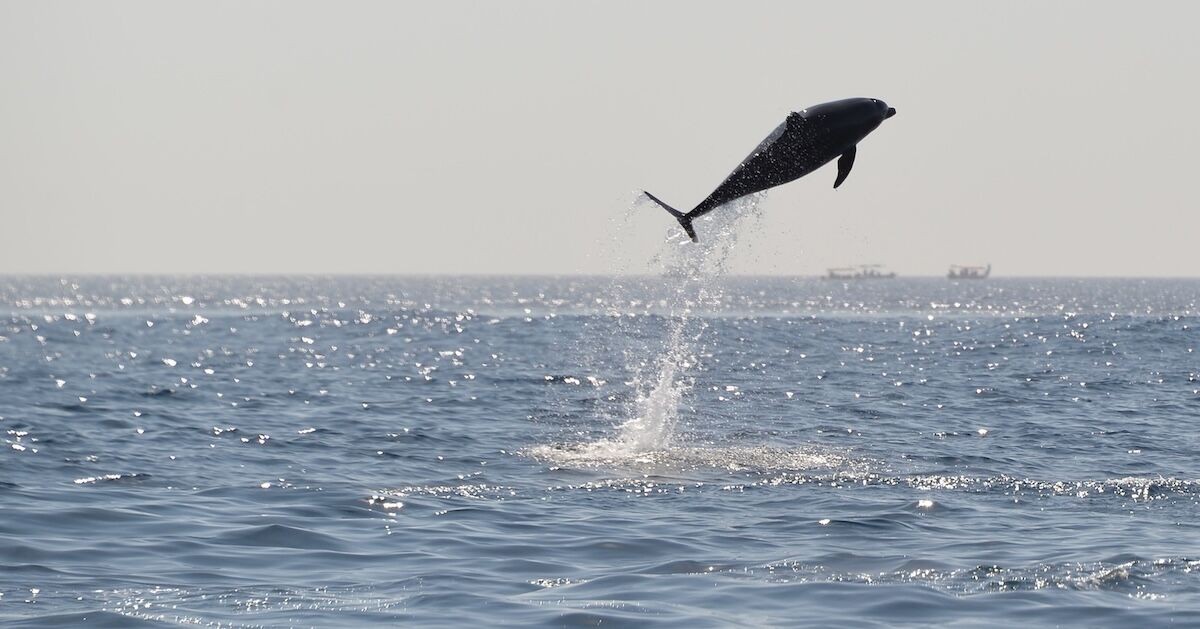
The expedition concluded with a spectacular display of marine social behavior. On the final night, as guests gathered at the bow with binoculars, a superpod of approximately 800 dolphins appeared. Calves and adults rode the vessel’s bow wave for nearly an hour, jumping and playing until the sun set and the water turned black. Sea lions and humpback whales joined the scene, creating a chaotic, joyful send-off that encapsulated the wild spirit of the Sea of Cortez.
Conclusion
The Baja expedition demonstrated that while the gray whale crisis demands respect and distance, the region’s ecological richness remains unparalleled. By shifting focus to other species, travelers can still engage deeply with conservation efforts—from citizen science with humpback whales to witnessing the urgent need for bycatch reduction in sea lion populations. The Sea of Cortez remains a vital, vibrant ecosystem where every encounter, from a desert snake to a superpod of dolphins, reinforces the importance of protecting marine biodiversity.