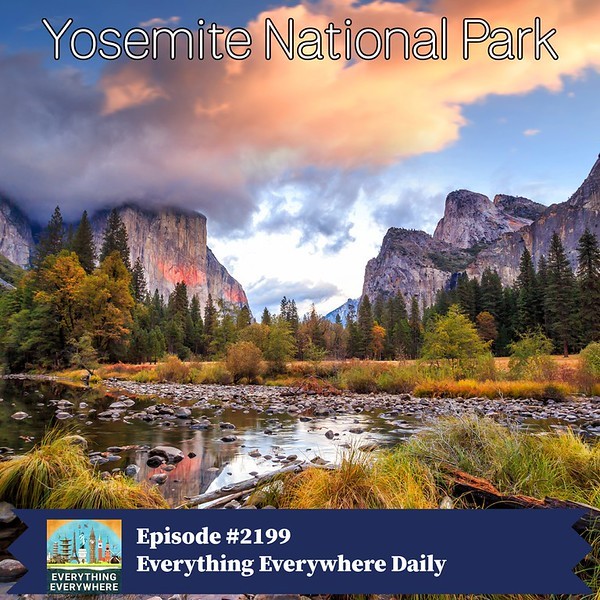
In California’s Sierras, there’s a place carved by ice and stubborn stone. It’s huge. It’s old. And it basically invented the idea of saving nature for the rest of us.
You’ve got Yellowstone. You’ve got the Grand Canyon. And you’ve got this one. Yosemite. The crown jewel, arguably.
Geology Is Just Violence Given Time
Look at those walls. Straight up. Thousands of feet of pure granite.
That rock started deep underground. Magma cooled. Slowly. Millions of years of crystallization while the Earth slept. Usually, that stuff stays buried. It’s the basement floor of the planet. But then the ground bucked. A tectonic heave shoved Yosemite’s rocks skyward.
Then came the abuse. Glaciers. Rain. Wind. They scraped the top layers off. They cut vertical scars into the stone. Now, 90% of what you see is naked granite.
It’s picturesque, sure. But it’s mostly just debris that didn’t wash away.
The Original Engineers
Before the tourists, before the paint, the Ahwahnechee lived there. For 8,000-plus years.
They weren’t just visitors. They were gardeners of a scale most of us can’t imagine. They used fire. Deliberately. Low intensity, frequent burns to keep the meadows open.
“By setting frequent, low-intensity fires… they kept the valley’s open meadders from being choked out by dense cOnifer forests.”
This cleared underbrush. It recycled nutrients. It boosted black oaks for acorns. A steady diet of acorns for both humans and animals. It worked for centuries.
Then white settlers showed up and said, Fire is bad. So the burning stopped. The forest got dense. The biodiversity in the meadows dropped. Now, when fires start, they burn hotter than hell because there’s so much dry fuel packed tight. Irony isn’t just a literary device. It’s a historical pattern.
The Ahwahnechee had myths about this place, too. One says El Capitan wasn’t always there. Two bear cubs sleeping on a rock that grew into the sky. A panicked mom bear. Lions and cougars tried to rescue the cubs but failed. A measuring worm left a slimy trail so they could slide down.
Small worm, big rescue. Makes sense for a valley of tiny details hiding in massive structures.
Conquest And Naming
Everything changed after the Gold Rush. 1851: the Mariposa Battalion rolled into town. Or rather, rolled into the valley.
They were volunteers, sanctioned by the new state of California. Their job? Rid the area of a “perceived threat.” Translation: burn the villages, starve out the food stores, chase the families out.
The Ahwahnechee came back to find strangers owning their home. The culture broke. The name stayed, though. Sort of.
A militia doctor named Lafayette Bunnell liked the indigenous name. But he butched it. He thought Yosemite meant “grizzly bears.” It probably came from Yohé’meti —they are the killers. Maybe referring to the bears. Maybe referring to Chief Tenaya’s fierce defense of the land.
Either way, the valley got a new label just as its soul got evicted.
Painting The Scene
Enter the settlers. Some came for gold. Most came for trees.
But a few came for beauty. German painter Albert Bierstadt arrived with a sketchbook and a lot of money-making ambition. His painting The Domes of Yosemite sold for $25,000 in 1867. That’s a fortune back then. It bought his reputation and, inadvertently, Yosemite’s fame.
People saw his lush, glowing canvases. They packed up. They traveled. They arrived.
One guy arrived and never left. Well, he stayed a while. Galen Clark became the unofficial guardian. He wrote about the tourists weeping at the vista. “Overwhelmed in the sudden presence of the unspeckable.”
And then John Muir showed up.
The High Priest
Muir didn’t plan on becoming the father of the parks. He just ran from the Civil War. Skedaddled across the country until a brochure hooked him.
He saw the valley and broke. Literally.
“I am captive. I am bound.”
Muir climbed everything. He studied the flowers. He got too close to grizzlies. He obsessed over every inch. But he didn’t just write poems about rocks. He got political.
In 1892 he founded the Sierra Club. The goal wasn’t hiking; it was protection. Specifically, federal protection. Because here is the messy truth about 19th-century America: The federal government wasn’t always the enemy. Sometimes, the state was the problem.
Yosemite Valley and Mariposa Grove didn’t belong to the feds. President Lincoln gave them to the state of California in 1864.
A noble gift. Terrible execution. The state let loggers hack up the trees. Grazers ate the grass. Hotels went up everywhere. Muir watched his sanctuary get manicured into mediocrity.
The Campfire Summit
Muir knew he needed muscle. Political muscle. He found Theodore Roosevelt.
In 1903, Roosevelt visited. But they didn’t meet in a white house office. They dropped their handlers. No valets. No politicians. Just Muir, Roosevelt, a pack of mules, and the High Sierra.
“I do not want anyone with me but You; I want to drop Poliotics absolutely.”
It was the ultimate influencer strategy. Muir didn’t just talk about the wilderness; he forced the most energetic president in US history to sleep in it. To smell the pine. To see the scale.
It worked. Roosevelt took control of Yosemite from the state just three years later. Fast. Really fast for Washington.
But then came the dam.
The War Over Water
Hetch Hetchy. It was a valley north of Yosemite. Just as beautiful. Granite domes. Waterfalls. Everything else.
San Francisco wanted the water. The 1906 earthquake had devastated the city. They needed a reliable reservoir. So they looked at Hetch Hetchy and saw a swimming pool.
Roosevelt faced a choice. His advisor Gifford Pinchot thought natural resources should be used wisely. Use them. Build the dam.
Muir thought this was blasphemy. You don’t drain a cathedral.
Roosevelt hesitated. He liked Muir. He didn’t want to interfere. But Pinchot argued logic over awe. Congress agreed.
Muir fought. He lobbied William Howard Taft. Taft refused.
In 1911, Taft stepped down. He and Roosevelt ran in 1912, splitting the vote so badly that Woodrow Wilson won. And Wilson signed the Raker Act in 1913. The dam was authorized.
Muir was 75. He died almost exactly one year later. The water started flooding in 1923. A masterpiece was underwater.
Was it worth it? You tell me.
Open Wound
Muir’s death marked an end. And a beginning.
The national park system was young, awkward, and full of holes. Hetch Hetchy was a scar on its face. But the fight established a precedent. Wild places weren’t just property. They were rights of passage. For everyone.
Today, the meadows are still dense with unchecked forest growth. The fires come hotter than before. The granite walls don’t care about your policy papers.
We still hike there. We still look up. We still weep sometimes. But we left the dammers. And we left out the original engineers, for a long, long time.
Does protection require sacrifice? Maybe.
Or maybe it just requires admitting that we’re not in charge.