


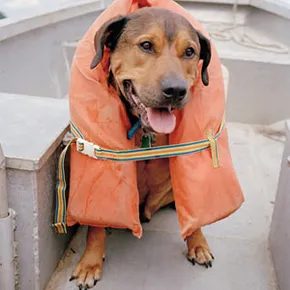
We’ve all seen the photos. A Golden Retriever sticking its head out of a speedboat, wind-swept and joyful. Or a cat perched regally on a sailboat’s rail, surveying the horizon. They look like protagonists in an adventure movie. And for centuries, they’ve been part of the maritime story. Great Danes once recognized enemy subs during WWII. Portuguese Water Dogs have webbed feet for a reason. Border Collies have even survived shipwrecks by riding air pockets to shore.
But let’s get real. Taking your pet on a boat isn’t just about the photo op. It’s a logistical minefield.
Your first boat trip was probably a blur of seasickness and slippery decks. Your pet will feel it too. They’ll slip. They’ll panic at the dock’s noise. They might even go overboard. Boating with animals requires serious prep. You need gear. You need training. And you need to accept that things will go wrong until they don’t.
If you want to avoid disaster, you need to pet-proof your vessel. Treat your boat like a house with no walls. What smells good? What moves? What looks like food?
Preparing Your Vessel for Animal Guests
Start with the basics. Cats need a litter box. But not just any box. It must be secured with shock cord. Use clumping litter. Non-clumping litter turns into a muddy slurry in choppy water, and if it gets into the bilge pump, you’re looking at a mechanical nightmare. Keep that litter box far away from any intakes.
Dogs are different. For short trips, they might be fine. For longer voyages, you need a designated bathroom spot. Newspapers work. So do synthetic grass mats with absorbent bases. These mimic a real walk. But here’s the catch: you still need hundreds of plastic bags. Do not let the phrase “poop deck” become literal. Everyone on board will hate you if you don’t clean up.
Acclimation is key. Start visiting your boat weeks before you plan to leave. Leash your pet. Let them sniff the engine. Let them walk the deck. Let them get bored with the vessel. Familiarity breeds comfort. Comfort keeps them calm when the waves get high.
And don’t forget towels. Lots of them. Some dogs love to swim. Others just love to shake dry immediately after. A wet, sandy dog on a leather seat is a disaster. A wet, smelly dog in your cabin at night is a nightmare.
The Non-Negotiable: Pet Flotation Devices
You cannot skip the PFD. Personal Flotation Device. Life jacket. Call it what you want, but your pet needs one. It’s not just about floating. It’s about preventing hypothermia if they fall into cold water for an extended period.
Get them used to it early. Let your dog wear it at home. Start with five minutes. Work up to an hour. By the time you hit the dock, it should be as normal as a collar.
Dogs usually take to it better than cats. But cats are unpredictable. Some hate it. Some find it restrictive. Some love it. Ask yourself: Is my cat healthy? Can it swim? Does it panic in water? If you aren’t sure, have a PFD ready. But monitor them closely.
Every PFD needs a handle on the back. This isn’t for decoration. It’s for rescue. You need to be able to lift your pet out of the water quickly. Practice this. Lift your dog. Hold them. See if they squirm. If they thrash, you won’t be able to get them back in during an emergency. You also need to be physically capable of lifting a wet, heavy animal. And don’t forget your own life vest. A panicked, wet dog can easily pull you overboard. Dog owners have drowned trying to rescue their pets. Don’t be that statistic.
Finding the Right Fit
Not all PFDs are created equal. A dog’s body shape varies wildly. A Greyhound is long and narrow. a Bulldog is wide and short. A generic PFD might slip off a Greyhound or choke a Bulldog.
Look for breed-specific or size-specific designs. If it’s too small, it restricts movement. If it’s too big, it slides off when it matters most. The fit must be snug but not tight. You should be able to slip two fingers under the straps. If you can’t, it’s too tight. If you can fit your whole hand, it’s too loose.
Check the materials. Look for durable nylon. Strong buckles. Reflective strips for visibility. A bright color helps you spot your pet in the water.
The Dock Drop-Off
Now you’re ready. The boat is pet-proofed. The PFDs are fitted. The towels are stacked. You’re at the dock.
Wait.
The dock is loud. Boats bump. Engines roar. Strangers yell. Your pet might freeze. Or bolt.
Secure your pet before you even think about stepping onto the boat. A leash is good. A harness is better. Some pets panic and jump. Others cower and refuse to move. Read your animal.
If your cat is going, keep them in a carrier until you’re ready to move. Sudden exposure to the environment can cause stress-induced illness. A stressed cat vomits. Vomit on a boat smells like death. It’s hard to clean. It’s harder to remove.
Take your time. Let your pet adjust. Don’t rush. The sea doesn’t care about your schedule.
The Reality of Leashes and Logistics
Let’s be honest about the assumption that your dog is a natural-born sailor. Sure, Labs love the splash, but a gentle pond swim is nothing like battling open-water currents. Muscle sinks. Fat floats. Lean dogs and short-legged breeds often exhaust themselves trying to keep pace with a moving vessel. They might not have the stamina or the speed to reach you if they slip over.
Don’t let enthusiasm override safety. If your pup is eager to dive, that excitement can become a hazard. Keep the leash in your hand, not tied to a cleat. You need to remain the anchor point. Once you are clear of the dock and ready to go, you can release them for a controlled swim. But until then? Tight control.
What actually goes in the gear bag?
- Water. Bring more than you think. Sun exposure hits harder on the water, and dehydration sets in faster than you’d expect for both you and your four-legged friend.
- Waste management. Newspapers or a portable dog toilet. This is the unglamorous reality of boating. Your dog won’t always get it right. Watch for their pre-poop signals, just like on a walk, and clean up immediately.
- Treats. High-value snacks for rewarding calm behavior.
- Restraints. A harness or leash is mandatory, especially at the dock where local leash laws apply.
- Exit strategy. A ramp or ladder. Older dogs or those carrying extra weight struggle with vertical climbs. A collapsible floating ramp mimics a shoreline and makes boarding painless.
- Paperwork. Vaccination records. If you’re crossing state or international borders, missing documents mean quarantine.
Boating with dogs is rewarding if you respect the limits. Boating with cats? That sounds absurd. Yet, some owners do it. And some cats actually thrive on the motion.
The Feline Resistance
Cats are sensitive to unpredictable motion. Cars jerk and swerve; to a cat, this destroys their finely tuned sense of balance. They announce their misery loudly. Now, imagine that stress on a boat, rocking and rolling with the waves. You can’t pull over and offer reassurance.
This doesn’t mean you can’t take your cat. Many do. But you have to prepare them. It’s a gradual process.
What does a seafaring cat actually need?
- A litterbox. Non-negotiable. Your cat needs a place to relieve itself comfortably away from the main living area.
- Food and water. Basic survival, obviously.
- A sturdy scratching post. Cats need resistance. If the post isn’t firmly attached to the boat, they’ll scratch the ropes or the upholstery instead. Secure it tightly.
- Restraints. A harness or carrier is essential. Cats often bolt for the shore the moment they see land. Ports are dangerous places for unrestrained pets. Keep them secured until you are safely back on the water.
- A rescue ladder. If your cat falls overboard, you need a way to get them back up. If their claws are intact, a strip of burlap, carpet, or fishnet tied to the side can serve as a makeshift ladder.
- Vaccination records. Different states have different rabies laws. Check them before you go. Non-compliant animals face quarantine.
Creating a Safe Haven
How do you keep a cat from panicking?
Experts suggest building a “cave.” This is a low, confined space near the center of the boat, where the rocking motion is least intense. If your cat shows signs of seasickness, this nest is their refuge.
Use several blankets. Ideally, ones that already smell like home. Add a familiar toy or a treat. Some cats won’t feel safe until they are partially covered by the fabric. It’s about creating a micro-environment of stability in a moving world.
It’s a different kind of travel. Less about the view, more about managing anxiety. But for those who commit to the prep, the water becomes a shared space rather than a source of stress. The question is whether you’re ready to build that cave before the tide comes in.
Keeping Your Pet Safe on the Water
The boat isn’t just a vehicle; it’s a hazard zone for paws and claws if you’re not paying attention. Fishing gear needs to be tucked away. Dogs and cats have a habit of getting hooked. It’s a gruesome accident that happens more often than you’d think. If your pet gets snagged, stop everything. Do not try to cut the hook off yourself. You’ll likely cause more damage or panic the animal. Keep them calm. Lighten the load if you can stabilize the hook’s weight, then rush them to a vet.
You have to watch them constantly. On the water. On the shore. Everywhere. Fun is temporary. Discipline is permanent. Your dog needs to understand that jumping into the water only happens on command. An off-leash dog near a propeller or a dock is a tragedy waiting to happen.
The Deck is a Trap
Check the temperature of the deck before you let them step out. Cats and dogs burn their paw pads on hot fiberglass or metal surfaces in seconds. Protective paw shoes are a smart investment, especially for midday trips. Even if the air feels cool, the surface beneath them might be cooking them. Wet decks are slippery. Paws slip. Slipping leads to falls. Falls lead to injuries.
If you’re heading to a beach, scan the sand for debris. Sharp shells. Crabs. Jellyfish. They’re all dangerous to a curious nose. Keep a first aid kit with tweezers close by. Ticks are another silent threat, especially if you’re camping after the boat ride. Pets are more vulnerable to Lyme disease than humans are. Check them thoroughly. Every time.
Hydration and Heat
Sun exposure is no joke for animals. They can get sunburned just like you. Keep sunscreen (at least SPF 15) on hand. For short-haired breeds, consider a lightweight sun-proof jacket. It’s cheaper than vet bills for severe burns. Make sure their water dish is always in the shade. Hydration is key. Pets pant more when they’re excited or nervous. Out in the sun, dehydration hits fast. Have plenty of fresh water ready.
What to Do If Things Go Wrong
Know the signs of seasickness. Disorientation. Excessive salivation. Apathy. If your pet goes limp or stops eating, they’re suffering. Keep a fishing net handy. If they go overboard, you might need to scoop them up quickly. Never tie your pet to the boat. If the water gets rough or the boat turns over, a tied animal can’t swim to safety. Use a carrier or a harness to keep them confined. It’s not about restricting freedom; it’s about preventing disaster.
When to Leave Them Behind
If you’ve tried multiple times and your pet still hates it, stop. Don’t force it. Boating isn’t for everyone. Some animals will never enjoy it. If your pet is miserable, leave them on land with a sitter. They’ll be happier. You’ll be safer. A stressed animal is unpredictable. It can bite. It can jump. It can ruin the trip for everyone.
“A miserable animal can be unpredictable and dangerous, even when that animal is your best friend on land.”
Respect their limits. There are other ways to see the world without dragging a terrified dog into a life jacket.


