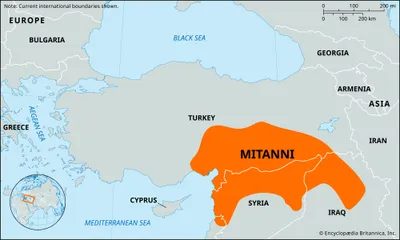
Most travelers head straight for the famous ruins of Babylon or the temples of Luxor. But if you want to see where history gets complicated, you need to look north, into the rugged terrain of modern-day Iraq and Syria. This is the land of Mitanni. It was an Indo-Iranian empire that dominated northern Mesopotamia for about a century and a half, from roughly 1500 to 1360 BCE.
It wasn’t just a footnote. At its peak, Mitanni stretched from the Zagros Mountains and the ancient city of Kirkūk (also known as Arrapkha) in the east all the way to the Mediterranean Sea in the west. The heart of this power was the Khābūr River region. This is where Wassukkani, the capital city, likely stood. Today, that location remains a mystery. Archaeologists haven’t pin-pointed it with certainty. But standing by the Khābūr River, you can almost feel the weight of that lost capital.
Who Were the Rulers of Mitanni?
The story of Mitanni is a story of migration and takeover. The people who ran it were Indo-Iranians. These were originally Aryan tribes who were on their way to settle in India. But they broke off the main group. They turned west instead, moving into Mesopotamia.
There, they didn’t stay isolated. They settled among the Hurrian peoples. Within a generation, they became the ruling noble class. The locals called them the maryannu. This was a warrior aristocracy that held the reins of power.
Navigating the Politics of Ancient Syria
If you were planning a trip there in 1400 BCE, you’d need to know the politics. The early foreign policy of Mitanni was defined by one thing: competition with Egypt for control of Syria. It was a high-stakes game of chess played across deserts and mountains.
Then, things shifted. Amicable relations were established with the Egyptian king Thutmose IV. He reigned from 1425 to 1417 BCE. This peace allowed Mitanni to breathe, to build, and to expand its influence without the constant threat of Nile-based armies at its border.
Key Figures in Mitannian History
You can’t talk about Mitanni without mentioning Saustatar. Also known as Shaushshatar, he reigned from around 1500 to 1450 BCE. He is remembered for one bold move: looting the Assyrian palace in Ashur. It was a statement. It said Mitanni was strong, rich, and not to be messed with.
But power always fades. The last independent king was Tushratta. He died around 1360 BCE. His reign ended in violence. The Hittite king Suppiluliumas I sacked Wassukkani. Tushratta was later assassinated. This sparked a series of dynastic struggles that tore the kingdom apart.
Mattiwaza, a son of Tushratta, tried to hold it together. He was aided by Suppiluliumas against Shuttarna of Hurri. Even with that help, Mitanni could not survive. It became part of the Hittite empire, renamed