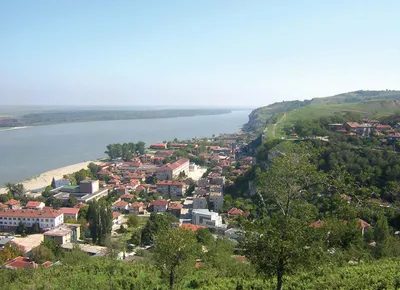
Nikopol isn’t just another Bulgarian town on the map. It’s a place where history didn’t just happen; it got buried under centuries of mud, war, and shifting riverbanks. Located in northern Bulgaria, this settlement sits precariously along the Danube River. If you look closely at the water, you’ll see it meets the Osŭm (Ossăm) River nearby. Directly across the water lies Turnu Măgurele in Romania. That border is thin here. The river doesn’t care much about politics anymore.
The town’s story starts with Byzantine Emperor Heraclius I back in AD 629. He built it as a stronghold. Today, you can still see the ruined fortresses dominating the skyline. They are crumbling reminders of a time when control of the Danube meant control of the Balkans.
The Battle That Changed The Balkans
Why do history buffs trek north to Nikopol? For one reason and one reason only: 1396.
The Ottoman Sultan Bayezid I crushed a Crusader army there. The Crusaders were led by King Sigismund of Hungary. It was a massacre. The defeat at Nikopol sealed the fate of the region. Turkish domination of the Balkans followed for five centuries. The echo of that battle still feels heavy here.
A Town That Was Destroyed Twice
Nikopol wasn’t always a quiet agricultural hub. The Turks occupied it from 1393 until 1877. During that time, they fortified it heavily. It became an administrative center. The population swelled to about 40,000 people.
Then came 1810. The Russians destroyed the town. It was wiped out. The Turks, desperate to maintain control, moved the regional government northwest to Vidin. Nikopol was left to rot. It declined rapidly after being abandoned as a center of power. It wasn’t liberated again until 1877.
What To See And Do Now
Today, Nikopol is small. The 2001 population count sat at 13,656. It is not a bustling metropolis. It is a place of fishing, farming, and viticulture. If you are planning a trip, don’t expect luxury resorts. You will find rugged landscapes and quiet ports.
The port itself has been superseded by Somovit. Don’t bother looking for major shipping traffic here. Instead, look at the water. The Danube is wide and slow here. It feels ancient.
“Nikopol is a place where the past is visible in the ruins that still dominate the town.”
Logistics And Timing
Getting there requires some planning. The town is remote compared to Sofia or Plovdiv. You will likely drive north from the capital or arrive via a smaller regional hub. The roads can be rough. The scenery is flat. The river views are expansive.
What is genuinely worth seeing? The ruins. They are stark. They remind you of the scale of the Ottoman Empire’s reach. You can hike around the old fortress walls. You can sit by the riverbank and watch boats pass. There is a quiet melancholy here. It suits the mood of a traveler who prefers silence to noise.
The climate