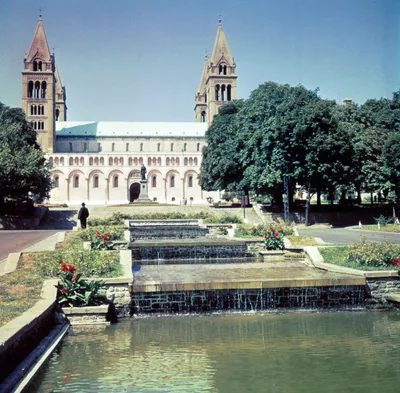
Pécs sits at the southern edge of the Mecsek Mountains. It is 220 kilometers from Budapest. The locals call it the “City of Five Churches.” This name sticks because of the layers of history buried in the streets. You are standing on former Illyrian land. Then came the Celts. Then the Romans built Sopianae here. It was the capital of Southern Pannonia.
Travelers often skip south to focus only on Budapest. That is a mistake. Pécs offers a different pace. It is smaller. It feels lived-in. The population is around 145,000. The air is cooler in the Mecsek foothills.
How to Get There and Logistics
You can reach the city by road or rail. Connections are solid. Trains run regularly to Budapest. The drive takes about two hours. Road links also connect you to Dunaújváros and other regional hubs.
Timing matters. Summer is busy. Winter can be crisp and quiet. The university towns always have a vibrant energy. Students keep the cafes open late.
The Early Christian Necropolis
This is the main reason to visit. The Early Christian Cemetery was designated a World Heritage site in 2000. It is one of the best-preserved examples of its kind outside of Italy.
You can walk through underground galleries. The walls are decorated with frescoes. They date back to the 4th and 5th century. The style is distinct. It mixes Roman, Eastern, and early Christian elements. The tombs are carved directly into the rock. Some have sarcophagi. Others are simple niches.
Visit the site early in the day. It gets crowded. The guides are knowledgeable. They explain the symbolism in the paintings. You will see fish. You will see the Good Shepherd. These images were coded messages for persecuted believers.
The Mosque and the Cathedral
The city center has a main square. It is large and open. In the middle stands the Ghazi Kassim Pasha Mosque. It was built during the Turkish occupation. The Turks held the city from 1543 to 1686. The mosque is well-preserved. It has a minaret. It looks out of place in a Christian city. But that is the point. It shows the layering of empires.
Today it serves as a Roman Catholic church. You can walk inside. The dome is high. The stone is cool.
Across the square is the cathedral. It was founded in 1009. Stephen I made Pécs a bishopric then. The building has been renovated many times. The 1960s restoration was extensive. It cleaned up centuries of soot and damage. The interior is bright. The frescoes are vivid. They tell the story of the bishopric.
The Zsolnay Cultural Quarter
You need to see the Zsolnay factory site. It is not just a museum. It is a cultural quarter. The factory made ceramics. Specifically, majolica ware. The name is famous internationally. The pieces are colorful. They have a distinct glaze.
The quarter has 15 renovated historic buildings. There are 88 statues. You will see artisan shops. You can buy pieces. The collection includes vases, tiles, and architectural elements. The building itself is a work of art. It blends industrial history with artistic flair.
Go in the afternoon. The light hits the glazed tiles well. You can browse the shops. It is a good place to pick up a souvenir. Or just to look. The atmosphere is creative.
The University and Intellectual History
Pécs was a humanist center in the 14th and 15th centuries. Louis I founded the University of Pécs in 1367. It is the oldest university in Hungary. The Turks closed it. It stayed closed for centuries.
It reopened in 1922 as Janus Pannonius University. It merged with the Medical University and Illyés Gyula Teacher Training College in 2000. The result is a modern,